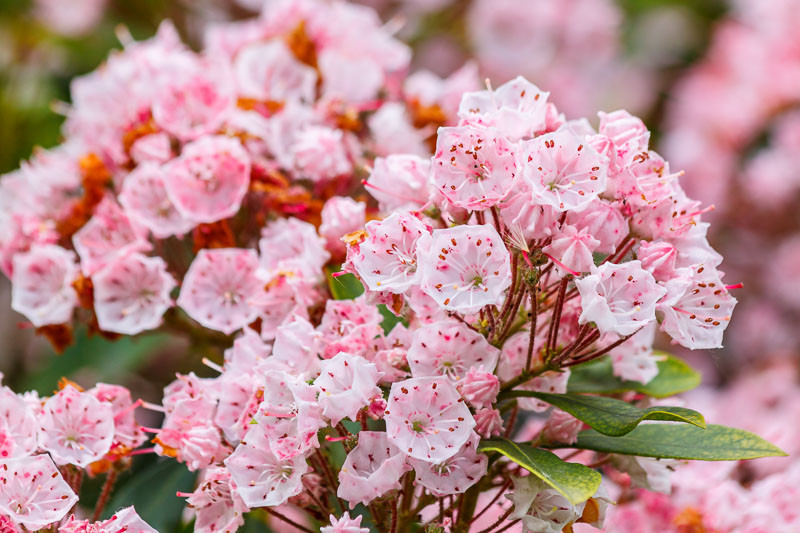
Mixed Privacy Screen Guides
A mixed privacy screen can turn an exposed garden boundary into a beautiful, layered landscape, with evergreens for winter coverage, flowering shrubs for color, and small trees for height. But combining different plants takes a little more planning than planting a uniform hedge. How do you arrange shrubs without overcrowding them? How much space do you need between layers? And how do you prune plants that flower at different times? Whether you’re designing a natural backyard screen, a wildlife-friendly boundary, or a more attractive alternative to a row of conifers, discover practical advice on planning, planting, training, and maintaining mixed screens that provide privacy and seasonal beauty.
Learn How to Design and Plant a Layered Mixed Privacy Screen with Correct Spacing and Plant Selection
The secret to a successful mixed screen is giving each plant a purpose. Some establish the permanent evergreen structure, others provide seasonal flowers or foliage, and a few may add height to conceal elevated views. When these roles are planned carefully, the planting feels lush rather than crowded.
Seven steps for planting a mixed privacy screen:
- Identify the views to screen: Determine whether the problem is a neighboring patio, boundary fence, road, or upstairs window.
- Measure the planting area: Record available length, depth, mature height limits, and distances from buildings, fences, and paths.
- Choose evergreen anchors: Position appropriate evergreen shrubs where winter privacy is most important.
- Add seasonal interest: Introduce compatible flowering shrubs, colorful foliage plants, or small trees without compromising the permanent screen.
- Arrange plants at mature spacing: Allow for the full canopy and root spread rather than their dimensions in nursery pots.
- Prepare the soil: Assess drainage, compaction, sunlight, and moisture, adapting the plant selection to actual conditions.
- Plant, water, and mulch: Establish healthy roots with appropriate planting depth, regular moisture monitoring, and suitable mulching.
How do you arrange plants in a mixed screen? Begin with the tallest structural plants where height is needed, then position medium shrubs and lower companions to create overlapping coverage. A staggered arrangement can look more natural than a rigid row, but it requires sufficient planting depth.
How far apart should mixed-screen shrubs be planted? Spacing depends on each plant’s mature spread and how much overlap is appropriate. A narrow arborvitae requires a different distance from a broad ninebark or hydrangea. Measure from plant center to plant center and provide adequate room for air circulation and maintenance.
Should mixed screens be planted in straight rows? Not necessarily. Gentle curves and informal clusters can create a natural appearance, especially in wider planting beds. In narrow gardens, a simpler single line with carefully chosen shrubs may be more practical.
How deep should a mixed privacy planting be? It depends on the plants. A substantial layered shrub border may require several feet or more of depth, while a narrow screen may only accommodate upright evergreens with smaller companions. Avoid designing a three-layer planting in space suited to only one row.
How many different plants should you use? A limited selection repeated in groups usually looks more coherent than a long sequence of unrelated species. Depending on the length of the screen, three to five complementary plant types can provide useful diversity without making maintenance unnecessarily complex.
Do mixed screens need evergreen plants? Not always if only summer privacy is needed. But where winter screening matters, suitable evergreens should form the structural foundation. Deciduous shrubs may retain attractive stems but generally provide less visual coverage when leafless.
Can you combine shrubs and trees? Yes. Small trees can help interrupt higher sightlines, while shrubs screen lower views. Make sure the mature tree canopy will not excessively shade neighboring shrubs or create unacceptable root competition.
How do you match plants to the soil? Group species with compatible moisture, drainage, and pH requirements. For example, rhododendrons and certain other acid-loving shrubs can make good companions in suitable acidic soil, while drought-adapted plants may need a different planting area.
When is the best time to plant a mixed screen? Spring and fall are often favorable in temperate climates, depending on rainfall and soil conditions. In cold regions, spring planting may give vulnerable evergreens more time to establish before winter.
Gardenia’s planning tip: Sketch the screen at mature size before planting. Draw the eventual shrub outlines, not tiny nursery circles. This simple exercise helps prevent overcrowding and reveals whether the planting will actually block the required views.
Explore Gardenia’s Choosing the Best Privacy Plants, Choosing Your Ideal Hedge, and Plants for Hedges and Screens.
Discover How to Water, Prune, and Maintain Mixed Screens with Evergreens and Flowering Shrubs
Mixed screens need thoughtful maintenance because different shrubs grow at different rates and flower at different times. The aim is to preserve the natural, layered appearance while preventing vigorous plants from overwhelming their neighbors.
How often should you water a newly planted mixed screen? Monitor moisture around each plant rather than treating the whole border as one uniform root zone. Newly planted shrubs need consistent moisture during establishment, but requirements vary according to species, soil, temperature, and rainfall.
Should all the shrubs receive the same fertilizer? No. Different plants have different nutritional and soil pH needs. Fertilize only where there is a demonstrated need, and avoid excessive nitrogen that encourages vigorous but poorly balanced growth.
When should you prune a mixed screen? Each species needs its own schedule. Spring-flowering shrubs often form buds the previous season and may be pruned after flowering, while many summer-flowering shrubs bloom on new growth and can be pruned during dormancy.
How do you prune panicle hydrangeas? Hydrangea paniculata ‘Limelight’ flowers on the current season’s growth. Appropriate late-winter or early-spring pruning can manage its size and support strong flowering, while retaining enough framework to form a substantial shrub.
How do you prune ninebark? Physocarpus ‘Diabolo’ can be selectively pruned to remove congested or older stems. Where spring flowers matter, avoid excessive dormant-season pruning that removes buds formed on older growth. Its natural arching form is often more attractive than tight shearing.
How should evergreen shrubs be pruned? Match the method to the species. Yews can tolerate shaping relatively well, while many arborvitae cannot reliably regenerate new foliage from old, bare wood. Regular light maintenance is preferable to allowing plants to become oversized and then cutting them back severely.
How do you maintain red-stemmed dogwoods? Red-osier and red-barked dogwoods produce some of their brightest winter stem colors on younger growth. Selective renewal pruning can encourage fresh stems, but cutting every branch annually may reduce the plant’s size and temporarily eliminate its screening function.
How do you keep the screen from becoming too dense? Remove crossing, damaged, or excessively vigorous branches where appropriate. Preserve enough space between plants for light and air circulation, and allow the shrubs to maintain their natural forms.
Should flowering shrubs be sheared into a hedge? Usually not when they are intended to form a natural mixed screen. Repeated shearing may reduce flowers, create dense outer foliage, and leave the interior sparse. Selective pruning often produces a more attractive and sustainable result.
How do you keep evergreen shrubs healthy at the base? Avoid allowing taller deciduous companions to shade the lower evergreen branches excessively. Maintain appropriate spacing and resist overcrowding for immediate visual effect.
When should you mulch a mixed screen? Organic mulch can help conserve moisture and suppress weeds. Apply it around the root zone without piling it against trunks or crowns. Check that moisture remains suitable for all species.
Can you add plants to an established screen? Yes, where there is sufficient room, light, and root space. Existing shrubs may have extensive root systems that compete strongly with new plants, so carefully assess conditions before filling a gap.
Gardenia’s maintenance advice: Maintain each plant according to its own growth habit, but judge the composition as a whole. A mixed screen should retain a natural rhythm of heights and textures without one shrub dominating everything around it.
Read Gardenia’s Hydrangea Pruning Guide, Hydrangea Growing and Care, and Shrub Growing and Care Guides.
Solve Mixed Screen Problems: Gaps, Uneven Growth, Winter Privacy, Deer Damage, and Overcrowding
A mixed privacy screen changes as it matures. Some shrubs grow quickly, others remain compact, and deciduous plants become transparent in winter. Anticipating these changes is much easier than correcting an overcrowded or uneven boundary later.
Why does my mixed screen look uneven? Different species have different growth rates, mature heights, and natural forms. This variation is part of the appeal, but major imbalances can arise when fast-growing plants crowd slower shrubs. Correct spacing and selective maintenance help preserve a pleasing structure.
Why does the screen lose privacy in winter? Deciduous shrubs lose their leaves, sometimes revealing gaps hidden during summer. Identify the winter sightlines and position suitably hardy evergreen plants where they are most needed.
How do you fill gaps in a mixed screen? First identify whether the gap is caused by plant loss, unsuitable spacing, excessive shade, or natural winter leaf drop. A new evergreen may be appropriate for permanent screening, while a deciduous shrub can provide seasonal coverage.
What if an evergreen becomes shaded by a larger shrub? Selectively prune compatible surrounding growth where appropriate, or consider whether the evergreen is in the wrong location. A plant that needs full sun may not remain dense beneath the expanding canopy of a neighboring tree.
Why is one shrub growing much faster than the others? Species naturally differ in growth rate, but soil fertility, drainage, watering, sunlight, and root competition may also contribute. Do not assume all shrubs should reach the same height or grow at an identical pace.
How do you prevent root competition? Allow adequate spacing, choose plants with compatible moisture requirements, and avoid overcrowding large shrubs or trees. During establishment, monitor smaller plants near the roots of vigorous neighbors.
Can deer damage a mixed screen? Yes. Deer may browse both evergreen and deciduous species, sometimes concentrating on particular favorites. Plant diversity does not guarantee protection. Read Gardenia’s Arborvitae Deer Damage and Alternatives.
Why are some shrubs flowering poorly? Insufficient light, incorrect pruning, immature plants, moisture stress, or unsuitable soil conditions can reduce flowering. Diagnose each species separately rather than applying one treatment to the entire screen.
What if the plants have incompatible water requirements? Consider separating them into different planting zones or replacing unsuitable companions. A moisture-loving dogwood and a drought-adapted shrub may require different watering strategies to remain healthy.
Can a mixed screen become invasive? Yes, if regionally invasive shrubs or trees are used. Check local guidance before planting, especially for species known to escape cultivation. Regional native or non-invasive alternatives are often better choices.
How do you restore an overgrown mixed screen? Identify the plants and their ability to recover from pruning. Renovate gradually where possible, remove dead or overcrowded growth, and consider replacement when a plant’s mature size is fundamentally unsuitable for the available space.
Is a mixed screen better than a single-species hedge? It can offer greater seasonal variety and reduce dependence on one plant species, but it also requires more careful design and individualized maintenance. A simple uniform hedge may be more appropriate where space is extremely limited.
Gardenia’s final growing advice: Mixed screens work best when every plant has enough room to thrive. Allow their natural shapes to develop, preserve evergreen coverage where winter privacy matters, and maintain the planting gradually rather than relying on repeated severe pruning.
Explore Gardenia’s Deer-Resistant Evergreen Screening Shrubs, Low-Maintenance Shrub Choices, and How to Choose the Right Hedge.