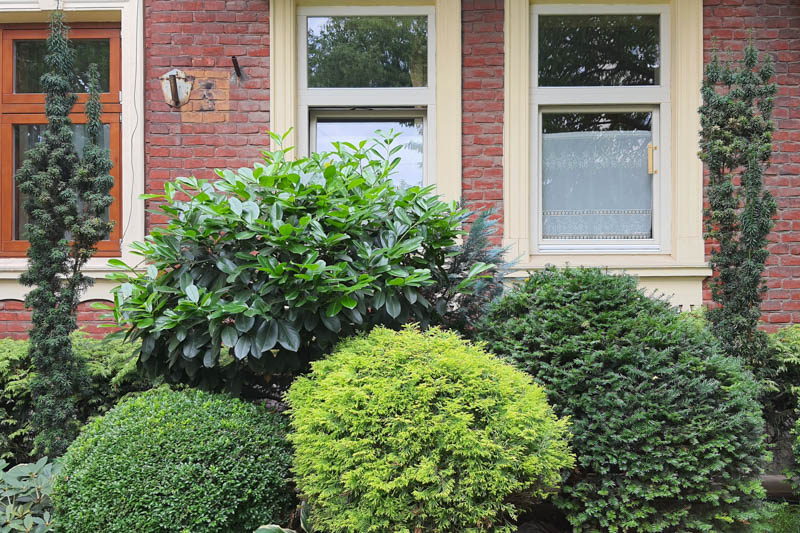
Mixed Foundation Planting: Design & Care Guide
A beautifully layered foundation garden can make a house feel more welcoming, but combining evergreen shrubs, flowering plants, grasses, and groundcovers requires some careful planning. How much space should you leave between a hydrangea and an evergreen? Which plants can share the same soil and watering schedule? And how do you keep a mixed border looking attractive after summer flowers have disappeared? The secret is giving every plant enough room and a clear purpose, while respecting the practical demands of growing near a building. Learn how to plan, plant, prune, and maintain mixed foundation beds that provide year-round structure, seasonal color, and lasting curb appeal.
Learn How to Plan a Mixed Foundation Bed with the Right Layers, Plant Spacing, and Proportions
Foundation planting should complement the architecture, not conceal it. The ideal design uses plants with different heights, textures, and seasons of interest while preserving windows, doorways, exterior walls, and maintenance access.
Seven steps to planning a mixed foundation garden:
- Measure the building and bed: Record window heights, bed depth, path clearance, corners, vents, and access points.
- Observe the microclimate: Check sun exposure, shade from eaves, reflected heat, and areas that receive little rainfall.
- Assess the soil: Identify compaction, drainage problems, pH, and existing root competition.
- Select structural plants: Choose well-proportioned evergreen shrubs suited to the space and climate.
- Add flowering shrubs: Select plants with compatible growing needs and complementary seasons of interest.
- Finish with lower plants: Use suitable perennials, grasses, and groundcovers to soften edges and connect the planting to paths or lawn.
- Allow for maturity: Calculate spacing based on eventual plant width and preserve building clearance.
What is the best way to layer a mixed foundation bed? Place structural shrubs where they frame the building, position appropriately sized flowering plants between or in front of them, and use lower perennials at the bed’s outer edge. Do not automatically put the tallest plant nearest the house if it would block a window or utility.
How wide should a mixed foundation bed be? Wide enough for the mature plants. A narrow strip may accommodate only one layer of compact plants, while a deeper bed can support shrubs and foreground perennials. There is no universal bed depth that works for every combination.
How far apart should the plants be spaced? Use mature spreads rather than nursery sizes. Some plants can overlap gently, but overcrowding can reduce airflow, increase root competition, and obscure the natural shapes that make mixed planting attractive.
How far should shrubs be planted from the house? Allow sufficient distance for their mature foliage, exterior inspection, ventilation, and access. Consider the shrub’s mature radius and any additional clearance required by the building. Avoid covering vents, drainage outlets, or vulnerable wall details.
Should mixed foundation planting be symmetrical? Not necessarily. A balanced composition often works better than exact mirroring. Repeat the same plants in small groups so the design feels cohesive even if the entrance and windows are asymmetrical.
How many plant varieties should be used? A few carefully repeated varieties usually produce more visual continuity than a crowded assortment. For small residential foundation beds, beginning with three or four complementary types may be sufficient.
How do you choose plants with compatible conditions? Match sunlight, soil pH, drainage, and moisture requirements. For example, a shaded planting with inkberry, heuchera, and appropriate sedges may be easier to maintain than mixing moisture-loving shrubs with drought-adapted plants in the same root zone.
Should you plant shrubs and perennials at the same time? You can, provided the design allows for their mature dimensions. Leaving temporary gaps around young shrubs is preferable to filling every space with vigorous plants that will eventually compete.
How do you plan for winter appearance? Decide which evergreen shrubs will provide the permanent framework. Deciduous hydrangeas, hostas, and most flowering perennials contribute seasonal beauty but should not be counted as winter foliage.
Gardenia’s design rule: Draw every plant at its mature width before digging. The most successful mixed foundation gardens look generous because plants have room to develop, not because every inch of soil is immediately filled.
Explore Gardenia’s Best Foundation Shrubs, Front Yard Plant Combinations, and Garden Planning Tools.
Discover How to Prepare Soil, Water, Mulch, and Prune a Mixed Foundation Planting
Mixed beds require a little more care in the planning stage because their plants do not all grow or respond to pruning in the same way. Once established, however, a well-matched combination can be easier to manage than a row of unsuitable shrubs repeatedly cut back beneath windows.
How should soil be prepared for mixed foundation planting? Check drainage, compaction, and soil structure before planting. Construction debris and heavily compacted ground are common near buildings. Correct serious problems where feasible and choose plants adapted to the actual growing conditions.
How do you manage drainage near a house? Keep water moving away from vulnerable foundation details and maintain existing grading, drains, weep holes, and ventilation. Do not bury wall features or raise soil and mulch against siding or damp-proofing details.
How often should newly planted shrubs and perennials be watered? Check root-zone moisture and water each plant according to its needs. Newly planted shrubs often require more sustained watering than established ones. Areas beneath eaves may remain dry even following rainfall.
Can all the plants share one irrigation system? They can if their moisture requirements are sufficiently similar. Otherwise, use separate watering zones or adjust the plant selection. Moisture-loving hydrangeas and drought-tolerant sunny-border perennials may not thrive under identical irrigation.
Should mixed foundation beds be fertilized every year? Not automatically. Healthy plants in suitable soil may need little additional feeding. Fertilize according to the species and demonstrated soil or nutritional needs rather than applying a heavy general-purpose feed to the entire bed.
How do you mulch around several types of plants? Apply suitable mulch to conserve moisture and suppress weeds, leaving crowns and woody stems clear. Keep mulch away from the building’s vulnerable wall details, drainage openings, and vents.
When should Bobo Hydrangea be pruned? Hydrangea paniculata ‘Bobo’ flowers on new growth and can be pruned appropriately during dormancy. Avoid treating all hydrangeas the same way, as oakleaf and many bigleaf types flower on older wood.
How should evergreen shrubs be pruned? Preserve their natural shapes where possible. Many compact evergreens need only occasional removal of damaged growth or modest shaping. Some conifers cannot reliably regrow from old, bare wood.
Should ornamental grasses be cut back every spring? Not all. Deciduous grasses may be cut back before new growth emerges, while evergreen and semi-evergreen sedges often benefit more from selective removal of damaged leaves. Identify each plant before pruning.
How do you maintain heucheras and hostas? Remove deteriorated foliage when appropriate, protect their crowns from burial, and maintain suitable moisture. Hostas naturally die back in winter, while heucheras may remain evergreen or semi-evergreen depending on climate and cultivar.
Can groundcovers crowd out smaller plants? Yes. Vigorous spreading plants may encroach on perennial crowns or shrub bases. Select species with manageable growth and monitor their spread as the bed becomes established.
How do you keep the planting balanced over time? Check mature growth each season. Thin or divide suitable plants where necessary, remove dead stems, and prevent vigorous shrubs from shading smaller companions excessively.
Gardenia’s maintenance advice: Care for each species according to its own needs, but evaluate the design as a whole. Healthy plants, natural shapes, and clear building access are more important than perfect geometric outlines.
Read Gardenia’s How and When to Prune Hydrangeas, Shrub Planting and Care Guides, and Low-Maintenance Perennial Care.
Solve Common Mixed Foundation Problems: Overcrowding, Dry Shade, Poor Flowering, and Seasonal Gaps
Mixed foundation beds change as they mature. Shrubs grow wider, perennials spread, and seasonal foliage disappears during winter. Understanding these changes helps prevent a beautiful young garden from becoming crowded or difficult to maintain.
Why does my mixed foundation bed look overcrowded? Plants may have been spaced according to nursery size rather than mature spread. Vigorous shrubs can overtake smaller perennials and block light. Selective thinning or replacement with appropriately sized plants may be needed.
Why are some plants thriving while others are struggling? They may have incompatible growing requirements. One species may prefer acidic, moist soil while another requires excellent drainage and relatively dry conditions. Check the individual plants before changing the entire watering or feeding routine.
Why is my hydrangea not flowering? Insufficient light, incorrect pruning, winter bud damage, or environmental stress can reduce bloom. Identify the hydrangea type before making cuts. Gardenia’s Hydrangea Blooming Problems Guide explains common causes.
Why are foundation plants struggling beneath the eaves? Roof overhangs can keep rainfall away from the soil. Even a shaded bed may experience serious root-zone drought. Check moisture below the surface and consider plants better adapted to dry shade.
Why are leaves turning yellow? Causes include waterlogging, drought, nutrient availability, soil pH, pests, and natural aging. Different plants can show similar symptoms for different reasons, so inspect the soil and roots before treating them.
What if an evergreen becomes bare on one side? Excessive shading, wall proximity, or inappropriate pruning may be responsible. Some evergreen shrubs cannot readily regenerate foliage from bare older stems. Correcting plant placement may be more effective than cutting back harder.
How do you fill seasonal gaps? Use attractive evergreen shrubs, suitable semi-evergreen foliage plants, or spring bulbs in appropriate positions. Do not overcrowd established shrub roots simply to make the bed look full immediately.
Why does the garden look empty in winter? Many hostas, flowering perennials, grasses, and hydrangeas are deciduous. A mixed foundation design needs permanent structure if winter appearance matters. Consider evergreens that suit the space and climate.
What if a shrub blocks a window? Assess whether selective pruning is sustainable. If its mature size is fundamentally inappropriate, replacement with a compact cultivar often provides a better long-term solution.
How do you protect the house from planting problems? Keep shrubs clear of drainage outlets, vents, and windows. Maintain suitable soil levels and avoid allowing irrigation or roof runoff to accumulate against vulnerable structural details.
Can an overgrown foundation planting be renovated gradually? Yes. Retain healthy plants that suit their positions, remove those that are oversized or failing, and restore appropriate spacing. Replant in stages if necessary rather than removing every established specimen.
How do you reduce maintenance without sacrificing beauty? Use fewer compatible plants, repeat them in natural groups, and select varieties that maintain attractive forms without frequent pruning or excessive irrigation.
Gardenia’s final care advice: The healthiest mixed foundation gardens are built around realistic mature sizes and compatible growing conditions. Preserve the building’s drainage and access, respect each plant’s natural form, and allow the design to develop gradually.
Explore Gardenia’s Shade Garden Design and Care, Low-Maintenance Shrub Selection, and Best Shrubs for Foundation Beds.