Augustine Rhododendron
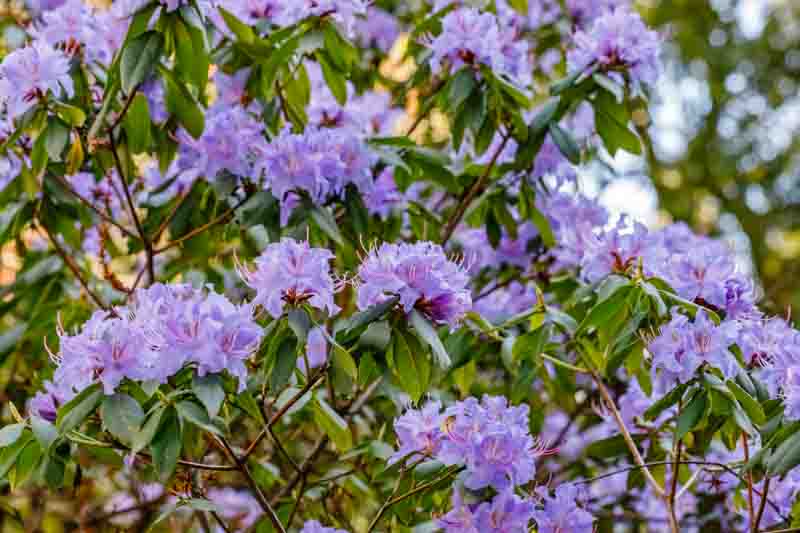


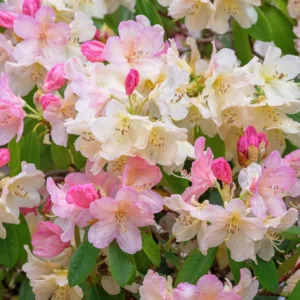
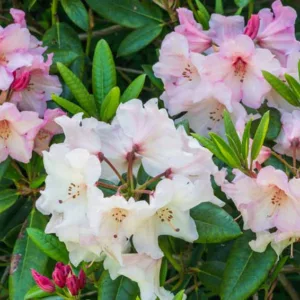
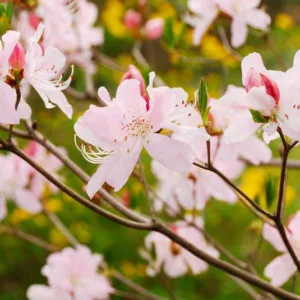
Rhododendron augustinii (Augustine’s Rhododendron) is prized for something unusual among rhododendrons: flowers that can come remarkably close to blue. In mid to late spring, its slender branches carry loose clusters of open, funnel-shaped blooms in shades of lavender, violet, purple, and, in selected forms, luminous violet-blue. Narrow evergreen leaves give the shrub a lighter, more graceful appearance than many large-leaved rhododendrons. Native to the mountains of China, it is particularly beautiful in sheltered woodland gardens and informal acidic borders.
Summary: Graceful evergreen rhododendron with violet-blue to purple spring flowers and narrow foliage.
Use: Woodland gardens, sheltered shrub borders, and informal acidic plantings.
Highlight: Loose clusters of unusually blue-toned, funnel-shaped flowers.
Important: Flower color varies considerably – an unnamed seedling may not produce the blue flowers you expect.
| Botanical Name | Rhododendron augustinii Hemsl. |
|---|---|
| Common Name | Augustine’s Rhododendron |
| Family | Ericaceae |
| Plant Type and Habit | Evergreen shrub, upright to broadly bushy |
| Hardiness | USDA Zones: 6-9 |
| Size | 5-8 ft. tall and wide (1.5-2.5 m) in typical cultivation; older plants may become larger |
| Time to Mature Size | Approximately 10-20 years |
| Exposure | Partial shade or sun where soil moisture is reliable; sheltered position |
| Soil | Acidic, humus-rich, moist but well-drained loam, sand, or suitably improved clay |
| Foliage | Narrow, dark green evergreen leaves with fine scales beneath |
| Flowers | Violet-blue, lavender, purple, or white, often spotted; mid to late spring |
Growing Rhododendron augustinii specifically for blue flowers? Gardenia recommends checking three things before buying: flower-color reliability, spring frost exposure, and summer growing conditions. An unnamed seedling may flower lavender or purple rather than blue; a hardy plant may survive winter but lose its flower buds to a late frost; and even a beautifully colored selection needs acidic soil, dependable moisture, and suitable summer temperatures.
Rhododendron augustinii is native to China, where it occurs in mountain regions including Sichuan, Yunnan, Hubei, and southeastern Tibet. It grows naturally on wooded slopes, forest margins, rocky hillsides, and other mountain habitats over a considerable range of elevations.
It belongs to a group of small-leaved, scaly rhododendrons known as lepidote rhododendrons. The scales can be seen on the undersides of the leaves and help distinguish these plants from the large-leaved, non-scaly rhododendrons familiar in many gardens.
Augustine’s Rhododendron generally develops into an upright, bushy evergreen shrub about 5-8 ft. (1.5-2.5 m) tall and wide, although old specimens can become larger in favorable gardens.
The narrow, pointed leaves are dark green and relatively small, with fine scales beneath. Their light texture allows the flowers to remain visually prominent rather than disappearing into a heavy mass of foliage.
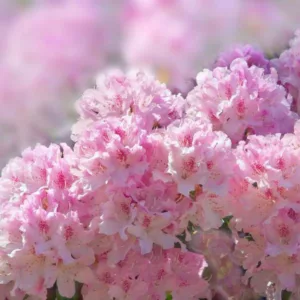
In mid to late spring, loose clusters of two to five flowers, sometimes more in selected forms, open near the branch tips. Individual funnel-shaped blooms can measure up to about 2.75 in. (7 cm) across in some forms. Their open arrangement gives the shrub an airy display quite different from the dense, rounded flower trusses of many hybrid rhododendrons.
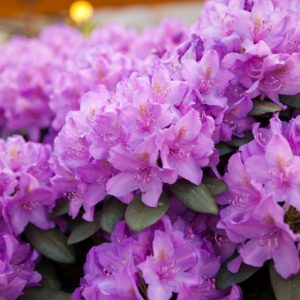
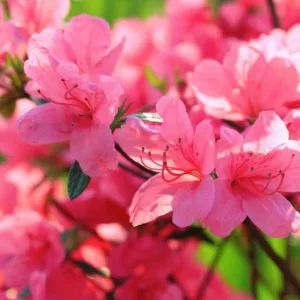
Flower color is remarkably variable. Wild plants and seedlings may bloom white, pale lavender, violet, or purple, while selected garden forms can produce much richer violet-blue shades. Greenish, brownish, or darker spotting may appear inside the throat.
If blue flowers are important to you, find out how the plant was propagated. Seed-grown Rhododendron augustinii can vary considerably in color. A vegetatively propagated named selection is a more reliable choice because it preserves the characteristics of the selected parent. When buying an unnamed plant, seeing it in flower is the safest way to know what color you are getting.
Rhododendron augustinii is naturally variable across its Chinese range, and its taxonomy has been interpreted differently over time. Plants formerly described under several separate names have been included within broader treatments of the species, while some authorities recognize distinct geographical forms or subspecies.
An unusual example is subsp. hardyi, recognized in some botanical treatments, which differs markedly from the familiar evergreen forms in having deciduous foliage and white flowers. Garden selections have concentrated particularly on richer blue-purple flower color, including the violet-blue ‘Electra’.
For gardeners, the practical lesson is simple: two plants labeled Rhododendron augustinii may look surprisingly different in flower. That natural variation is part of the species’ appeal, but careful selection matters if you are seeking a particular shade.
The spring flowers provide nectar and pollen to visiting insects. Like other rhododendrons, however, R. augustinii contains grayanotoxins and can be poisonous if ingested by people, dogs, cats, horses, and livestock. Rhododendrons are generally considered rabbit resistant, although hungry animals may still browse them.
Partial shade is a reliable choice, particularly where summers are warm. Morning sun followed by afternoon shade often provides an excellent balance. In cooler climates, the shrub can tolerate more sun if its roots remain cool and consistently moist.
Grow it in acidic, humus-rich soil that retains moisture but drains freely. Loam and sandy soils are suitable when enriched with organic matter, while clay requires good structure and drainage. Avoid alkaline or waterlogged ground.
Water regularly during establishment and prolonged dry periods. A mulch of leaf mold or composted bark helps conserve moisture and protects the shallow roots, but keep mulch away from the base of the stems.
A site can be warm enough for the shrub yet still be poor for flowering. Gardenia recommends evaluating winter cold, late spring frost, summer heat and moisture, and soil drainage together. This helps explain why an apparently healthy Rhododendron augustinii may grow well but flower poorly.
Plant in spring or fall, setting the root ball no deeper than it grew in its container. Water thoroughly after planting and avoid cultivating deeply around established plants because rhododendron roots grow close to the soil surface.
Little pruning is normally required. Remove dead, damaged, or badly placed branches, and do any shaping soon after flowering so you do not remove developing flower buds for the following year.
The species can be propagated from seed, while selected forms may be increased by semi-ripe cuttings, layering, or grafting. Seedlings are genetically variable, making vegetative propagation the better method when flower color or another characteristic needs to remain true to the parent plant.
Poor drainage can encourage root rot and crown rot, while alkaline soil may lead to iron chlorosis. Hot, dry exposure can cause leaf scorch and moisture stress.
Potential pests include vine weevils, aphids, scale insects, and lace bugs. Rhododendrons may also be affected by bud blast, petal blight, and leaf diseases.
Look first at late frost, shade, and pruning. Flower buds may be damaged even when the branches and foliage survive unharmed, while heavy shade can reduce flowering. Pruning too late in the season can also remove the following spring’s flower buds.
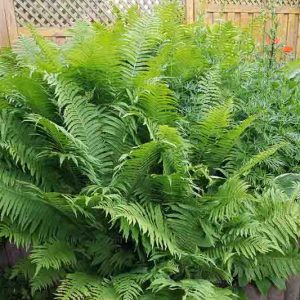
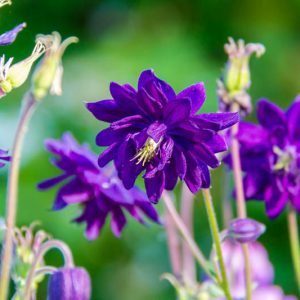
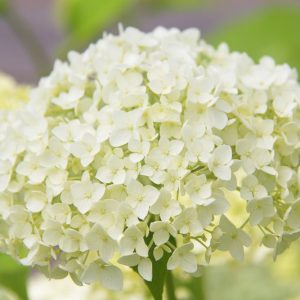
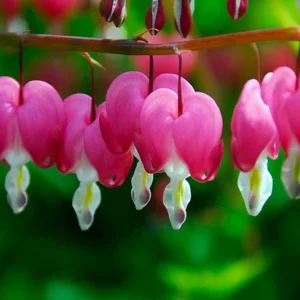
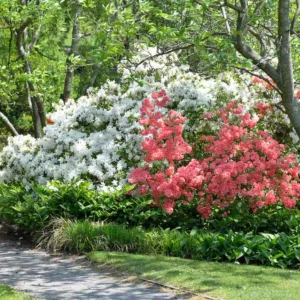
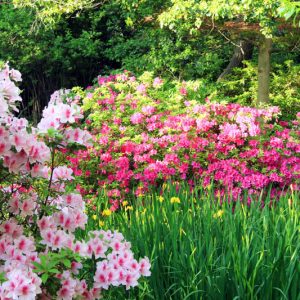
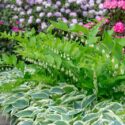
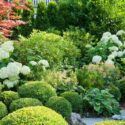
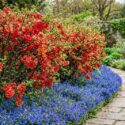
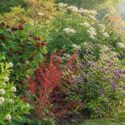
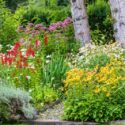
The violet-blue flowers of Rhododendron augustinii are especially effective beside white spring blooms, fresh green foliage, gold leaves, and woodland ferns. Appearance is only half the equation, however. Companions should also share its preference for compatible hardiness, acidic or acid-friendly soil, reliable moisture, good drainage, and partial shade.
Gardenia selects companions by looking first for overlap in hardiness, light, soil, moisture, and drainage, then considering mature size and seasonal interest. This avoids a common garden-design mistake: combining plants because their flowers look beautiful together even though their growing requirements do not.
Rhododendron augustinii looks beautiful with white spring flowers, golden foliage, and woodland ferns, but the best combinations must also share its requirements for soil, moisture, light, and climate.
Choose the blue-flowered rhododendron you want, find plants that genuinely share its conditions, and then check whether the combination will still work as everything matures.
Some selected forms produce striking violet-blue flowers, but the species is naturally variable and may bloom white, lavender, violet, or purple. For reliable blue-toned flowers, choose a named vegetatively propagated selection or buy a plant in bloom.
Rhododendron augustinii typically reaches about 5-8 feet (1.5-2.5 m) tall and wide in cultivation, although older plants may become larger in favorable conditions.
Partial shade is generally ideal. It can tolerate more sun in cool climates when soil moisture is reliable, but protection from intense afternoon heat is helpful in warmer gardens.
Rhododendron augustinii generally flowers in mid to late spring. Late spring frosts can damage developing buds or open flowers even when the shrub itself remains unharmed.
Yes. Like other rhododendrons, Rhododendron augustinii contains grayanotoxins and can be poisonous if ingested by people, pets, horses, and livestock.
Royal Horticultural Society – Rhododendron augustinii, plant characteristics, mature size, hardiness, flowering, and cultivation.
Trees and Shrubs Online – Rhododendron augustinii, botanical description, natural distribution, variation, and cultivated history.
Royal Horticultural Society – Rhododendron augustinii (Electra Group) ‘Electra’, flower characteristics and growing requirements.
Royal Horticultural Society – Rhododendron cultivation and propagation guidance.
Updated: October 2026 • Reviewed by Gardenia Editors
| Hardiness |
6 - 9 |
|---|---|
| Plant Type | Shrubs |
| Plant Family | Ericaceae |
| Genus | Rhododendron |
| Common names | Rhododendron |
| Exposure | Full Sun, Partial Sun |
| Season of Interest | Spring (Mid, Late) |
| Height | 5' - 8' (150cm - 240cm) |
| Spread | 5' - 8' (150cm - 240cm) |
| Spacing | 60" - 96" (150cm - 240cm) |
| Maintenance | Average |
| Water Needs | Average |
| Soil Type | Clay, Loam, Sand |
| Soil pH | Acid |
| Soil Drainage | Moist but Well-Drained |
| Characteristics | Showy, Evergreen |
| Tolerances | Rabbit, Clay Soil |
| Garden Uses | Hedges And Screens |
| Garden Styles | Informal and Cottage, Woodland Garden |
| Toxic to Humans | Low severity |
| Toxic to Cats | Toxic |
| Toxic to Dogs | Toxic |
| Toxic to Horses | Toxic |

| Hardiness |
6 - 9 |
|---|---|
| Plant Type | Shrubs |
| Plant Family | Ericaceae |
| Genus | Rhododendron |
| Common names | Rhododendron |
| Exposure | Full Sun, Partial Sun |
| Season of Interest | Spring (Mid, Late) |
| Height | 5' - 8' (150cm - 240cm) |
| Spread | 5' - 8' (150cm - 240cm) |
| Spacing | 60" - 96" (150cm - 240cm) |
| Maintenance | Average |
| Water Needs | Average |
| Soil Type | Clay, Loam, Sand |
| Soil pH | Acid |
| Soil Drainage | Moist but Well-Drained |
| Characteristics | Showy, Evergreen |
| Tolerances | Rabbit, Clay Soil |
| Garden Uses | Hedges And Screens |
| Garden Styles | Informal and Cottage, Woodland Garden |
| Toxic to Humans | Low severity |
| Toxic to Cats | Toxic |
| Toxic to Dogs | Toxic |
| Toxic to Horses | Toxic |
How many Rhododendron augustinii (Augustine Rhododendron) do I need for my garden?
| Plant | Quantity | |
|---|---|---|
| Rhododendron augustinii (Augustine Rhododendron) | N/A | Buy Plants |
Create a membership account to save your garden designs and to view them on any device.
Becoming a contributing member of Gardenia is easy and can be done in just a few minutes. If you provide us with your name, email address and the payment of a modest $25 annual membership fee, you will become a full member, enabling you to design and save up to 25 of your garden design ideas.
Join now and start creating your dream garden!