Tree Rhododendron, Himalayan Rose Tree, Burans, Gurans
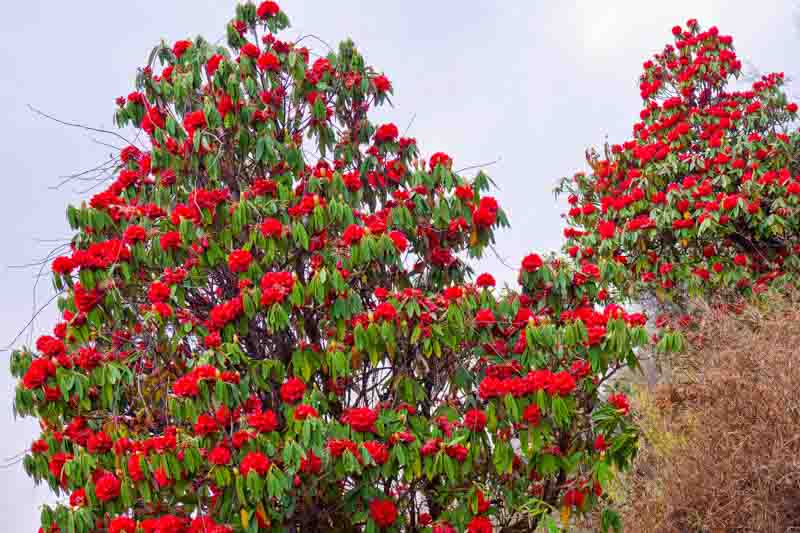


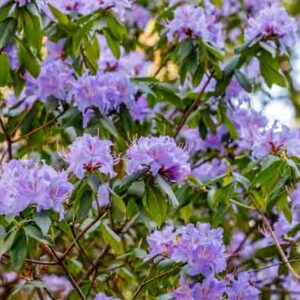
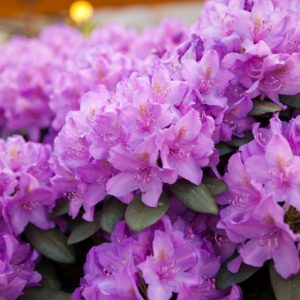
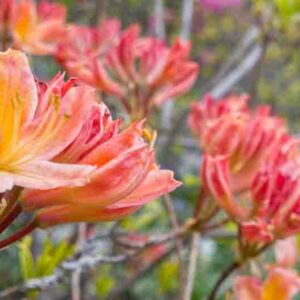
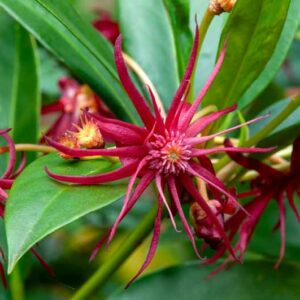
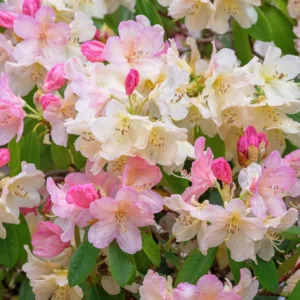
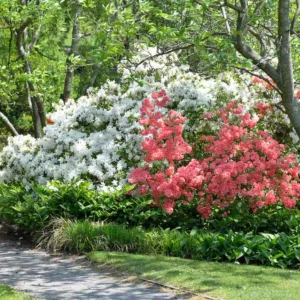
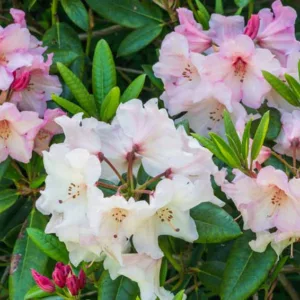
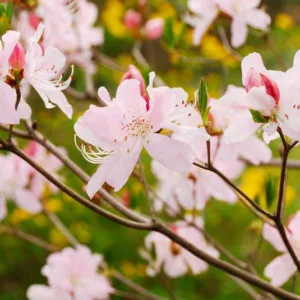
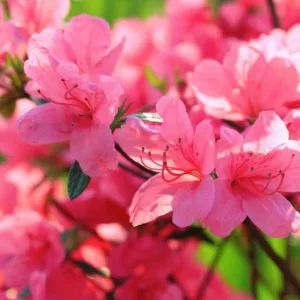
Rhododendron arboreum (Himalayan Rose Tree) is one of the great tree-forming rhododendrons. In spring, mature plants can be covered with rounded clusters of crimson, scarlet, pink, or occasionally white flowers above large, glossy evergreen leaves. Turn over a mature leaf and another distinctive feature appears: a dense covering of silvery, fawn, or cinnamon-colored hairs. Native to mountain forests across southern Asia, this long-lived species can eventually develop into a substantial flowering tree.
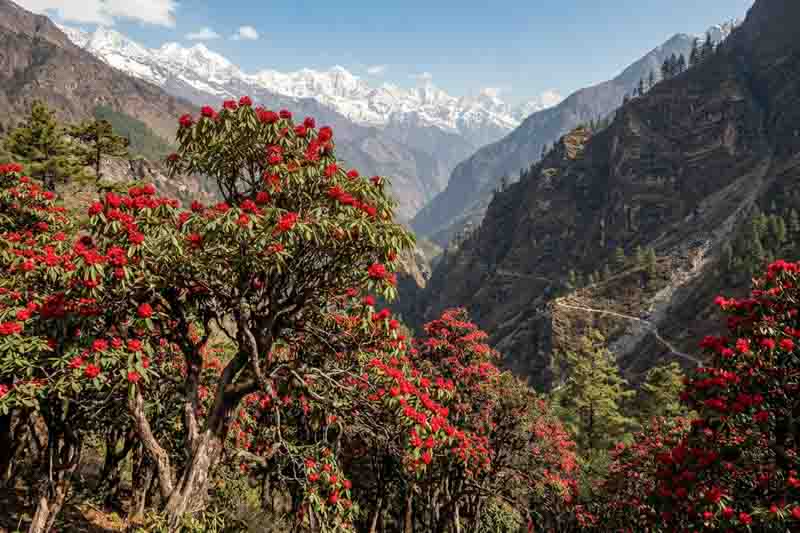
Summary: Large evergreen shrub or tree with spectacular spring flowers and distinctive leaf undersides.
Use: Superb specimen for sheltered woodland gardens, large borders, and acidic landscapes.
Highlight: Crimson, scarlet, pink, or white flower clusters above handsome evergreen foliage.
Important: Hardiness and appearance vary with subspecies and provenance.
| Botanical Name | Rhododendron arboreum Sm. |
|---|---|
| Common Names | Himalayan Rose Tree, Tree Rhododendron, Burans |
| Family | Ericaceae |
| Plant Type and Habit | Evergreen shrub or tree, becoming broad-crowned with age |
| Hardiness | RHS H4 (14-23°F / -10 to -5°C); often grown in USDA Zones 7-9. Cold tolerance varies with provenance and local conditions. |
| Size | 25-40 ft. tall (8-12 m), 8-13 ft. wide (2.5-4 m) in cultivation; potentially taller in the wild |
| Growth Rate | Slow; approximately 20-50 years to mature size |
| Exposure | Partial shade; sheltered from drying winds |
| Soil | Acidic, humus-rich, moist but well-drained loam or sandy soil |
| Foliage | Glossy evergreen leaves with silvery to cinnamon-colored undersides |
| Flowers | Rounded clusters of crimson, scarlet, pink, or white flowers in early to mid-spring, depending on climate. |
Rhododendron arboreum occurs across different elevations and climates, so plants carrying the same species name are not necessarily equally hardy. Gardenia recommends considering provenance alongside winter cold, summer heat, exposure, and soil conditions rather than relying on a single hardiness figure.
Rhododendron arboreum is native across a broad area of southern Asia, including the Himalayas, India, Nepal, Bhutan, southern Tibet, and northern Myanmar, with populations extending to southern India and Sri Lanka. It grows naturally in mountain forests, often among oaks and other broadleaf trees. Known as Burans or Gurans in parts of the Himalayas, it is also the national flower of Nepal.
Young plants are upright and densely leafy, but older specimens develop substantial trunks, spreading branches, and broad crowns. In cultivation, it can reach 25-40 ft. (8-12 m) in height and 8-13 ft. (2.5-4 m) in spread over approximately 20-50 years. Wild trees can become considerably taller.
The large, leathery leaves are glossy dark green above. Beneath, they carry a dense layer of fine hairs, known as indumentum, which may be silvery, fawn, rusty, or cinnamon-brown. This contrasting underside is one of the species’ most attractive features.
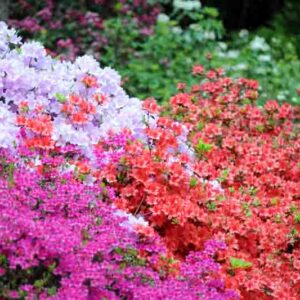
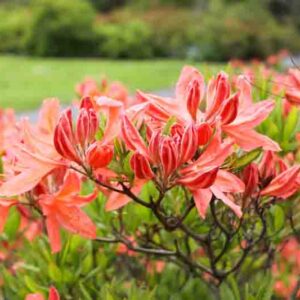
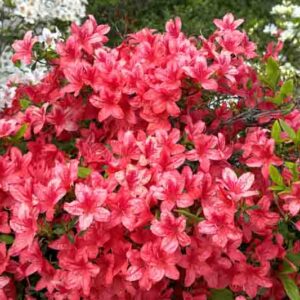
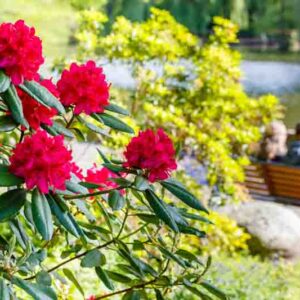
In early to mid-spring, dense rounded trusses of bell-shaped flowers appear at the branch tips. Crimson and scarlet are characteristic, but pink and white forms also occur. Flowering time varies with climate, elevation, and provenance.
Rhododendron arboreum varies considerably across its range. Accepted forms include subsp. arboreum, subsp. cinnamomeum, subsp. nilagiricum, and subsp. zeylanicum, among others, while varieties include white-flowered var. album and pink-flowered var. roseum. Geographic forms can differ in indumentum, stature, flower color, and cold tolerance.
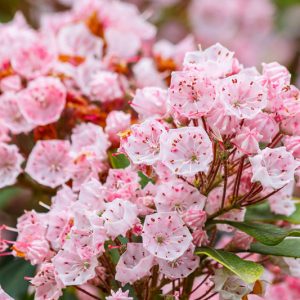
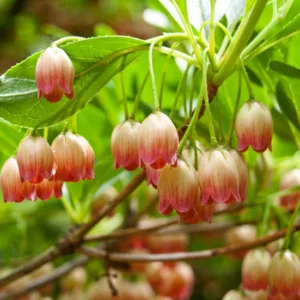
Red flowers alone do not identify Rhododendron arboreum. Gardenia recommends looking at the tree-forming habit, large leathery leaves, dense indumentum beneath mature foliage, flower structure, and provenance together.
The flowers provide nectar and pollen to visiting animals in their native ecosystems. Ecological relationships documented in Asian mountain forests should not, however, automatically be assumed in gardens elsewhere.
Rhododendrons are generally resistant to rabbits, although hungry animals may still browse them. R. arboreum, like other rhododendrons, contains toxic grayanotoxins. Leaves, flowers, nectar, and other plant tissues can be poisonous if ingested by people, dogs, cats, horses, and livestock.
Partial shade or dappled light is ideal, particularly where summers are warm. Morning sun with afternoon protection encourages flowering while reducing heat and moisture stress.
Grow Himalayan Rose Tree in acidic, humus-rich soil that remains moist but drains freely. Loam or sandy soil enriched with organic matter works well. Avoid alkaline ground and waterlogged sites. Water regularly during establishment and prolonged dry periods, and mulch the shallow root zone to conserve moisture and keep roots cool.
Before planting, Gardenia recommends checking four factors: winter cold, summer heat and exposure, acidic soil with good drainage, and enough permanent space for the mature tree. A sheltered position cannot compensate for waterlogged or alkaline soil, just as perfect soil cannot overcome an unsuitable climate.
Plant in spring or fall, setting the root ball no deeper than it grew in its container. Water thoroughly and apply leaf mold, composted bark, or another organic mulch, keeping it away from the trunk.
Established plants need little pruning beyond removing dead, damaged, or poorly placed branches. Avoid deep cultivation beneath the canopy because rhododendron roots are shallow and easily damaged.
Propagation is possible from seed, while selected forms can be increased by cuttings, layering, or grafting. Seedlings may vary in flower color, foliage, and hardiness, so vegetative propagation is preferable when a particular selection must remain true to type.
Unsuitable growing conditions cause many of the most serious problems. Poor drainage can encourage Phytophthora root rot and crown rot, while alkaline soil may cause chlorosis. Hot, dry exposure can result in leaf scorch and moisture stress. Potential pests include Vine weevils, aphids, scale insects, and lace bugs; rhododendrons may also suffer from bud blast, petal blight, and leaf diseases.
Yellow tissue between greener veins can indicate chlorosis associated with high soil pH, while yellowing accompanied by wilting or branch decline warrants a check of drainage and root health. Identify the cause before adding fertilizer.
Good companions should overlap in their preference for acidic soil, partial shade, reliable moisture, and good drainage. Mature size matters too, especially around a rhododendron that may remain in place for decades.
Gardenia selects companions by looking first for overlap in hardiness, light, soil, moisture, and drainage, then considering mature size and seasonal interest. Plants that look beautiful together are not necessarily plants that will grow well together.
A Himalayan Rose Tree can occupy the same garden for decades. Before planting, check not only whether it can survive your conditions, but whether it and its companions will still have suitable light, moisture, and space as they mature.
This turns a list of attractive plants into something more useful: a planting designed around the conditions they actually share.
Rhododendron arboreum commonly reaches about 25-40 feet (8-12 m) tall and 8-13 feet (2.5-4 m) wide in cultivation, although wild specimens can grow considerably taller.
No. Partial shade or dappled sunlight is generally best. Morning sun with protection from intense afternoon sun can encourage flowering while reducing heat and moisture stress.
The RHS rates Rhododendron arboreum H4, approximately 14 to 23°F (-10 to -5°C), but cold tolerance varies with subspecies, provenance, plant maturity, and exposure.
Rhododendron arboreum generally blooms in spring, producing rounded clusters of crimson, scarlet, pink, or occasionally white flowers. Timing varies with climate, elevation, and provenance.
Yes. Rhododendron arboreum contains grayanotoxins. Leaves, flowers, nectar, and other plant tissues can be toxic if ingested by people, pets, horses, and livestock.
Royal Horticultural Society – Rhododendron arboreum, plant characteristics, mature size, hardiness, and cultivation.
Royal Botanic Gardens, Kew – Plants of the World Online, Rhododendron arboreum Sm., accepted taxonomy and native distribution.
Trees and Shrubs Online – Rhododendron arboreum, botanical description, geographical variation, and cultivated history.
Royal Horticultural Society – Rhododendron cultivation and growing guidance.
Updated: October 2026 • Reviewed by Gardenia Editors
| Hardiness |
7 - 9 |
|---|---|
| Plant Type | Shrubs, Trees |
| Plant Family | Ericaceae |
| Genus | Rhododendron |
| Common names | Rhododendron |
| Exposure | Partial Sun |
| Season of Interest | Spring (Early, Mid) |
| Height | 25' - 40' (7.6m - 12.2m) |
| Spread | 8' - 13' (240cm - 4m) |
| Spacing | 96" - 156" (240cm - 4m) |
| Maintenance | Average |
| Water Needs | Average |
| Soil Type | Loam, Sand |
| Soil pH | Acid |
| Soil Drainage | Moist but Well-Drained |
| Characteristics | Showy, Evergreen |
| Tolerances | Rabbit |
| Garden Styles | Informal and Cottage, Woodland Garden |
| Toxic to Humans | Low severity |
| Toxic to Cats | Toxic |
| Toxic to Dogs | Toxic |
| Toxic to Horses | Toxic |


| Hardiness |
7 - 9 |
|---|---|
| Plant Type | Shrubs, Trees |
| Plant Family | Ericaceae |
| Genus | Rhododendron |
| Common names | Rhododendron |
| Exposure | Partial Sun |
| Season of Interest | Spring (Early, Mid) |
| Height | 25' - 40' (7.6m - 12.2m) |
| Spread | 8' - 13' (240cm - 4m) |
| Spacing | 96" - 156" (240cm - 4m) |
| Maintenance | Average |
| Water Needs | Average |
| Soil Type | Loam, Sand |
| Soil pH | Acid |
| Soil Drainage | Moist but Well-Drained |
| Characteristics | Showy, Evergreen |
| Tolerances | Rabbit |
| Garden Styles | Informal and Cottage, Woodland Garden |
| Toxic to Humans | Low severity |
| Toxic to Cats | Toxic |
| Toxic to Dogs | Toxic |
| Toxic to Horses | Toxic |
How many Rhododendron arboreum (Tree Rhododendron) do I need for my garden?
| Plant | Quantity | |
|---|---|---|
| Rhododendron arboreum (Tree Rhododendron) | N/A | Buy Plants |
Create a membership account to save your garden designs and to view them on any device.
Becoming a contributing member of Gardenia is easy and can be done in just a few minutes. If you provide us with your name, email address and the payment of a modest $25 annual membership fee, you will become a full member, enabling you to design and save up to 25 of your garden design ideas.
Join now and start creating your dream garden!