American Germander, Canada Germander, Canadian Germander, Germander, Wood Sage, American Wood Sage, Canadian Wood Sage, Hairy Germander, Horsemint, Lavender Bee Balm, Teucrium boreale
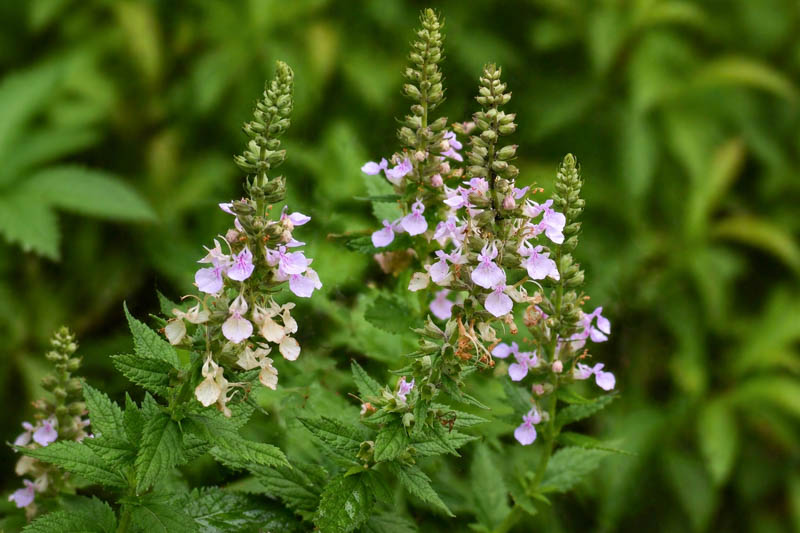


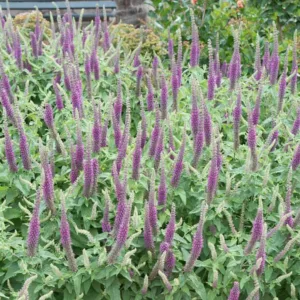
Teucrium canadense, commonly known as American germander, Canada germander, or wood sage, is a native North American perennial for moist meadows, rain gardens, streambanks, pollinator gardens, naturalized borders, and wildlife-friendly landscapes. A rhizomatous member of the mint family, it forms upright square stems with aromatic foliage and summer spikes of pink, lavender-pink, or purplish flowers that attract bees, butterflies, and other beneficial insects.
Teucrium canadense is a native, moisture-loving, rhizomatous perennial for full sun to part shade. It is valued for long summer bloom, pollinator appeal, wetland tolerance, and natural meadow character. Grow it in moist, fertile, well-drained to wet soil, give it room to spread, and cut it back after flowering if a tidier look is desired.
Use: Excellent for pollinator gardens, moist meadows, rain gardens, wetland edges, streambanks, naturalized borders, native plant gardens, cottage-style plantings, and large wildlife-friendly beds.
Highlight: Pink to lavender-pink flower spikes appear from summer into early fall.
Design note: Best in drifts or colonies; too spreading for tiny, tightly controlled spaces unless contained or edited.
| Botanical Name | Teucrium canadense |
|---|---|
| Family | Mint family – Lamiaceae |
| Common Names | American germander, Canada germander, wood sage, germander |
| Native Range | Native across much of North America, including most of the United States and parts of Canada |
| Plant Type | Rhizomatous herbaceous perennial |
| Hardiness | Typically grown in USDA Zones 4-9 |
| Height | 18-36 in. tall |
| Spread | 18-36 in. wide, spreading wider over time by rhizomes |
| Sun Exposure | Full sun to part shade |
| Soil | Moist, fertile soil; tolerates wet meadows, marsh edges, ditches, and streamside conditions |
| Bloom Time | June to September, depending on region |
| Flower Color | Pink, lavender-pink, purplish-pink, occasionally pale lilac |
| Wildlife Value | Attracts bees, butterflies, flies, and other beneficial insects |
| Deer Resistance | Often avoided because of bitter, aromatic foliage, but not deer-proof |
| Maintenance Level | Low to moderate; spreading habit may need management |
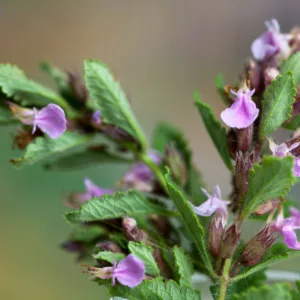
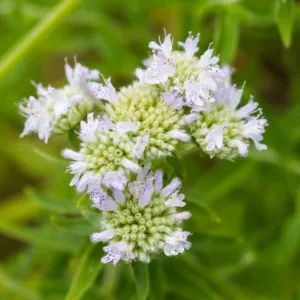
American germander is a native perennial wildflower with upright stems, opposite toothed leaves, and terminal spikes of small, tubular, lipped flowers. It grows from rhizomes and is best used where a plant can spread naturally rather than remain as a single tight clump.
It suits gardeners who want native perennials that support wildlife and handle damp places. A wet corner, rain garden basin, meadow edge, ditch, or streamside planting can become more colorful and habitat-rich with Teucrium canadense.
Good to know: American germander is in the mint family, but it is not a culinary mint. It spreads by rhizomes and behaves more like a native meadow perennial than a clipped ornamental herb.
Teucrium canadense typically grows 18-36 inches tall. The stems are square, upright, and often hairy. The leaves are opposite and toothed. The flowers are usually pinkish, lavender-pink, or purplish, with a lower lip that helps visiting insects land.
Teucrium canadense is native to much of North America, including most of the United States and parts of Canada. In the wild, it grows in moist woods, thickets, marshes, wet meadows, streambanks, bottomlands, prairie swales, damp openings, and other sites with reliable moisture.
American germander usually blooms from June to September, depending on climate, latitude, and moisture. In warm regions, flowering may begin earlier; in northern gardens, it often peaks in midsummer.
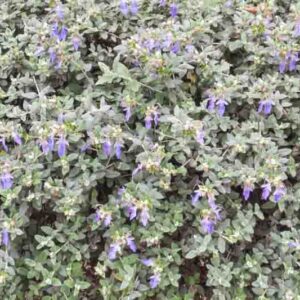
The foliage is green, toothed, and held on upright stems. The plant starts as a clump but spreads by rhizomes. This is useful in meadows, rain gardens, wet borders, and habitat plantings, but it may need editing in small formal beds.
Most plants reach about 1.5-3 feet tall. Spread depends on soil moisture, fertility, and competition. In leaner or drier soil, colonies expand more slowly. In moist, fertile ground, they may spread steadily.
American germander is cold-hardy and generally suitable for USDA Zones 4-9. It dies back in winter and returns from the crown and rhizomes in spring. Cut back old stems in late winter or early spring, or leave some standing for winter structure and insect habitat.
American germander is valuable in pollinator-focused landscapes because its lipped flowers suit bees and other insects. Bumblebees, smaller native bees, butterflies, flies, and other beneficial insects may visit the blooms. It also adds structure to damp plantings when combined with sedges, rushes, grasses, and other native perennials.
American germander is often considered relatively deer-resistant because of its bitter, aromatic foliage, but no plant is completely deer-proof when deer pressure is high.
Young shoots, drought-stressed plants, and newly installed perennials may still be sampled.
American germander is not a dryland plant. It can handle short dry spells once established, but it grows and flowers best in moist soil. In hot, dry sites, it may become shorter, sparse, or stressed.
Moisture is the secret to success: American germander performs best where soil stays evenly moist, especially during active growth and flowering.
Reliable pet-toxicity listings for Teucrium canadense are limited, so it should not be described as pet-safe. Keep pets, children, and livestock from grazing ornamental or wild plants. Because the genus Teucrium includes species with known medicinal and safety concerns, avoid internal use unless guided by a qualified professional.
American germander can be aggressive in rich, moist soil. In a rain garden or meadow, its rhizomes help knit the planting together. In a small ornamental bed, they may be too assertive. Site it where colonizing is welcome, or divide and remove unwanted rhizomes as needed.
Best description: native but spreading. American germander is ideal for naturalized moist plantings, but it should be monitored in small, formal, or tightly packed beds.
American germander rarely needs heavy feeding. Compost is usually enough. Too much fertilizer can produce lush, floppy growth and may encourage spread. In native plantings, favor organic matter over high-nitrogen fertilizer.
Mulch with shredded leaves, compost, or fine bark to hold moisture and reduce weeds while plants establish. In meadow-style plantings, sedges, grasses, and neighboring perennials eventually act as living mulch.
Design tip: American germander looks best in a drift. Pair it with moisture-loving grasses and bold native flowers so its spreading habit feels intentional, not accidental.
American germander does not need staking in most sunny, moist locations. In rich soil and part shade, stems may lean after heavy rain. Grow it among sturdy companions such as switchgrass, blue flag iris, mountain mint, Joe Pye weed, or swamp milkweed for natural support.
Cut plants back after the main flowering period to refresh foliage, reduce self-seeding, or tidy the planting. For habitat value, leave some stems standing through winter and remove old growth in late winter or early spring.
Pruning tip: For a polished garden look, shear or cut back after bloom. For habitat value, leave some stems standing through winter and clean up in early spring.
Winter care is minimal. Top growth dies back, while roots and rhizomes overwinter underground. In exposed gardens, a light layer of leaf mulch can protect the crown and conserve moisture. Avoid piling soggy mulch directly over crowns in poorly drained soil.
American germander can grow in a container, but pot culture limits its natural spreading habit. Use a large container, a moisture-retentive but well-aerated mix, and regular summer watering. Divide when crowded. A pot is most useful when you want the flowers but need to control the rhizomes.
This is where Teucrium canadense shines. Plant it in the middle to upper zone of a rain garden, where soil stays moist but not constantly underwater. In a meadow, combine it with native grasses, sedges, and moisture-loving perennials that can compete politely. The result is a layered planting with summer bloom, texture, movement, and pollinator value.
| Task | Best Time |
|---|---|
| Planting | Plant in spring or fall when soil moisture is easier to maintain. |
| Division | Divide in spring or early fall. |
| Bloom | Expect flowers from June to September. |
| Pruning | Cut back after flowering or leave stems for winter habitat. |
| Cleanup | Remove old stems in late winter or early spring. |
American germander is easy to propagate by division because it spreads through rhizomes. Established clumps can be lifted and divided in spring or early fall. Each division should include healthy roots and growing points. It can also be grown from seed, although division is faster and more predictable.
Dig around the clump, lift a rooted section, and replant immediately into moist soil. Water well until new growth resumes.
Collect mature seed and sow it in a prepared native plant bed or seed tray. Germination can vary, so division is usually preferred.
Fast diagnostic: Poor flowering usually means shade or drought. Excessive spread usually means the plant is happy in moist, fertile soil. Flopping usually means rich soil, shade, or crowding.
American germander is generally low-maintenance in suitable conditions. Aphids may appear on tender growth, and spider mites can occur if plants are stressed by heat or drought. Slugs may browse young shoots in damp gardens. Root problems are uncommon in appropriate rain garden or meadow settings, but any perennial can decline in stagnant, anaerobic soil.
American germander differs from the clipped evergreen germanders used in Mediterranean-style gardens. Teucrium chamaedrys is often used as edging or in knot gardens, while Teucrium fruticans is a silvery shrub for mild climates. Teucrium canadense is taller, herbaceous, rhizomatous, and better suited to moist naturalistic plantings than formal hedging.
Good companions are moisture-loving perennials, grasses, sedges, and rushes that can share space with a spreading native. Options include Blue flag iris, cardinal flower, great blue lobelia, Joe Pye weed, spotted Joe Pye weed, hollow Joe Pye weed, New York ironweed, bee balm, wild bergamot, Virginia mountain mint, short-toothed mountain mint, Culver’s root, obedient plant, swamp sunflower, New England aster, blue vervain, tussock sedge, soft rush, switchgrass, boneset, white turtlehead, red turtlehead, smooth goldenrod, and rough-stemmed goldenrod.
Teucrium canadense, commonly called American germander or Canada germander, is a native North American herbaceous perennial in the mint family.
Yes. American germander is native to much of North America, including most of the United States and parts of Canada.
American germander usually blooms from June to September, depending on region and growing conditions.
It typically grows 18 to 36 inches tall.
Yes. American germander spreads by rhizomes and can form colonies, especially in moist, fertile soil.
American germander is native, not an exotic invasive plant, but it can spread aggressively in favorable moist soil and may need management in small gardens.
It prefers full sun to part shade and moist soil, making it well suited to rain gardens, wet meadows, streambanks, and damp borders.
Yes. The flowers attract bees, butterflies, flies, and other beneficial insects during the summer bloom season.
It is often avoided because of its bitter, aromatic foliage, but it should be considered deer-resistant rather than deer-proof.
It can tolerate short dry periods once established, but it performs best in consistently moist soil.
Yes. American germander is an excellent choice for rain gardens where soil remains moist but is not permanently submerged.
Control spread by dividing clumps, removing unwanted rhizomes, planting it with strong companions, or placing it where natural colonizing is welcome.
American germander should not be promoted as an edible herb. Grow it as an ornamental and ecological native plant, and avoid internal use without qualified guidance.
Good companions include swamp milkweed, blue flag iris, cardinal flower, mountain mint, Joe Pye weed, sedges, rushes, switchgrass, bee balm, asters, and goldenrods.
It can be cut back after flowering for tidiness or left standing through winter for structure and wildlife habitat, then cleaned up in early spring.
Updated: April 2026 • Reviewed by Gardenia Editors
| Hardiness |
4 - 9 |
|---|---|
| Plant Type | Perennials |
| Plant Family | Lamiaceae |
| Genus | Teucrium |
| Common names | Germander |
| Exposure | Full Sun, Partial Sun |
| Season of Interest | Summer (Early, Mid, Late), Fall |
| Height | 1' - 3' (30cm - 90cm) |
| Spread | 1' - 3' (30cm - 90cm) |
| Spacing | 18" - 36" (50cm - 90cm) |
| Maintenance | Average |
| Water Needs | Average |
| Soil Type | Clay, Loam, Sand |
| Soil pH | Acid, Alkaline, Neutral |
| Soil Drainage | Moist but Well-Drained |
| Characteristics | Showy |
| Native Plants | United States, Pennsylvania, Rhode Island, Vermont, Connecticut, Delaware, Maine, Massachusetts, Maryland, New Hampshire, New Jersey, New York, California, Northeast, Midwest, Pacific Northwest, Southeast, Southwest, Rocky Mountains, Illinois, Indiana, Iowa, Kansas, Michigan, Minnesota, Missouri, Nebraska, North Dakota, Ohio, South Dakota, Wisconsin, Idaho, Oregon, Washington, Louisiana, Mississippi, North Carolina, South Carolina, Tennessee, Virginia, West Virginia, Alabama, Arkansas, Florida, Georgia, Kentucky, Texas, Arizona, Nevada, New Mexico, Oklahoma, Colorado, Montana, Utah, Wyoming |
| Tolerances | Clay Soil |
| Attracts | Bees, Butterflies |
| Garden Uses | Beds And Borders, Ponds And Streams, Rain Gardens |
| Garden Styles | Butterfly Garden, Informal and Cottage, Pollinator Garden, Prairie and Meadow, Woodland Garden |
| Toxic to Humans | Low severity |
| Toxic to Cats | No known toxicity |
| Toxic to Dogs | No known toxicity |
| Toxic to Horses | No known toxicity |


| Hardiness |
4 - 9 |
|---|---|
| Plant Type | Perennials |
| Plant Family | Lamiaceae |
| Genus | Teucrium |
| Common names | Germander |
| Exposure | Full Sun, Partial Sun |
| Season of Interest | Summer (Early, Mid, Late), Fall |
| Height | 1' - 3' (30cm - 90cm) |
| Spread | 1' - 3' (30cm - 90cm) |
| Spacing | 18" - 36" (50cm - 90cm) |
| Maintenance | Average |
| Water Needs | Average |
| Soil Type | Clay, Loam, Sand |
| Soil pH | Acid, Alkaline, Neutral |
| Soil Drainage | Moist but Well-Drained |
| Characteristics | Showy |
| Native Plants | United States, Pennsylvania, Rhode Island, Vermont, Connecticut, Delaware, Maine, Massachusetts, Maryland, New Hampshire, New Jersey, New York, California, Northeast, Midwest, Pacific Northwest, Southeast, Southwest, Rocky Mountains, Illinois, Indiana, Iowa, Kansas, Michigan, Minnesota, Missouri, Nebraska, North Dakota, Ohio, South Dakota, Wisconsin, Idaho, Oregon, Washington, Louisiana, Mississippi, North Carolina, South Carolina, Tennessee, Virginia, West Virginia, Alabama, Arkansas, Florida, Georgia, Kentucky, Texas, Arizona, Nevada, New Mexico, Oklahoma, Colorado, Montana, Utah, Wyoming |
| Tolerances | Clay Soil |
| Attracts | Bees, Butterflies |
| Garden Uses | Beds And Borders, Ponds And Streams, Rain Gardens |
| Garden Styles | Butterfly Garden, Informal and Cottage, Pollinator Garden, Prairie and Meadow, Woodland Garden |
| Toxic to Humans | Low severity |
| Toxic to Cats | No known toxicity |
| Toxic to Dogs | No known toxicity |
| Toxic to Horses | No known toxicity |
How many Teucrium canadense (American Germander) do I need for my garden?
| Plant | Quantity | |
|---|---|---|
| Teucrium canadense (American Germander) | N/A | Buy Plants |
Create a membership account to save your garden designs and to view them on any device.
Becoming a contributing member of Gardenia is easy and can be done in just a few minutes. If you provide us with your name, email address and the payment of a modest $25 annual membership fee, you will become a full member, enabling you to design and save up to 25 of your garden design ideas.
Join now and start creating your dream garden!
Create a membership account to save your garden designs and to view them on any device.
Becoming a contributing member of Gardenia is easy and can be done in just a few minutes. If you provide us with your name, email address and the payment of a modest $25 annual membership fee, you will become a full member, enabling you to design and save up to 25 of your garden design ideas.
Join now and start creating your dream garden!