Jasmine Types Explained: Best Varieties, Star Jasmine vs. True Jasmine, and Which Jasmine Smells the Strongest
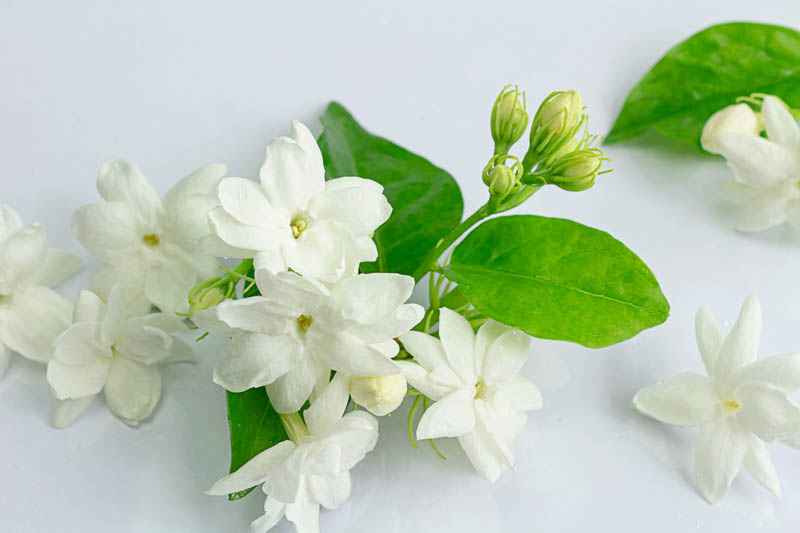


If you want a garden that looks elegant by day and smells unforgettable by evening, jasmine is hard to beat. The best jasmine plants do more than flower – they perfume patios, soften fences, dress up trellises, and turn ordinary garden corners into destinations.
This guide focuses on the best types of jasmine plants for gardens, with an emphasis on how to compare them quickly and choose the right one for your climate, design goals, and maintenance style. Since many gardeners already have detailed plant profiles on hand, the most useful place to start is with a side-by-side comparison.
If you only need a fast recommendation, start here. These picks highlight the strongest performers for the most common garden goals.
Some are true jasmines in the Jasminum genus. Others are jasmine relatives or plants with “jasmine” in the common name because they share a similar fragrance or garden role. That distinction matters when you compare hardiness, fragrance, growth habit, and long-term maintenance.
Use this table to compare hardiness, evergreen habit, mature size, bloom season, fragrance, and best garden uses. Because gardeners often use the word “jasmine” broadly, this table also flags whether each plant is a true jasmine or a jasmine relative.
| Variety | Hardiness | Evergreen | Size | Bloom Time | Fragrant | Uses |
|---|---|---|---|---|---|---|
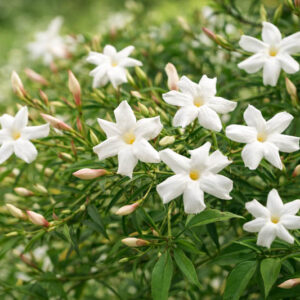
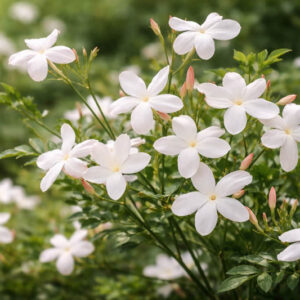
| Common Jasmine (Jasminum officinale) True jasmine |
7 – 10 | Semi-evergreen to deciduous | 15 – 30 ft | Late spring to fall | Yes | Trellises, arches, walls, containers |
| Pink Jasmine (Jasminum polyanthum) True jasmine |
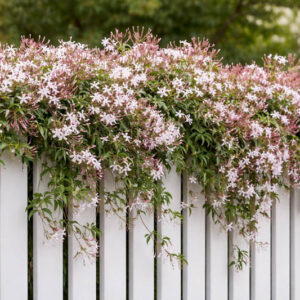
8 – 10 | Evergreen | 15 – 20 ft | Late winter to spring | Very | Trellises, fences, containers |
| Arabian Jasmine (Jasminum sambac) True jasmine |
9 – 11 | Evergreen | 6 – 10 ft | Summer | Extremely | Containers, courtyards, indoors |
| Downy Jasmine (Jasminum multiflorum) True jasmine |
9 – 11 | Evergreen | 5 – 10 ft | Spring through fall | Light to none | Hedges, shrubs, containers |
| Yellow Jasmine (Jasminum humile) True jasmine |
7 – 9 | Semi-evergreen | 8 – 20 ft | Late spring to fall | Light | Banks, walls, trellises, sunny borders |
| Primrose Jasmine (Jasminum mesnyi) True jasmine |
8 – 10 | Evergreen in mild climates | 6 – 10 ft | Late winter to spring | No or very light | Banks, walls, informal supports, cascading growth |
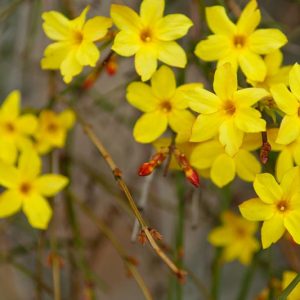
| Winter Jasmine (Jasminum nudiflorum) True jasmine |
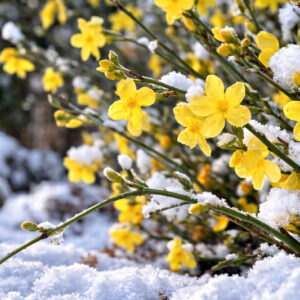
6 – 10 | Deciduous | 4 – 15 ft | Winter to early spring | No | Slopes, walls, winter color, erosion control |
| Spanish Jasmine (Jasminum grandiflorum) True jasmine |
9 – 10 | Semi-evergreen | 6 – 13 ft | Summer to fall | Very | Trellises, pergolas, walls, containers |
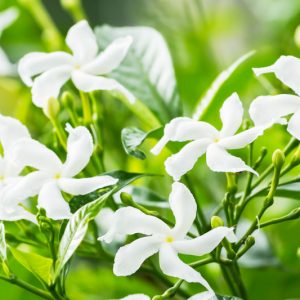
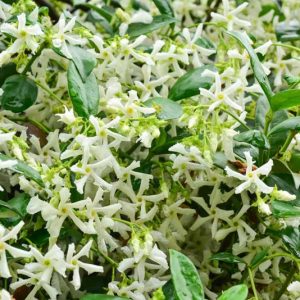
| Star Jasmine (Trachelospermum jasminoides) Jasmine relative |
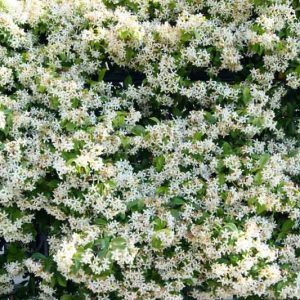
8 – 10 | Evergreen | 2 – 20 ft | Late spring to summer | Very | Fences, privacy screens, walls, groundcover, containers |
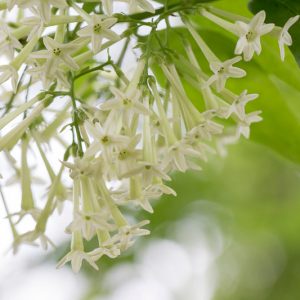
| Night-Blooming Jasmine (Cestrum nocturnum) Jasmine relative |
9 – 11 | Evergreen in frost-free areas | 8 – 10 ft | Warm season, often intermittent | Extremely at night | Moon gardens, patios, containers |
Jasmine earns space in a garden because it solves more than one design problem at once. A good variety can cover a fence, soften masonry, introduce fragrance where people actually sit, and extend seasonal interest beyond a brief bloom window. That is a rare combination. Many plants provide coverage. Many shrubs provide scent. Fewer plants do both while still looking refined when trained.
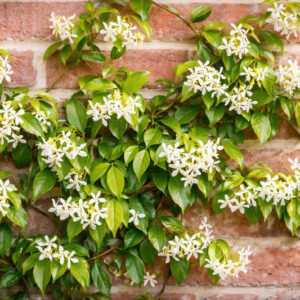
Jasmine is especially useful in the places where gardens often feel least finished: blank walls, narrow side yards, entrance trellises, and patio edges. In those settings, the plant is not just decorative. It acts like living architecture, turning a support structure into part of the design rather than something to hide.
Its value also depends on timing. Winter Jasmine matters because it flowers when most gardens are flat. Pink Jasmine matters because it carries strong scent when late winter still feels empty. Arabian Jasmine matters because it brings concentrated fragrance close to doors, seating, and containers. The best jasmine is rarely just “pretty.” It is the one that solves the right problem in the right season.
| Hardiness |
6 - 11 |
|---|---|
| Plant Type | Climbers, Shrubs |
| Genus | Jasminum, Trachelospermum |
| Exposure | Full Sun, Partial Sun |
| Season of Interest | Spring (Early, Mid, Late), Summer (Early, Mid, Late), Fall, Winter |
| Maintenance | Low |
| Water Needs | Average |
| Soil Type | Chalk, Loam, Sand |
| Soil pH | Acid, Alkaline, Neutral |
| Soil Drainage | Moist but Well-Drained, Well-Drained |
| Characteristics | Showy |
| Attracts | Bees, Butterflies |
| Landscaping Ideas | Arbors, Pergolas, Trellises, Beds And Borders, Ground Covers, Patio And Containers, Wall-Side Borders |
| Garden Styles | City and Courtyard, Coastal Garden, Informal and Cottage |
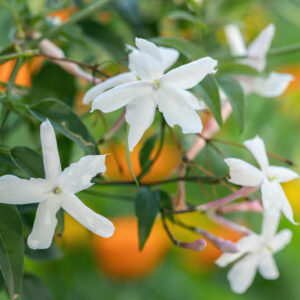
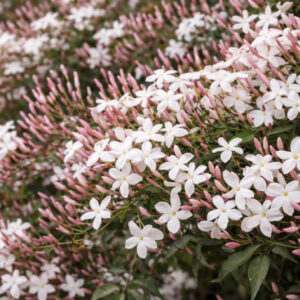
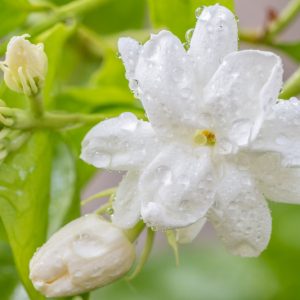
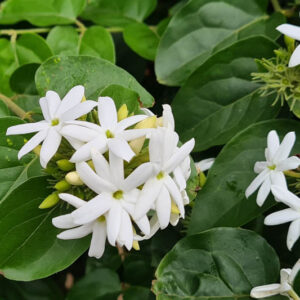
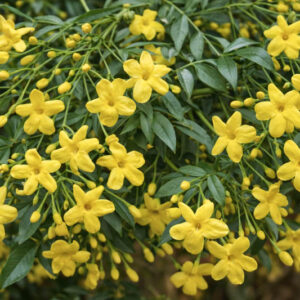
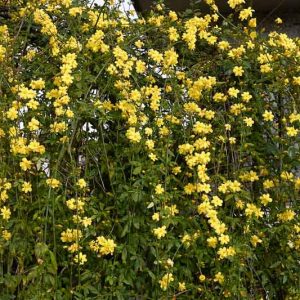
The best jasmine is not always the most fragrant or the fastest-growing. The right choice depends on winter lows, the kind of support available, how close the plant will be to people, and whether you want an evergreen screen, a container specimen, or a seasonal highlight.
1 Start with climate. If winter lows are the main limitation, Winter Jasmine and Common Jasmine are usually safer bets than tender species such as Arabian Jasmine, Spanish Jasmine, or Night-Blooming Jasmine.
2 Choose by garden job. For evergreen screening, Star Jasmine is usually more dependable than a looser, deciduous type. For concentrated scent near a chair, gate, or window, Arabian Jasmine often outperforms larger landscape vines because the flowers stay closer to where people pause.
3 Match the habit to the structure. Twining or trainable jasmines suit trellises and arches. Arching or scrambling plants such as Primrose Jasmine and Winter Jasmine are often more convincing when allowed to spill over walls, banks, or retaining edges.
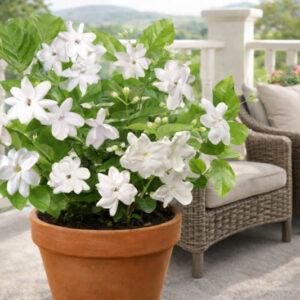
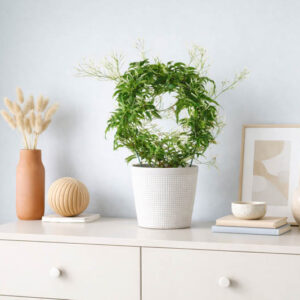
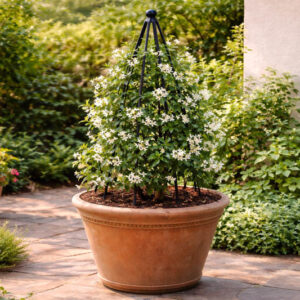
4 Decide whether you need a container plant. Arabian Jasmine, Pink Jasmine, and Star Jasmine adapt well to pots with regular feeding, drainage, and pruning. Very vigorous landscape types are usually easier to manage in the ground.
5 Be realistic about maintenance. Jasmine looks effortless only when it is guided early. A few ties, a clear support, and pruning at the correct time make the difference between a plant that feels intentional and one that quickly looks tangled.
Jasmine plants are at their best when they are treated as architectural plants, not just flowering extras. They can frame an entry, draw the eye upward, connect garden rooms, or soften hardscape edges that otherwise feel rigid.
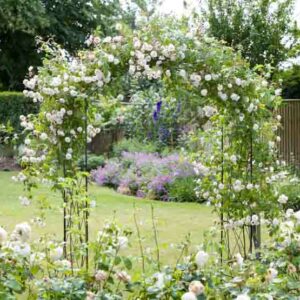
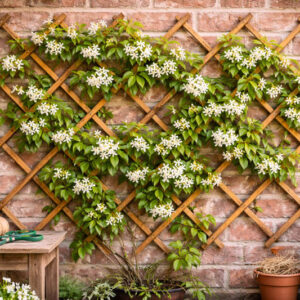
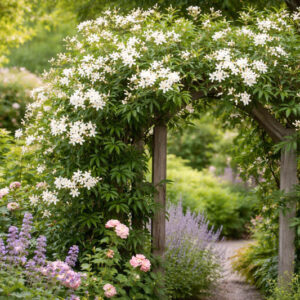
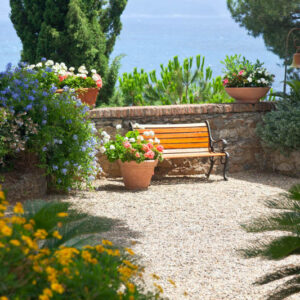
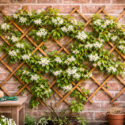
One of the strongest uses is on a trellis or arbor. This gives the vine a clear structure to climb while keeping flowers and fragrance at nose level. Another excellent application is along a pergola, where the overhead bloom and scent create a stronger immersive effect.
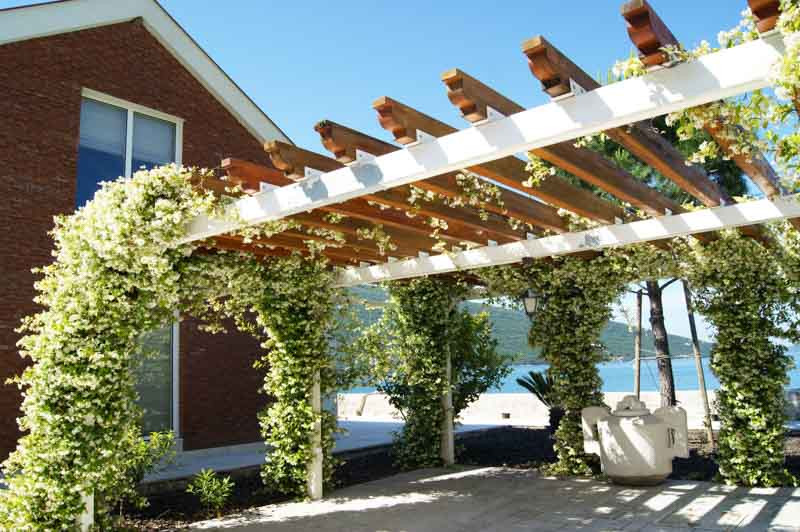
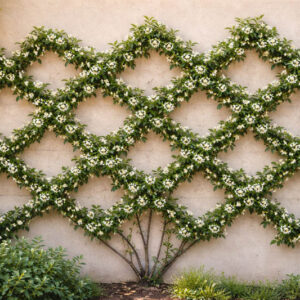
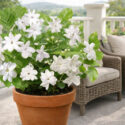
Jasmine also excels on privacy screens and boundary fences. In smaller gardens, this allows one plant to do the work of decoration, screening, and fragrance all at once. For containers, more compact or manageable types like Arabian Jasmine are particularly useful, especially in courtyards and balcony gardens.
In sloped sites or informal landscapes, arching jasmines such as Winter Jasmine and Primrose Jasmine can provide drape, movement, and erosion support. They may not behave like classic twining vines, but they are still highly effective garden plants.
Most true jasmines in the genus Jasminum are generally regarded as non-toxic to dogs, cats, and horses. That includes popular garden choices such as common jasmine (Jasminum officinale). Star jasmine (Trachelospermum jasminoides) is also generally listed as non-toxic to dogs and cats. Even so, any plant material can cause mild stomach upset if chewed in quantity, so it’s still wise to discourage nibbling.
The main exception in this guide is night-blooming jasmine (Cestrum nocturnum). Despite its name, it is not a true jasmine, and all parts of the plant are considered toxic if eaten, with berries posing particular concern. If you garden with curious pets or small children, place it out of reach or choose one of the non-toxic true jasmines instead.
Some jasmine types or jasmine relatives behave politely in one climate and aggressively in another. Fast-growing plants such as Pink Jasmine or Star Jasmine may need firmer control in mild regions, while tender species can be completely manageable where cold limits growth. Regional behavior always matters more than a generic reputation, so local extension guidance is worth checking before mass planting.
Tender jasmines such as Arabian Jasmine, Spanish Jasmine, and Night-Blooming Jasmine are often easiest to manage in containers in cooler climates. That allows gardeners to move them into a bright protected space before frost. A sunny room, greenhouse, or enclosed porch is usually more realistic than trying to keep these species alive in exposed winter conditions outside their comfort zone.
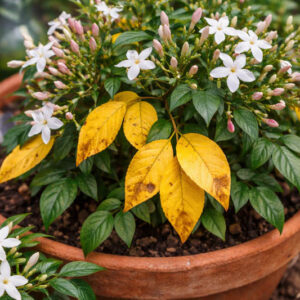
For pots and small courtyards, Arabian Jasmine is usually the best fragrance-first choice, Pink Jasmine is excellent for seasonal impact on a support, and Star Jasmine is one of the strongest evergreen options for long-term structure. Large, vigorous landscape plants can start in containers, but they rarely stay at their best there indefinitely.
Jasmine care is often described as simple, and in many cases that is true. But performance depends heavily on getting a few core conditions right.
Sun exposure is the first one. Most jasmine varieties flower best with generous light, though some tolerate part shade. Too little sun usually means fewer blooms, weaker stems, and a less dense plant.
Water management is the next big factor. Newly planted jasmine needs consistent moisture while establishing, but mature plants usually perform best in well-drained soil with moderate watering. Overwatering causes just as many problems as underwatering, especially in containers or heavy soils.
Support and pruning are equally important. Many gardeners assume jasmine climbs neatly on its own. In reality, most varieties benefit from tying, guiding, and occasional shaping. A few minutes of training early in the season can produce a much better display later.
Feeding should be moderate, not excessive. Heavy nitrogen often creates lush green growth at the expense of flowers. For most home landscapes, steady soil health and sensible pruning matter more than aggressive fertilization.
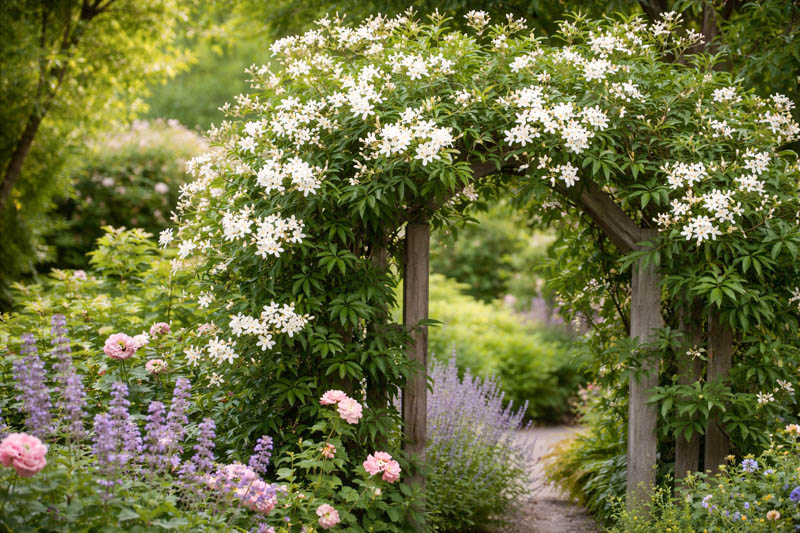
1 The first mistake is assuming every plant called jasmine behaves like a twining, fragrant Jasminum. Star Jasmine and Night-Blooming Jasmine are useful garden plants, but they are not true jasmines botanically and they should not be evaluated as though they were identical substitutes.
2 The second mistake is choosing only by scent. A powerfully fragrant plant that needs frost protection, outgrows its support, or blooms at the wrong time for the space will disappoint even if the flowers smell wonderful.
3 The third mistake is treating all supports the same. A pergola, narrow trellis, retaining wall, and patio pot ask for very different habits. Matching plant structure to physical structure usually matters more than choosing the most famous variety.
4 The fourth mistake is forgetting winter strategy. In cool climates, the real question is often not “Can I grow this jasmine?” but “Do I want to overwinter it indoors every year?”
The best jasmine for your garden depends on the job you need it to do. For classic vine character and long-season perfume, choose Common Jasmine. For evergreen screening, Star Jasmine remains one of the strongest all-around options even though it is not a true jasmine. For container fragrance, Arabian Jasmine is one of the most satisfying choices. For cold climates, Winter Jasmine earns its place by flowering when little else does.
The smartest question is not “Which jasmine is best?” but “Which jasmine fits this support, this climate, and this moment of the garden?” Once that is clear, the right plant becomes much easier to choose.
| Hardiness |
6 - 11 |
|---|---|
| Plant Type | Climbers, Shrubs |
| Genus | Jasminum, Trachelospermum |
| Exposure | Full Sun, Partial Sun |
| Season of Interest | Spring (Early, Mid, Late), Summer (Early, Mid, Late), Fall, Winter |
| Maintenance | Low |
| Water Needs | Average |
| Soil Type | Chalk, Loam, Sand |
| Soil pH | Acid, Alkaline, Neutral |
| Soil Drainage | Moist but Well-Drained, Well-Drained |
| Characteristics | Showy |
| Attracts | Bees, Butterflies |
| Landscaping Ideas | Arbors, Pergolas, Trellises, Beds And Borders, Ground Covers, Patio And Containers, Wall-Side Borders |
| Garden Styles | City and Courtyard, Coastal Garden, Informal and Cottage |
Create a membership account to save your garden designs and to view them on any device.
Becoming a contributing member of Gardenia is easy and can be done in just a few minutes. If you provide us with your name, email address and the payment of a modest $25 annual membership fee, you will become a full member, enabling you to design and save up to 25 of your garden design ideas.
Join now and start creating your dream garden!
Create a membership account to save your garden designs and to view them on any device.
Becoming a contributing member of Gardenia is easy and can be done in just a few minutes. If you provide us with your name, email address and the payment of a modest $25 annual membership fee, you will become a full member, enabling you to design and save up to 25 of your garden design ideas.
Join now and start creating your dream garden!