Discover the best jasmine plants for containers, from intensely fragrant Arabian jasmine to evergreen star jasmine and showy pink jasmine. These potted jasmine varieties bring perfume, flowers, and elegance to patios, balconies, and entryways. Choose the right type for your climate, light, and container style for the best results.
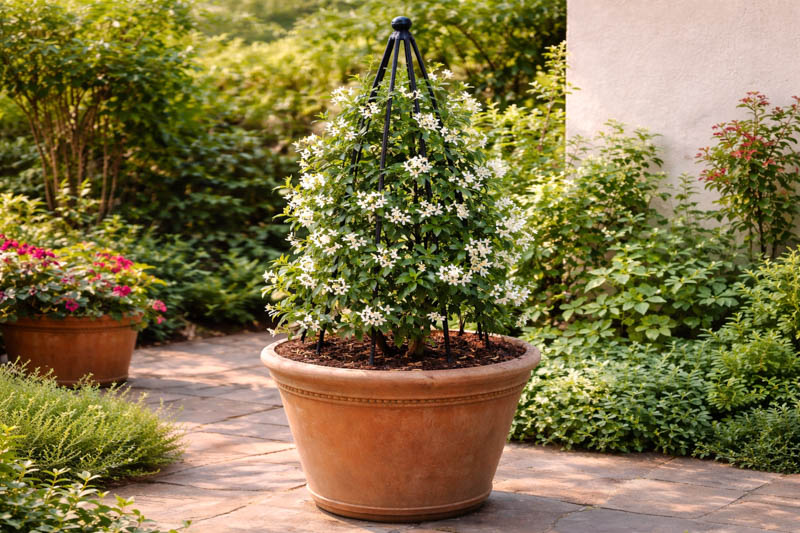


If you want a container plant that brings glossy foliage, elegant flowers, and memorable fragrance to patios, balconies, entryways, and small outdoor spaces, jasmine is one of the strongest options available. The best jasmine plants for containers combine ornamental value with practical performance: they flower well in pots, tolerate shaping, and place fragrance close to where people actually sit, walk, and relax.
This guide focuses on the best jasmine varieties for containers, with a practical emphasis on hardiness, evergreen structure, bloom season, fragrance strength, and realistic maintenance. Some are true jasmines in the Jasminum genus, while others are jasmine relatives commonly grown for a similar look and scent. For container gardeners, that distinction matters because growth habit, winter tolerance, and pruning needs are not the same.
Need a fast recommendation? Start here with the strongest container performers for the most common goals.
This is the fastest way to narrow the list if winter lows are your main limitation.
The best potted jasmines are not simply beautiful in bloom. They also tolerate restricted root space, respond well to pruning, and stay close enough to doors, windows, and seating areas for their scent to be noticed.
Use this table to compare hardiness, evergreen habit, mature size, bloom season, fragrance, and best container uses. Because gardeners often use the word “jasmine” broadly, the table also flags whether each plant is a true jasmine or a jasmine relative.
| Variety | Hardiness | Evergreen | Mature Size | Bloom Time | Fragrance | Best Use in Pots |
|---|---|---|---|---|---|---|
| Arabian Jasmine (Jasminum sambac) True jasmine |
9 – 11 | Evergreen | 6 – 10 ft | Mainly summer | Very strong | Premium patio pots, courtyards, bright indoor wintering |
| Pink Jasmine (Jasminum polyanthum) True jasmine |
8 – 10 | Evergreen | 15 – 20 ft | Late winter to spring | Strong | Trellised containers, protected balconies, seasonal show |
| Star Jasmine (Trachelospermum jasminoides) Jasmine relative |
8 – 10 | Evergreen | 2 – 20 ft | Late spring to summer | Strong | Evergreen structure, narrow supports, formal planters |
| Spanish Jasmine (Jasminum grandiflorum) True jasmine |
9 – 10 | Semi-evergreen | 6 – 13 ft | Summer to fall | Very strong | Warm-climate containers, trellises, perfume gardens |
| Common Jasmine (Jasminum officinale) True jasmine |
7 – 10 | Semi-evergreen to deciduous | 15 – 30 ft | Late spring to fall | Strong | Larger containers, classic vine effect, patio trellises |
| Downy Jasmine (Jasminum multiflorum) True jasmine |
9 – 11 | Evergreen | 5 – 10 ft | Spring through fall | Light to little | Shrub-form containers, lighter-scent spaces |
| Primrose Jasmine (Jasminum mesnyi) True jasmine |
8 – 10 | Evergreen in mild climates | 6 – 10 ft | Late winter to spring | Very light | Cascading planters, informal displays |
| Winter Jasmine (Jasminum nudiflorum) True jasmine |
6 – 10 | Deciduous | 4 – 15 ft | Winter to early spring | None | Cold-climate pots, winter color, arching displays |
Jasmine is especially effective in containers because it combines fragrance, flowers, and flexible form in a relatively small footprint. A potted specimen can frame a doorway, soften a stair, anchor a balcony, or turn a plain patio into a more immersive planting space.
Containers also make more jasmine types possible across a wider range of climates. Tender or semi-tender plants can spend the warm season outdoors and be moved to a protected bright location before frost. That makes container growing not just decorative, but practical.
There is another advantage that matters in everyday use: fragrance is easiest to enjoy when flowers are close to where people pause. A potted jasmine near a bench, gate, or entry can make a bigger impression than a much larger plant growing farther away.
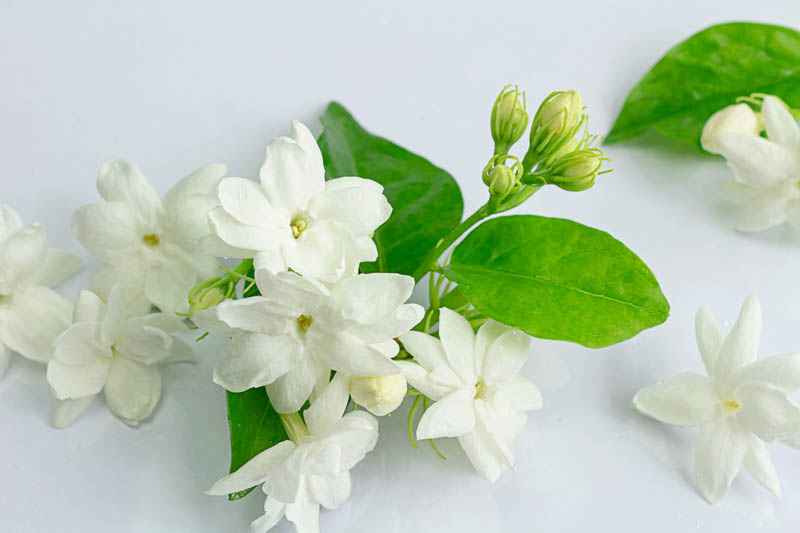
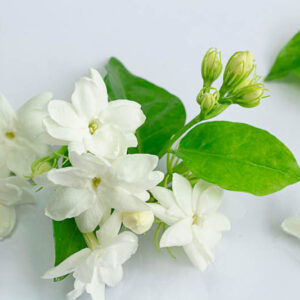
Best for: strongest fragrance, premium patio pots, courtyards, warm climates, bright indoor overwintering
Arabian Jasmine is one of the strongest container choices because it naturally adapts well to life in pots and can be maintained as a shrub or lightly trained vine. In container culture it is typically far more restrained than it would be in the tropics, which makes it easier to keep near seating areas and doorways. The flowers are intensely fragrant, white, and most abundant in summer.
If your priority is rich scent in a manageable container plant, this is the clearest first choice.
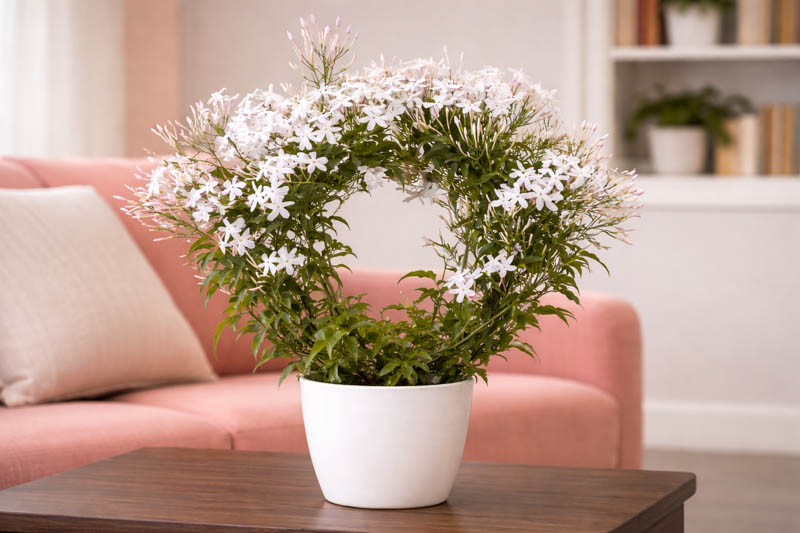
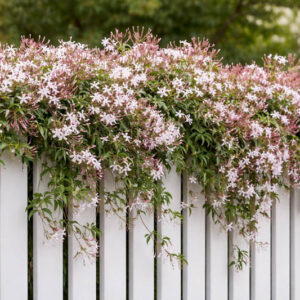
Best for: trellised pots, late winter to spring bloom, seasonal impact, protected balconies
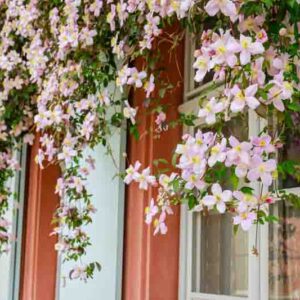
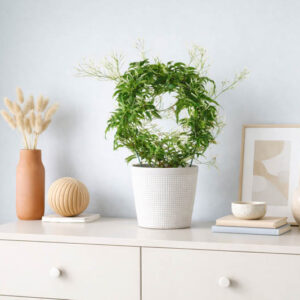
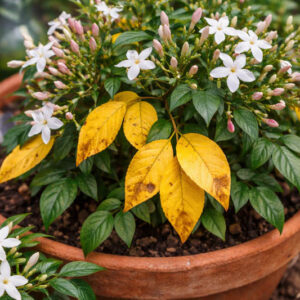
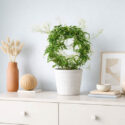
Pink Jasmine is a vigorous evergreen vine prized for white flowers opening from pink buds in late winter and spring. In containers, it performs best when trained on a small trellis or obelisk and pruned after flowering to keep the growth dense and controlled.
This is one of the best choices for gardeners who want a dramatic seasonal show when many patios and balconies still feel bare.
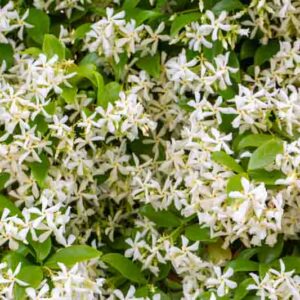
Best for: evergreen structure, formal containers, sunny sheltered walls, low-maintenance fragrance
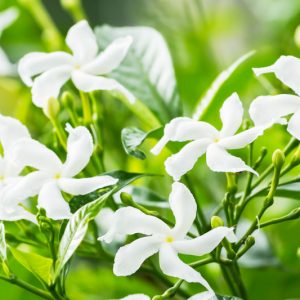
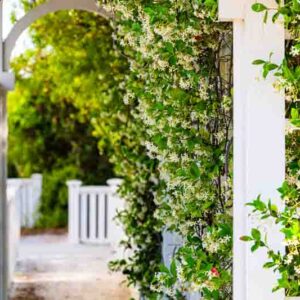
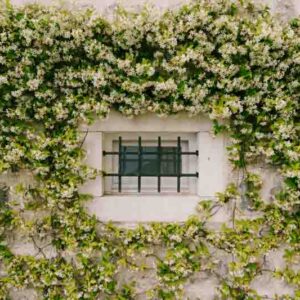
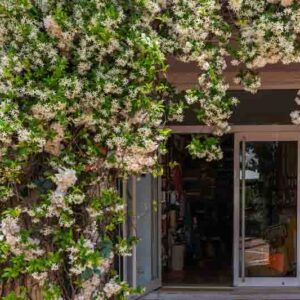
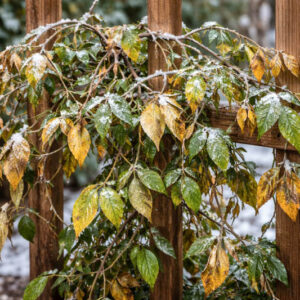
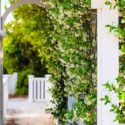
Star Jasmine is not a true jasmine, but it is one of the best evergreen jasmine relatives for containers. It is a woody climber with glossy foliage and fragrant white flowers in late spring to summer. In addition to bloom, it offers year-round structure, and the foliage often takes on bronze tones in colder weather.
Choose this one when evergreen presence matters almost as much as fragrance.
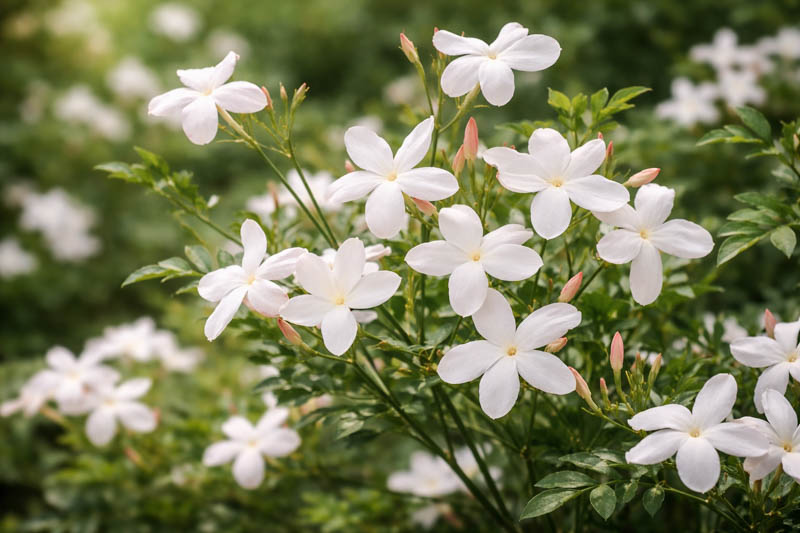
Best for: warm climates, perfume-grade fragrance, summer to fall bloom, elegant potted vines
Spanish Jasmine is a semi-evergreen climbing jasmine with strongly fragrant flowers from summer into fall. It suits containers well in warm regions or where winter protection is realistic. It needs sun, good drainage, and a support sturdy enough for its climbing habit.
It is a more specialized choice than Arabian Jasmine, but for warm-climate gardeners who want a classic fragrant vine in a pot, it is one of the most rewarding.
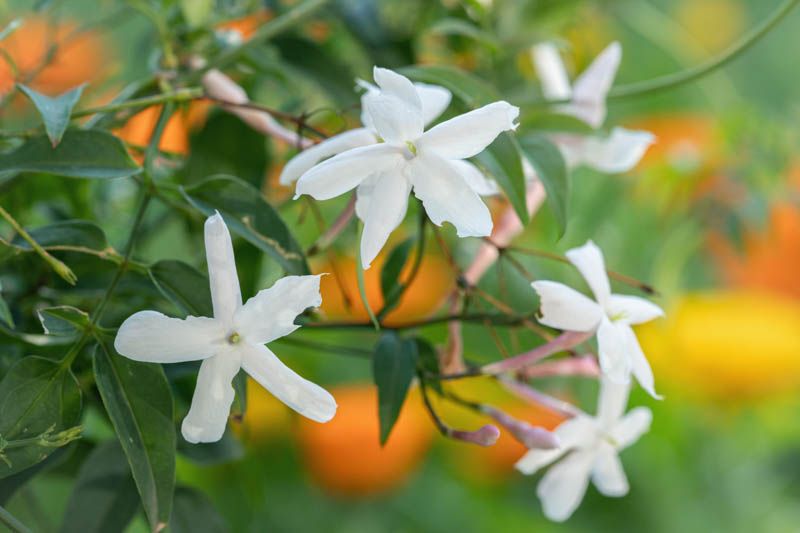
Best for: larger containers, classic true jasmine character, long bloom season, patio trellises
Common Jasmine is a vigorous climber with fragrant white blooms from late spring into fall. It is best suited to larger containers with support and benefits from regular training. In cooler climates it can be semi-evergreen or deciduous, but it remains a high-value choice where gardeners want the familiar look and scent most people associate with true jasmine.
This is a strong option when you want a true jasmine vine and have room for a larger pot.
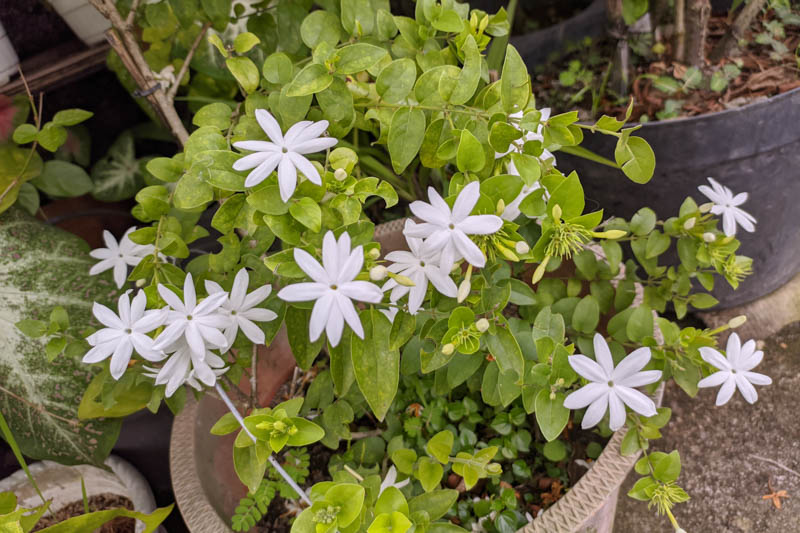
Best for: shrub-form containers, abundant white flowers, lower-fragrance spaces
Downy Jasmine is a better choice for form and flower display than for heavy fragrance. It can be shaped more easily than some climbers and works well in decorative containers where a fuller shrub-like outline is desirable. The flowers are abundant over a long season, often from spring through fall in warm climates.
It is especially useful where a strongly perfumed plant would feel excessive.
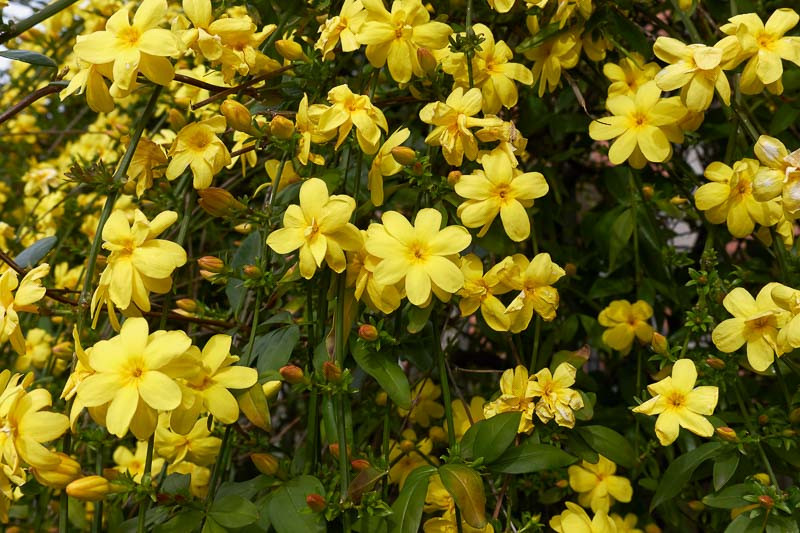
Best for: cascading containers, mild climates, informal style, late winter color
Primrose Jasmine is grown more for form and color than fragrance. Its arching growth and yellow flowers make it useful in elevated planters or containers where stems can spill naturally over the edges. It is less formal than the classic white jasmines, but highly effective in relaxed garden designs.
Use it when you want drape, movement, and early-season color rather than concentrated scent.
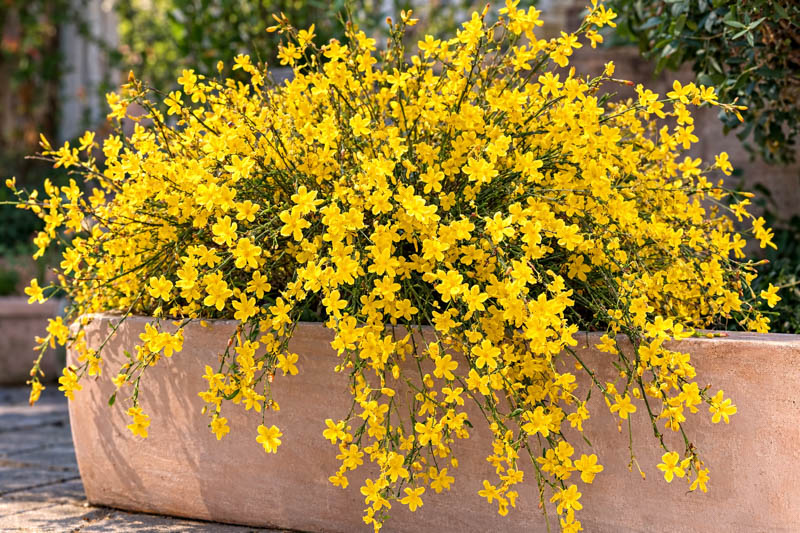
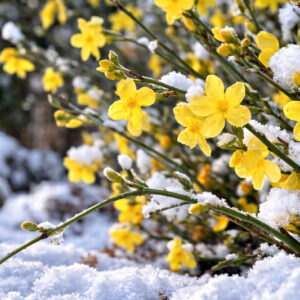
Best for: colder climates, winter bloom, seasonal contrast, informal supports
Winter Jasmine is valuable because it flowers in winter to early spring, not because it is fragrant. It is more arching than twining, which makes it better for informal supports, trailing displays, or pots near walls where the stems can be guided loosely.
For gardeners in colder regions who want a jasmine that can stay outdoors more reliably, this is one of the most practical options.
The best potted jasmine depends on the job you need it to do.
1 Start with fragrance. If scent is the priority, Arabian Jasmine is usually the strongest pick for pots. If you want fragrance plus evergreen foliage, Star Jasmine is one of the best choices.
2 Match growth habit to the container and support. Twining or climbing jasmines need a trellis, obelisk, or wall support. Arching types such as Winter Jasmine and Primrose Jasmine look better when allowed to spill or drape.
3 Be realistic about winter care. Tender jasmines are excellent container plants precisely because they can be moved to shelter before frost. Hardy jasmines reduce that workload, but may offer less fragrance.
Tender jasmines such as Arabian Jasmine, Spanish Jasmine, and Downy Jasmine are usually best treated as warm-season container plants outside their hardiness range. Before frost, move them into a bright protected area such as a sunroom, greenhouse, enclosed porch, or bright window with good light and airflow. Reduce feeding, water more carefully, and avoid forcing soft new growth during low-light winter months.
Borderline plants such as Pink Jasmine and Star Jasmine may overwinter outdoors in mild climates, but in colder regions containers expose roots to more cold than in-ground plantings do. A protected wall, wrapped container, or indoor winter shelter may still be necessary.
Hardier choices such as Winter Jasmine and, in many regions, Common Jasmine are better bets if you want a plant that can remain outdoors more reliably. Even then, roots in pots are more vulnerable than roots in the ground, so large containers and sheltered placement improve winter survival.
Pot size: Jasmine performs best when somewhat root-contained but not cramped. Use a container large enough to buffer moisture swings without creating a cold, soggy root zone.
Drainage: Excellent drainage is essential. Use a free-draining potting mix and never let water pool in saucers or decorative outer pots.
Light: Most jasmines flower best in full sun or very bright light. Too little light reduces flowering, weakens growth, and makes plants harder to keep compact.
Support and pruning: Jasmine rarely looks effortless without guidance. Tie in new shoots early and prune after flowering when appropriate. Pruning too early or at the wrong time can reduce bloom on plants that flower on older wood.
Feeding: Feed moderately during active growth. Excess nitrogen often produces more leafy growth at the expense of flowers.
1 Choosing only by fragrance and ignoring mature size or support needs.
2 Using a pot without sharp drainage.
3 Treating every jasmine as though it climbs and flowers the same way.
4 Forgetting to plan ahead for frost protection.
5 Letting growth tangle for too long before training and shaping it.
The best jasmine for containers is the one that matches your climate, fits your support, flowers reliably in a pot, and keeps its fragrance close to where people actually experience it.
Arabian Jasmine is usually the top choice for fragrance in containers. It combines very strong scent with a growth habit that is easier to manage in pots than many larger climbing jasmines.
Star Jasmine is one of the best evergreen choices for containers. It offers glossy foliage, fragrant flowers, and year-round structure, making it especially useful where the plant needs to look good even when not in bloom.
Winter Jasmine is the most practical choice for colder climates because it is hardier than the more tropical fragrant types. Common Jasmine can also work in some cooler areas, especially in protected spots or larger containers.
Yes. Several jasmines can be overwintered or grown indoors with very bright light, good airflow, and careful watering. Arabian Jasmine is one of the better options for bright indoor conditions, while large vigorous climbers usually need stronger pruning and support.
For most gardeners, Arabian Jasmine is the best jasmine plant for containers because it combines strong fragrance, manageable size, and reliable ornamental value in pots. Star Jasmine is the best evergreen structural option for containers, especially where year-round foliage matters. Pink Jasmine is ideal for dramatic late winter to spring bloom on a support, while Winter Jasmine is the most practical option for colder climates.
The best question is not simply “Which jasmine is best?” It is “Which jasmine fits this climate, this container, this support, and this level of winter care?” Once that is clear, the right plant becomes much easier to choose.
| Hardiness |
6 - 11 |
|---|---|
| Plant Type | Climbers, Shrubs |
| Genus | Jasminum, Trachelospermum |
| Exposure | Full Sun, Partial Sun |
| Season of Interest | Spring (Early, Mid, Late), Summer (Early, Mid, Late), Fall, Winter |
| Maintenance | Low |
| Water Needs | Average |
| Soil Type | Chalk, Loam, Sand |
| Soil pH | Acid, Alkaline, Neutral |
| Soil Drainage | Moist but Well-Drained, Well-Drained |
| Characteristics | Showy |
| Attracts | Bees, Butterflies |
| Landscaping Ideas | Patio And Containers |
| Hardiness |
6 - 11 |
|---|---|
| Plant Type | Climbers, Shrubs |
| Genus | Jasminum, Trachelospermum |
| Exposure | Full Sun, Partial Sun |
| Season of Interest | Spring (Early, Mid, Late), Summer (Early, Mid, Late), Fall, Winter |
| Maintenance | Low |
| Water Needs | Average |
| Soil Type | Chalk, Loam, Sand |
| Soil pH | Acid, Alkaline, Neutral |
| Soil Drainage | Moist but Well-Drained, Well-Drained |
| Characteristics | Showy |
| Attracts | Bees, Butterflies |
| Landscaping Ideas | Patio And Containers |
Create a membership account to save your garden designs and to view them on any device.
Becoming a contributing member of Gardenia is easy and can be done in just a few minutes. If you provide us with your name, email address and the payment of a modest $25 annual membership fee, you will become a full member, enabling you to design and save up to 25 of your garden design ideas.
Join now and start creating your dream garden!
Create a membership account to save your garden designs and to view them on any device.
Becoming a contributing member of Gardenia is easy and can be done in just a few minutes. If you provide us with your name, email address and the payment of a modest $25 annual membership fee, you will become a full member, enabling you to design and save up to 25 of your garden design ideas.
Join now and start creating your dream garden!