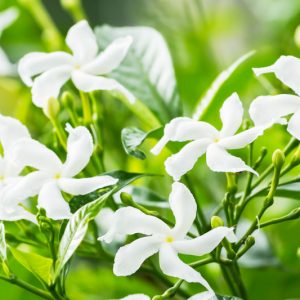
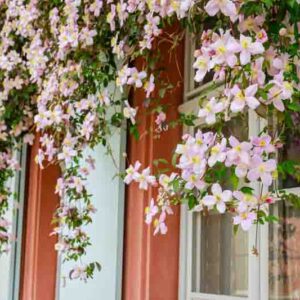
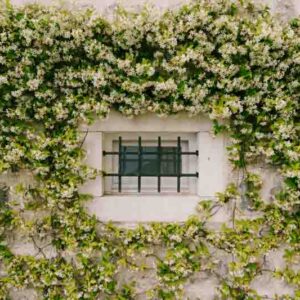
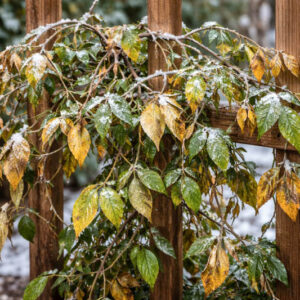
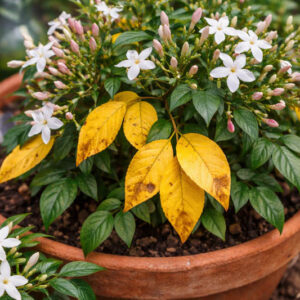
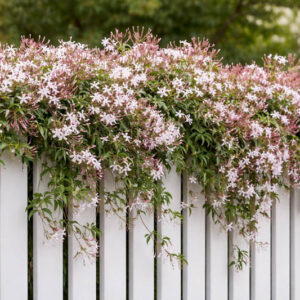
Jasmine is a fragrant flowering vine or shrub that can bloom from winter to fall, depending on the type. Winter jasmine flowers in winter to early spring, pink jasmine in late winter to spring, common jasmine in late spring to fall, and Arabian jasmine usually blooms in summer with repeated flushes.
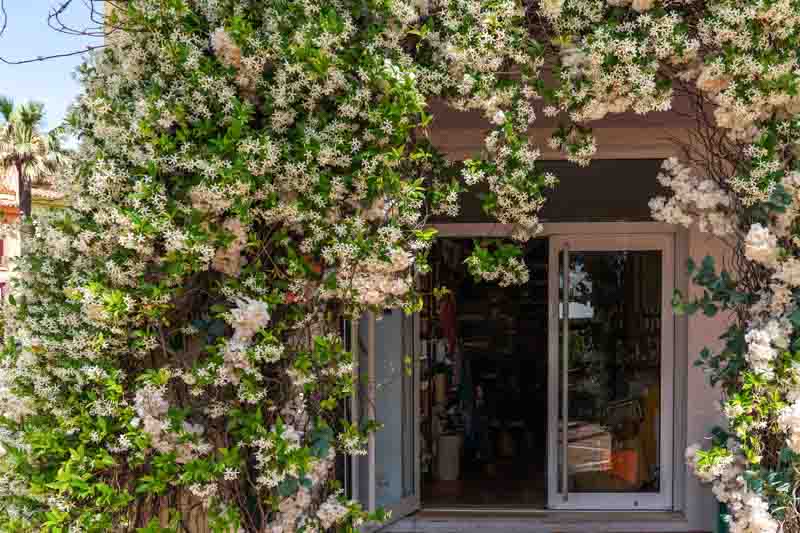


If you are planning a fragrant garden, timing matters almost as much as fragrance. Jasmine is famous for its perfume, but one of the most common questions gardeners ask is simple: when does jasmine bloom? The honest answer is that jasmine bloom time depends on the species, climate, light exposure, and how the plant is grown. Some jasmine plants flower in late winter, others peak in spring or summer, and a few continue in flushes into fall.
That is exactly why jasmine can be such a high-value plant in the landscape. With the right selection, you can enjoy blooms and fragrance across multiple seasons instead of getting one short display and waiting another year.
Jasmine bloom time varies by type, with some flowering in late winter or spring and others blooming from late spring through summer or into fall. Pink jasmine often blooms in late winter to spring, common jasmine in late spring through summer, and Arabian jasmine in summer.
This guide explains jasmine flowering season in a practical, garden-focused way. Instead of giving vague answers, it shows how bloom time changes by species, why some jasmines flower earlier than others, and what gardeners can do to get more flowers. It also helps separate true jasmine from popular jasmine relatives, because that distinction affects bloom timing, scent, and care.
Need the fast answer first? These are the jasmine types gardeners most often compare when asking about bloom time.
Not every plant called jasmine is a true jasmine. True jasmines belong to the Jasminum genus. Popular plants like Star Jasmine and Night-Blooming Jasmine are jasmine relatives, not botanical jasmines, and their bloom cycles differ.
The easiest way to answer the question “when does jasmine bloom?” is to identify the plant first. Gardeners often use the word jasmine broadly, but different species have very different bloom windows. Adding hardiness zones makes the comparison much more useful because bloom season and winter survival are closely connected.
| Jasmine Type | Hardiness | Bloom Time | Fragrance Level | Notes |
|---|---|---|---|---|
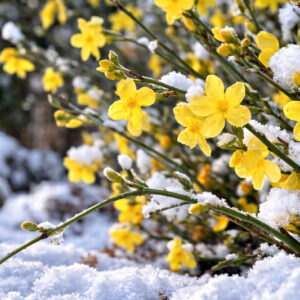
| Winter Jasmine (Jasminum nudiflorum) | 6 – 10 | Winter to early spring | Low to none | Valued for color more than scent |
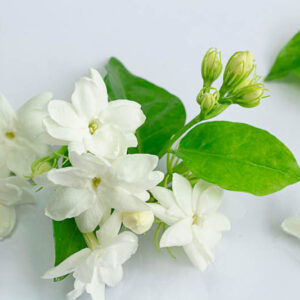
| Pink Jasmine (Jasminum polyanthum) | 8 – 10 | Late winter to spring | Very fragrant | One of the earliest scented jasmines |
| Primrose Jasmine (Jasminum mesnyi) | 8 – 10 | Late winter to spring | Light | Strong seasonal color, less fragrance |
| Common Jasmine (Jasminum officinale) | 7 – 10 | Late spring through summer, often into fall | Strong | Classic long-season blooming jasmine |
| Spanish Jasmine (Jasminum grandiflorum) | 9 – 10 | Summer to fall | Very fragrant | Warm-climate performer |
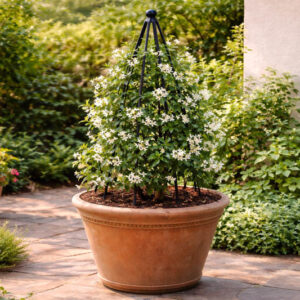
| Arabian Jasmine (Jasminum sambac) | 9 – 11 | Summer, often in repeated flushes | Extremely fragrant | Excellent for pots and patios |
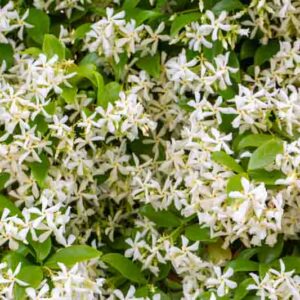
| Star Jasmine (Trachelospermum jasminoides) | 8 – 10 | Late spring to summer | Very fragrant | Jasmine relative, evergreen and widely used |
| Night-Blooming Jasmine (Cestrum nocturnum) | 9 – 11 | Warm season, often intermittent | Extremely strong at night | Not a true jasmine |
In practical terms, many gardeners are really asking about months, not just seasons. The exact timing depends on variety and climate, but these month ranges are a useful rule of thumb for most gardens.
Winter Jasmine usually blooms from January to March, and sometimes starts as early as December in mild climates. Pink Jasmine typically flowers from February to April. Primrose Jasmine also tends to bloom from February to April.
Common Jasmine generally begins flowering from May or June and can continue through September, sometimes into October in warm regions. Spanish Jasmine often blooms from June to October. Arabian Jasmine is usually strongest from June to September, often flowering in repeated flushes rather than one single wave.
Star Jasmine usually peaks from May to July, though warm climates may extend the display. Night-Blooming Jasmine often flowers on and off from late spring through early fall, most commonly from May to September.
January-March: Winter Jasmine
February-April: Pink Jasmine, Primrose Jasmine
May-July: Star Jasmine
May-October: Common Jasmine
June-September: Arabian Jasmine
June-October: Spanish Jasmine
In mild climates, blooming may start earlier and last longer; in cooler climates, flowering may begin later and finish sooner.
That means there is no single universal jasmine season. The better question is: which jasmine blooms in the months when you will enjoy it most? If you want perfume near a patio in midsummer, Arabian jasmine is a very different choice from pink jasmine, which shines much earlier in the year.
Jasmine does not bloom on one fixed schedule. Different types flower in different seasons, ranging from winter and early spring to summer and fall, with bloom time shaped by species, climate, and growing conditions.
Even within the same plant category, flowering is not perfectly fixed. That is where many articles become too simplistic. A jasmine may be described as a spring bloomer, but in a mild climate it can start earlier. In a cooler region, the same plant may bloom later and for a shorter period.
Climate is the first major variable. Warmer regions push jasmine into growth earlier, which often means earlier flowers. In cooler climates, the same plant may wait until conditions stabilize.
Sunlight is equally important. Most jasmines flower best in generous light. A plant growing in too much shade may stay healthy enough to leaf out but flower lightly, late, or irregularly.
Pruning timing also matters more than many gardeners expect. If you prune immediately before buds are forming, you can remove the wood that would have flowered. That is one reason jasmine sometimes disappoints after an otherwise healthy growing season.
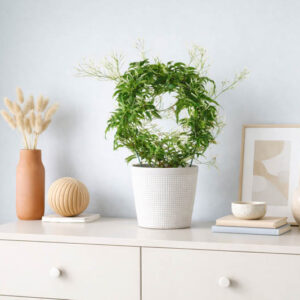
Container culture can influence flowering too. Potted jasmine often blooms well when it receives excellent drainage, bright light, and steady feeding, but root stress, poor drainage, or weak light can reduce performance quickly.
If your jasmine is growing but not flowering well, the issue is usually cultural rather than mysterious. The best results come from getting a few basics right.
1 Give it enough sun. Most jasmine plants bloom better with strong light. Bright exposure usually translates into heavier flowering and better scent.
2 Do not overfeed with nitrogen. Too much fertilizer can create lush green growth at the expense of flowers. Balanced nutrition is usually better than aggressive feeding.
3 Prune after the flowering cycle, not before it. This is especially important with seasonal bloomers like pink jasmine and winter jasmine.
4 Keep soil well-drained. Jasmine likes consistent moisture while establishing, but it usually performs poorly in heavy, soggy conditions.
5 Match the variety to your climate. A plant that is always stressed by cold will rarely flower at its best, even if it survives.
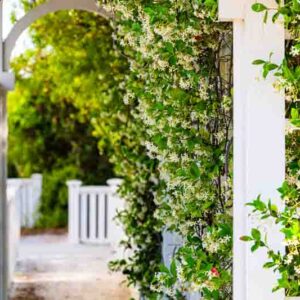
If fragrance is your priority, place jasmine where people actually pause – near seating, gates, windows, and paths. Bloom time matters most when the flowers are close enough to enjoy.
For a long flowering season, Common Jasmine is one of the strongest choices. It often flowers from late spring through summer and may continue into fall in favorable conditions. Arabian Jasmine can also be very rewarding because it tends to flower in repeated flushes rather than one short burst.
If you want the earliest color, Winter Jasmine and Pink Jasmine are stronger answers. If you want an evergreen wall of scent later in the season, Star Jasmine is often the better fit.
So the longest-blooming jasmine is not always the “best” jasmine. The right choice depends on whether you need early bloom, peak summer fragrance, evergreen structure, or a longer overall display.
The biggest mistake is assuming every jasmine flowers in summer. Many do not. Some are prized precisely because they flower earlier, when the garden is still quiet.
The second mistake is buying by fragrance alone without checking the bloom season. A wonderfully scented jasmine is still the wrong plant if it flowers when you are away, if it misses your main outdoor season, or if it cannot handle your winter conditions.
The third mistake is confusing true jasmine with jasmine relatives. Night-Blooming Jasmine is famous for scent, but it behaves very differently from Jasminum officinale or Jasminum sambac. Accurate plant identity leads to accurate bloom expectations.
Jasmine bloom time ranges from winter to fall depending on the type. For early flowers, look to winter jasmine or pink jasmine. For classic warm-season fragrance, common jasmine and Arabian jasmine are among the strongest choices. For an evergreen jasmine-look vine with a late spring to summer display, star jasmine remains a top performer.
The most useful answer to “when does jasmine bloom?” is not one date or one month. It is this: choose the jasmine whose flowering season matches your climate, your garden design, and the months when you want scent the most.
Jasmine bloom time depends on the type. Some varieties bloom in late winter or spring, while others flower from late spring through summer and may continue into fall.
That depends on the variety. Winter jasmine often blooms from January to March, pink jasmine from February to April, star jasmine from May to July, common jasmine from May or June into September or October, and Arabian jasmine most strongly from June to September.
Winter jasmine is usually the earliest blooming type, often flowering in winter to early spring. Pink jasmine is another early bloomer, typically flowering in late winter to spring.
Common jasmine is one of the longest-blooming jasmine types, often flowering from late spring through summer and sometimes into fall. Arabian jasmine can also bloom for a long period in repeated warm-season flushes.
The most common reasons are too much shade, pruning at the wrong time, excess nitrogen fertilizer, poor drainage, or climate stress. Jasmine usually flowers best with strong light and pruning done after blooming.
Some types do. Common jasmine often blooms through much of summer, and Arabian jasmine may flower in repeated summer flushes. Earlier types like pink jasmine usually finish before peak summer.
| Hardiness |
6 - 11 |
|---|---|
| Plant Type | Climbers, Shrubs |
| Plant Family | Apocynaceae, Oleaceae |
| Genus | Jasminum, Trachelospermum |
| Exposure | Full Sun, Partial Sun |
| Season of Interest | Spring (Early, Mid, Late), Summer (Early, Mid, Late), Fall, Winter |
| Maintenance | Low |
| Water Needs | Average |
| Soil Type | Chalk, Loam, Sand |
| Soil pH | Acid, Alkaline, Neutral |
| Soil Drainage | Moist but Well-Drained, Well-Drained |
| Characteristics | Showy |
| Attracts | Bees, Butterflies |
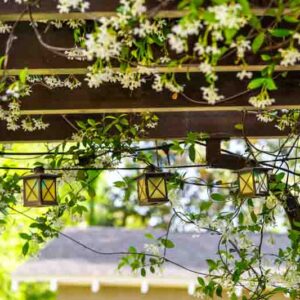
| Landscaping Ideas | Arbors, Pergolas, Trellises, Banks And Slopes, Ground Covers, Patio And Containers, Wall-Side Borders |
| Garden Styles | City and Courtyard, Coastal Garden, Informal and Cottage |
| Hardiness |
6 - 11 |
|---|---|
| Plant Type | Climbers, Shrubs |
| Plant Family | Apocynaceae, Oleaceae |
| Genus | Jasminum, Trachelospermum |
| Exposure | Full Sun, Partial Sun |
| Season of Interest | Spring (Early, Mid, Late), Summer (Early, Mid, Late), Fall, Winter |
| Maintenance | Low |
| Water Needs | Average |
| Soil Type | Chalk, Loam, Sand |
| Soil pH | Acid, Alkaline, Neutral |
| Soil Drainage | Moist but Well-Drained, Well-Drained |
| Characteristics | Showy |
| Attracts | Bees, Butterflies |
| Landscaping Ideas | Arbors, Pergolas, Trellises, Banks And Slopes, Ground Covers, Patio And Containers, Wall-Side Borders |
| Garden Styles | City and Courtyard, Coastal Garden, Informal and Cottage |
Create a membership account to save your garden designs and to view them on any device.
Becoming a contributing member of Gardenia is easy and can be done in just a few minutes. If you provide us with your name, email address and the payment of a modest $25 annual membership fee, you will become a full member, enabling you to design and save up to 25 of your garden design ideas.
Join now and start creating your dream garden!
Create a membership account to save your garden designs and to view them on any device.
Becoming a contributing member of Gardenia is easy and can be done in just a few minutes. If you provide us with your name, email address and the payment of a modest $25 annual membership fee, you will become a full member, enabling you to design and save up to 25 of your garden design ideas.
Join now and start creating your dream garden!