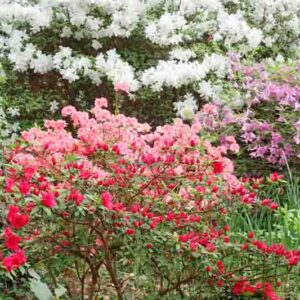
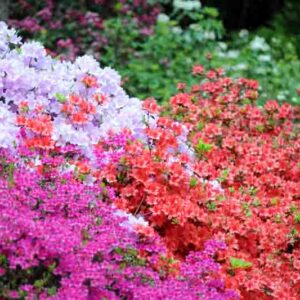
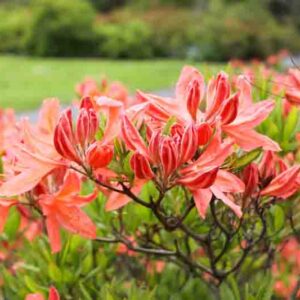
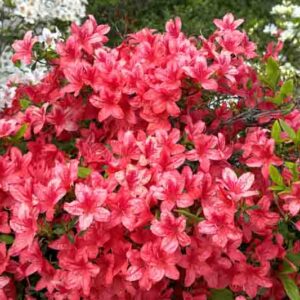
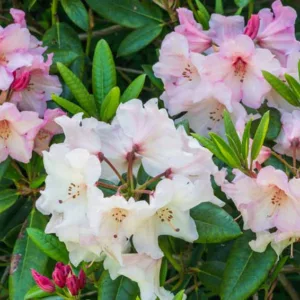
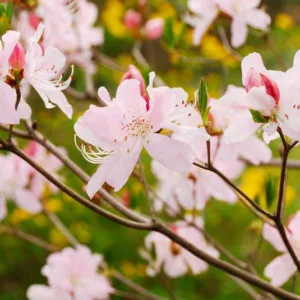
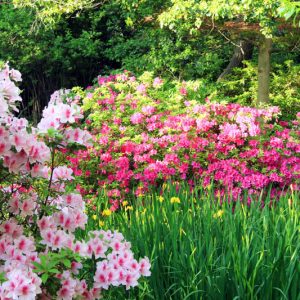
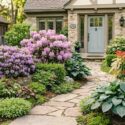
Small garden, spectacular spring flowers! Discover beautiful dwarf azaleas and compact rhododendrons that bring vibrant color, elegant foliage, and year-round interest without overwhelming your space. Explore charming evergreen and deciduous varieties, compare their mature sizes and growing needs, and find the perfect shrubs for borders, courtyards, and containers.
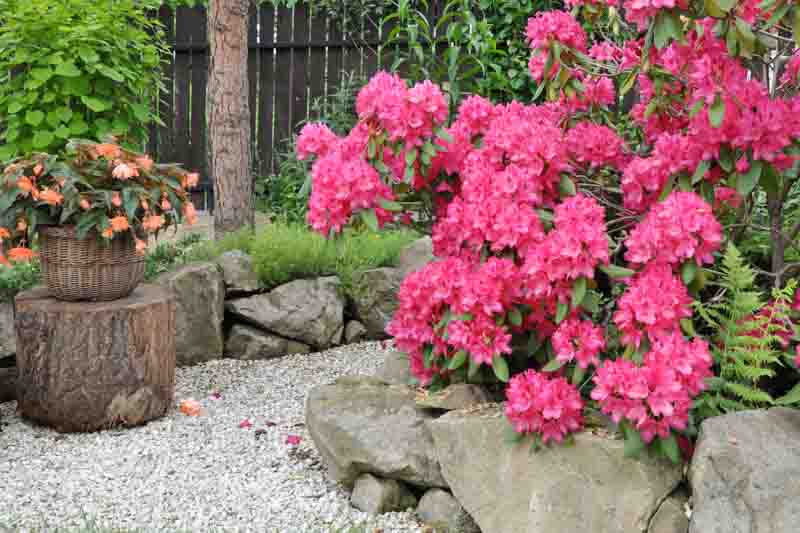


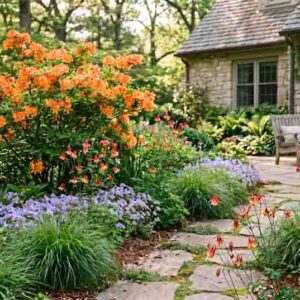
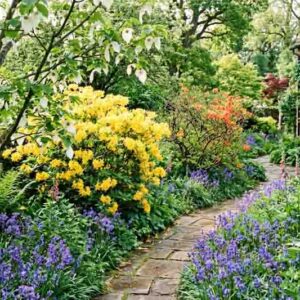
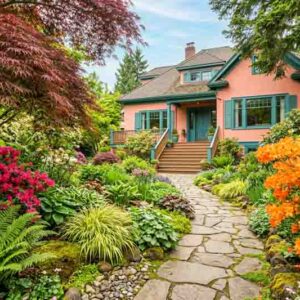
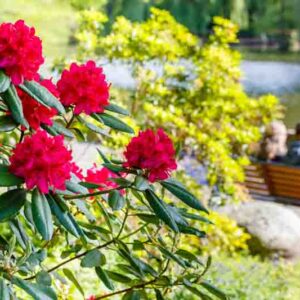
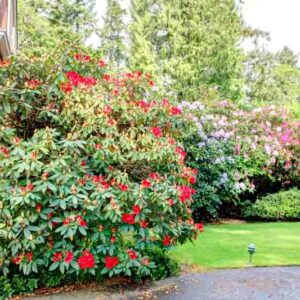
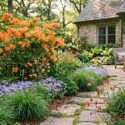
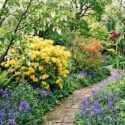
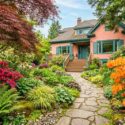
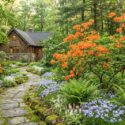
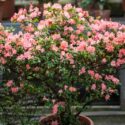
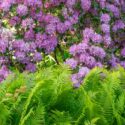
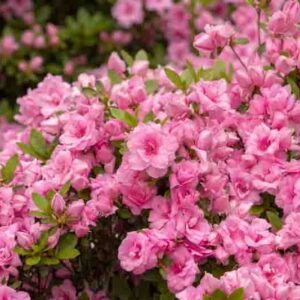
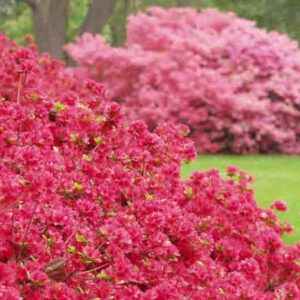
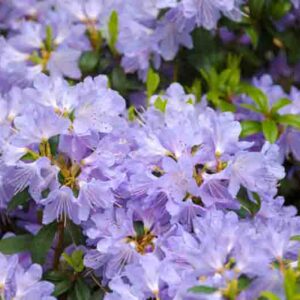
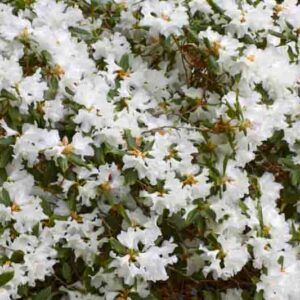
A small garden can still put on a spectacular spring show. Imagine a low mound of lavender-purple rhododendron flowers beside a stone path, a compact evergreen azalea smothered in crimson blossoms, or a white-flowering shrub brightening a sheltered courtyard. None needs an enormous garden to look wonderful.
The challenge is finding varieties that fit. Azaleas and rhododendrons range from tiny, slow-growing evergreens to shrubs that eventually become as wide as a small tree. A plant that looks perfectly proportioned beside your front door today may crowd the walkway ten years from now.
Fortunately, there are plenty of beautiful dwarf azaleas, compact rhododendrons, and smaller flowering varieties for narrow borders, rock gardens, patios, courtyards, and containers. Some provide year-round evergreen foliage, while others add fragrance or brilliant autumn color.
Explore Gardenia’s collection of azaleas and rhododendrons for small gardens below. You’ll find genuinely dwarf selections as well as larger shrubs that can work beautifully when given their own space. The key is knowing which is which before you plant.
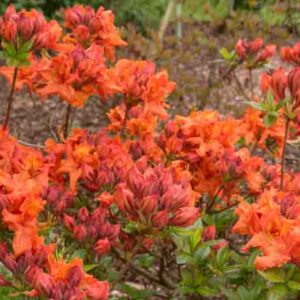
Small-garden tip: Always check mature width as well as height. ‘Hino Crimson’, for example, may stay only 2-3 ft. tall but spread 3-5 ft. wide. That’s a lovely shape for a generous border, but a poor fit for a planting strip only 2 ft. across.
Not every small garden needs the same kind of shrub. A narrow front border calls for a different plant than a woodland courtyard, and a container on a patio has different requirements again.
Four groups offer particularly useful choices:
| Plant group | Best features | Best uses |
|---|---|---|
| Dwarf evergreen azaleas | Dense foliage and masses of spring flowers, often with a rounded or spreading habit. | Front borders, courtyards, foundation plantings. |
| Small-leaved rhododendrons | Fine-textured evergreen foliage, compact growth, and colorful blossoms. | Rock gardens, raised beds, low borders. |
| Compact evergreen rhododendrons | Showy flower clusters and year-round structure. | Small woodland gardens and focal-point plantings. |
| Deciduous azaleas | Brilliant flowers, sometimes fragrance, and attractive autumn foliage. | Mixed borders with room for seasonal shrubs. |
Gardenia’s collection brings together beautiful dwarf, compact, and medium-sized azaleas and rhododendrons with outstanding ornamental qualities.
Some are ideal for small containers and low borders. Others need more space but can make magnificent individual specimens in a modest landscape. Most of them have been recognized as proven performers and have received the Rhododendron of the Year Award of the American Rhododendron Society and/or the prestigious Award of Garden Merit of the Royal Horticultural Society.
Explore their detailed plant cards to compare height, spread, growth habit, hardiness, flower color, bloom time, and growing requirements. Save your favorites as you browse, then use the comparisons below to decide which varieties will really fit your garden.
Choosing for a very small space? Start with the genuinely dwarf selections, then check their spread. Medium-sized shrubs can also work in small gardens, but usually as a single specimen rather than part of a crowded planting.
| Hardiness |
3 - 10 |
|---|---|
| Plant Type | Shrubs |
| Genus | Rhododendron |
| Exposure | Full Sun, Partial Sun |
| Season of Interest | Spring (Early, Mid, Late), Summer (Early), Fall, Winter |
| Maintenance | Low |
| Water Needs | Average |
| Soil Type | Clay, Loam, Sand |
| Soil pH | Acid |
| Soil Drainage | Moist but Well-Drained |
| Tolerances | Rabbit |
| Attracts | Butterflies, Hummingbirds |
| Landscaping Ideas | Beds And Borders, Patio And Containers, Small Gardens |
| Garden Styles | City and Courtyard, Informal and Cottage, Japanese Garden, Traditional Garden |






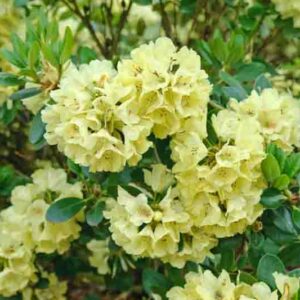
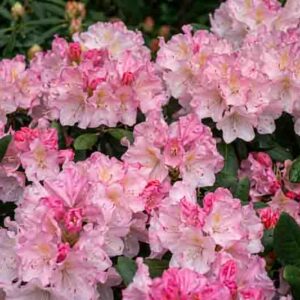
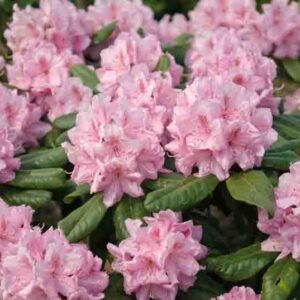
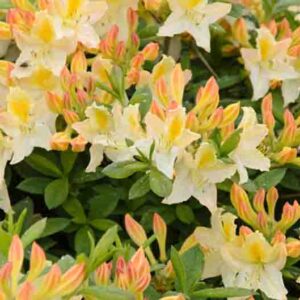
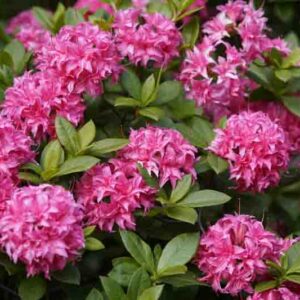
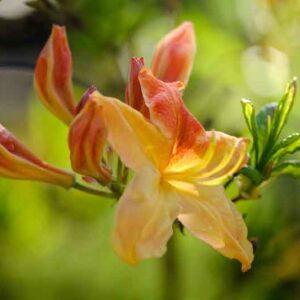
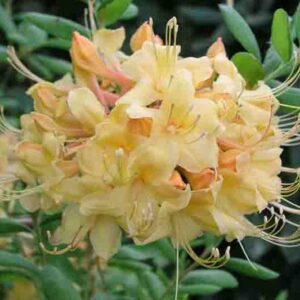
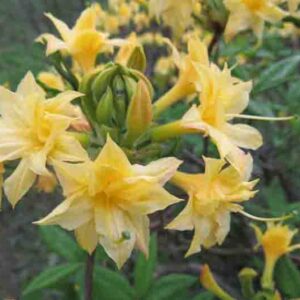
The word dwarf is appealing, but it doesn’t always tell you how much room a shrub will need. A low-growing rhododendron may spread surprisingly wide, while a slow-growing variety can eventually become substantial.
Specialist nurseries sometimes describe rhododendrons by their height after ten years. That’s useful for comparing growth rates, but it isn’t a final size. These are long-lived woody shrubs, and many continue growing well beyond their tenth year.
The following comparison uses dimensions published in Gardenia’s individual plant profiles. It highlights why varieties in the same small-garden collection may have very different planting requirements.
| Cultivar | Listed height × spread | Best garden use |
|---|---|---|
| ‘Ginny Gee’ | 12-18 in. × 18-24 in. (30-45 × 45-60 cm) |
Very small border, rock garden, suitable container. |
| ‘Ramapo’ | 2 ft. × 2-3 ft. (60 × 60-90 cm) |
Low evergreen accent, raised bed, rock garden. |
| ‘Blue Tit’ | 2-3 ft. × 2-3 ft. (60-90 × 60-90 cm) |
Compact border or small courtyard planting. |
| ‘Princess Anne’ | 2-3 ft. × 2-3 ft. (60-90 × 60-90 cm) |
Small mixed border, rock garden. |
| ‘Dora Amateis’ | 3-4 ft. × 3-4 ft. (90-120 × 90-120 cm) |
Compact evergreen focal point. |
| ‘Hino Crimson’ | 2-3 ft. × 3-5 ft. (60-90 × 90-150 cm) |
Wide, low border with room to spread. |
| ‘Gibraltar’ | 4-5 ft. × 4-5 ft. (120-150 × 120-150 cm) |
Generous mixed border or individual specimen. |
| ‘Scintillation’ | 4-6 ft. × 4-6 ft. (120-180 × 120-180 cm) |
Specimen shrub where sufficient space is available. |
Sizes are approximate garden expectations, not fixed limits or standardized ten-year measurements. Actual growth depends on climate, soil, exposure, and age. Check the individual Gardenia plant profile for current growing information.
If your planting area is only 3 ft. wide, ‘Ginny Gee’ or ‘Ramapo’ may be more practical than ‘Hino Crimson’. Although ‘Hino Crimson’ is relatively low, its wider spread makes it better suited to a generous foreground border.
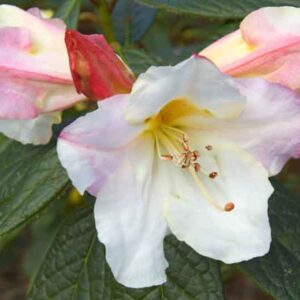
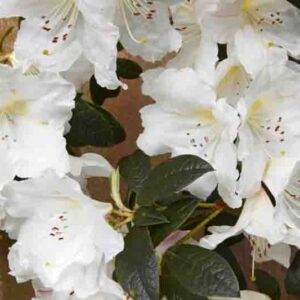
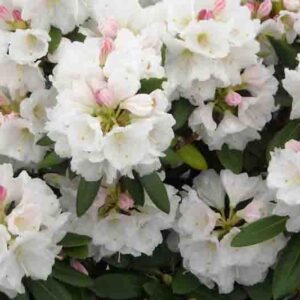
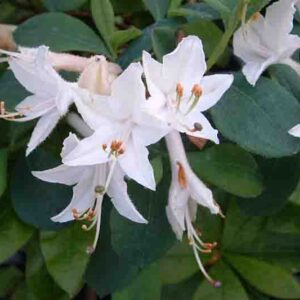
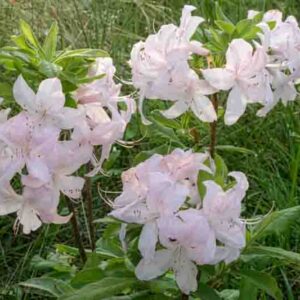
‘Dora Amateis’ offers a different opportunity: a compact evergreen specimen with impressive white flowers. ‘Scintillation’ and ‘Gibraltar’, by contrast, require substantially more space and should not be presented as dwarf plants.
The lesson is simple: small in height does not always mean small in footprint.
Before buying: Measure the planting space, including the width available between paths, walls, and neighboring plants. Compare that measurement with the shrub’s expected spread, and leave some room for future growth and maintenance.
Size matters, but it isn’t the only consideration. A beautifully proportioned shrub may still struggle if the soil is too alkaline, the position too hot, or the cultivar poorly suited to your winters.
Before choosing, work through these five questions:
For a very small space: ‘Ginny Gee’. Its exceptionally compact dimensions make it a strong candidate for a small rock garden, the front of a border, or a suitably sized container.
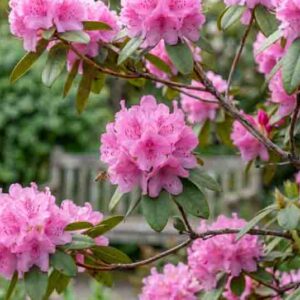
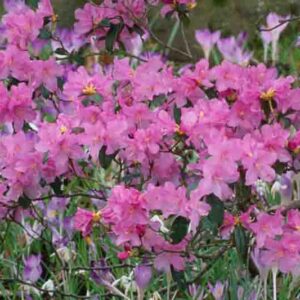
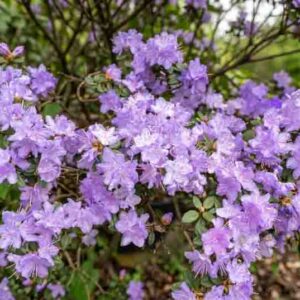
For a low evergreen accent: ‘Ramapo’. Its spreading habit, blue-green foliage, and lavender-purple flowers make it particularly attractive beside stonework or at the edge of a raised planting.
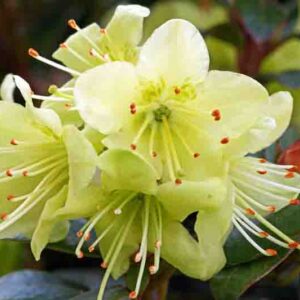
For a flowering focal point: ‘Dora Amateis’. With white flowers and a broad, compact habit, it can provide an impressive display where you have approximately 3-4 ft. of growing space in each direction, plus suitable clearance.
Gardenia’s detailed plant profiles let you compare the characteristics of individual azaleas and rhododendrons. The Plant Finder helps narrow your choices by hardiness zone, sunlight, soil, drainage, and other growing requirements.
Save the plants you like, then use the Garden Design Tool to review growing-condition compatibility, mature plant sizes, seasonal interest, and planting quantities.
For a small garden, being able to compare plants before committing to a layout can help you avoid the disappointment of overcrowded borders or shrubs that eventually outgrow their position.
You don’t need an open planting bed to grow a beautiful rhododendron. A compact evergreen shrub in a handsome container can brighten a patio, small courtyard, or entrance with an impressive display of spring flowers.
Containers are particularly useful where the garden soil is alkaline or poorly suited to acid-loving plants. They allow you to provide a more appropriate growing medium without changing the entire planting area.
Start with a genuinely compact variety. ‘Ginny Gee’, ‘Ramapo’, and other appropriately sized dwarf rhododendrons are more practical candidates than large deciduous azaleas or vigorous evergreen hybrids.
Choose a sturdy container with drainage holes and enough room for the root ball and further growth. A broad, stable pot suits low, spreading varieties and is less likely to topple as the shrub develops.
Use a high-quality ericaceous potting mix formulated for acid-loving plants. Avoid heavy garden soil, which can compact in containers and restrict drainage.
Container tip: A rhododendron hardy in the ground may still suffer root damage in an exposed pot. In cold climates, winter protection is especially important for container-grown evergreens.
A small garden often looks better with a few well-chosen shrubs than with a large collection planted too closely together. Give each rhododendron room to show its natural shape, and use lower-growing companions to add texture and seasonal interest.
For companions, choose plants that enjoy similar soil acidity, moisture, and light. Gardenia’s companion planting guide offers additional ideas for harmonious combinations.
Most compact azaleas and rhododendrons are relatively straightforward to maintain when planted in suitable conditions. Their fine, shallow roots need consistent moisture and good drainage, but they generally require little routine pruning.
Light pruning can maintain shape, but it cannot turn every large-growing rhododendron into a dwarf shrub. Some varieties respond well to cutting back, while others may struggle to regenerate from old wood.
If you find yourself repeatedly cutting back a shrub to keep it from blocking a path or window, it may simply be the wrong plant for that position.
For more detailed advice, see Gardenia’s Azalea and Rhododendron Growing Guide.
Safety note: Azaleas and rhododendrons contain grayanotoxins and are poisonous if ingested. Take care when planting them in areas accessible to young children or pets.
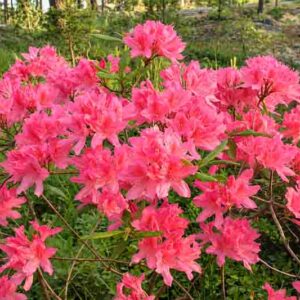
Compact evergreen azaleas such as ‘Hino Crimson’ and ‘Rosebud’ can be excellent choices. Their mature widths vary, so select a cultivar that fits your planting area rather than choosing by height alone.
Among popular compact choices, ‘Ginny Gee’ grows approximately 12-18 in. tall and 18-24 in. wide, while ‘Ramapo’ reaches around 2 ft. tall and 2-3 ft. wide. Other small selections include ‘Blue Tit’ and ‘Princess Anne’. Actual growth varies with growing conditions and age.
Yes. Many compact varieties grow successfully in containers with suitable ericaceous potting mix, good drainage, regular watering, and appropriate light. Their roots may require additional protection from freezing in winter.
No. Ten-year height estimates are often used by specialist nurseries to compare cultivars, but rhododendrons generally continue growing beyond that age. Mature height and especially spread are more useful when planning a small garden.
Some compact rhododendrons tolerate full sun in cool climates when soil moisture is adequate. Others prefer morning sun or dappled shade. Check each cultivar’s light requirements, especially in hot summer regions.
Pruning can control growth to a degree, but it is not a dependable substitute for choosing a naturally compact variety. Some rhododendrons respond poorly to severe cutting back. Light shaping after flowering is generally preferable.
Most prefer acidic, humus-rich, moist but well-drained soil, generally around pH 4.5-6.0. Their shallow root systems benefit from mulch and consistent moisture, but prolonged waterlogging can damage the roots.
A small garden doesn’t have to mean small flowers or modest ambitions. A carefully chosen dwarf azalea or compact rhododendron can deliver a magnificent spring display while keeping the garden open, balanced, and easy to maintain.
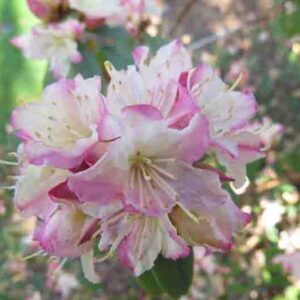
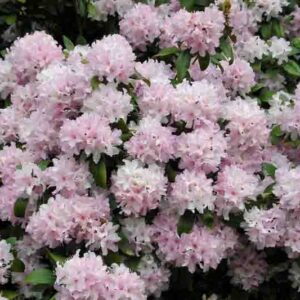
Whether you love the tiny pink-and-white flowers of ‘Ginny Gee’, the lavender-purple blooms of ‘Ramapo’, or the scented white blossoms of ‘Dora Amateis’, start with the plant’s real dimensions and growing requirements. Explore Gardenia’s individual profiles, save your favorites, and build a garden where every shrub has room to look its best.
Updated and reviewed by Gardenia: October 2026
| Hardiness |
3 - 10 |
|---|---|
| Plant Type | Shrubs |
| Genus | Rhododendron |
| Exposure | Full Sun, Partial Sun |
| Season of Interest | Spring (Early, Mid, Late), Summer (Early), Fall, Winter |
| Maintenance | Low |
| Water Needs | Average |
| Soil Type | Clay, Loam, Sand |
| Soil pH | Acid |
| Soil Drainage | Moist but Well-Drained |
| Tolerances | Rabbit |
| Attracts | Butterflies, Hummingbirds |
| Landscaping Ideas | Beds And Borders, Patio And Containers, Small Gardens |
| Garden Styles | City and Courtyard, Informal and Cottage, Japanese Garden, Traditional Garden |
Create a membership account to save your garden designs and to view them on any device.
Becoming a contributing member of Gardenia is easy and can be done in just a few minutes. If you provide us with your name, email address and the payment of a modest $25 annual membership fee, you will become a full member, enabling you to design and save up to 25 of your garden design ideas.
Join now and start creating your dream garden!