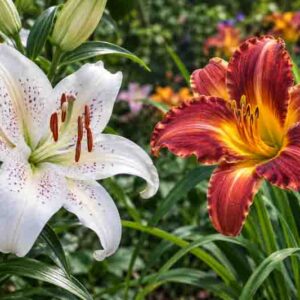
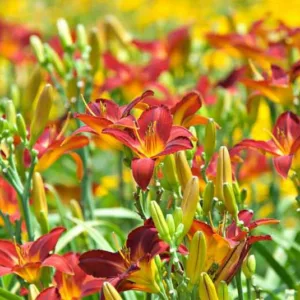
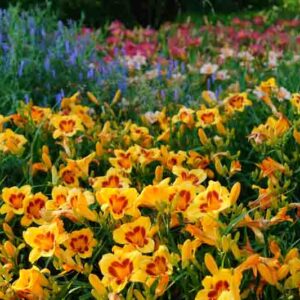
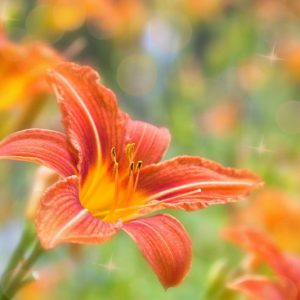
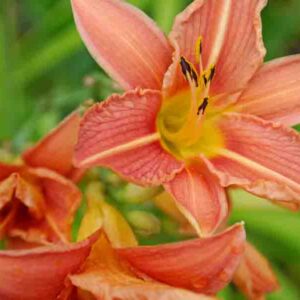
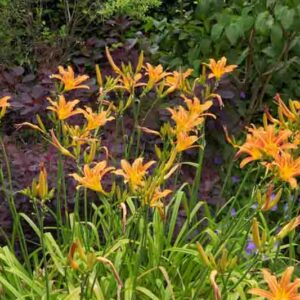
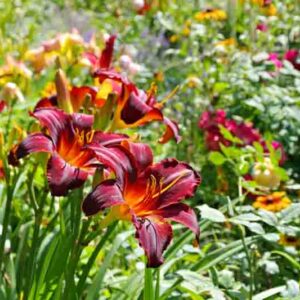
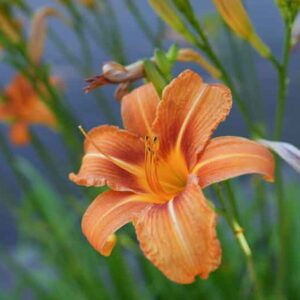
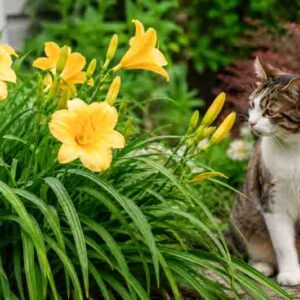
Daylilies thrive in sunny gardens, but heat tolerance and flower performance are not always the same. Discover which daylilies suit full sun, why flower color matters in extreme heat, how much sun and water plants need, and which proven cultivars deserve a place in hot, exposed summer borders.
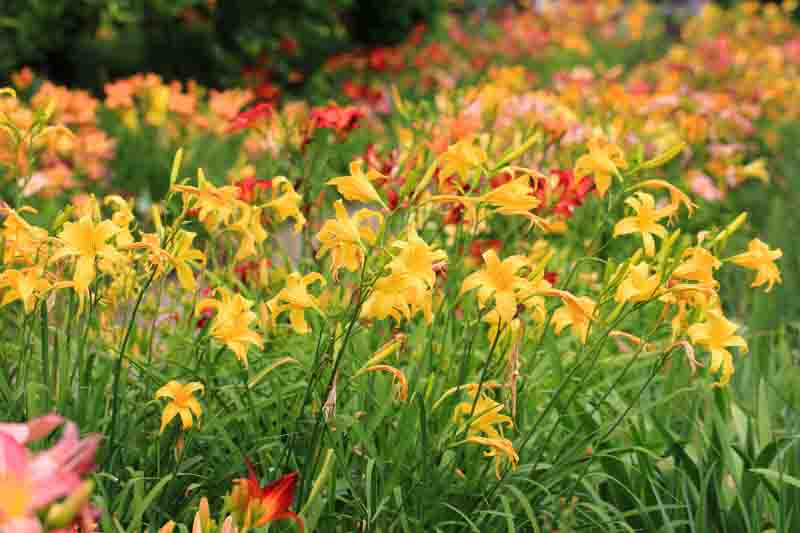


Daylilies are among the most dependable perennials for sunny gardens. Once established, many Hemerocallis cultivars cope remarkably well with summer heat and periods of dry weather, although reliable moisture produces better growth and flowering. But there is an important distinction gardeners often miss: a daylily plant can tolerate heat very well while its flowers may not look their best in extreme afternoon sun.
Flower color matters. The American Daylily Society recommends at least six hours of direct sunlight for most daylilies. It notes that light yellow cultivars, many pinks, and delicate pastels need good sun to develop their best coloring, while many red and purple cultivars benefit from some shade during the hottest part of the day because darker flowers absorb more heat.
So the best daylily for full sun is not simply a cultivar labeled “full sun.” Your summer temperatures, afternoon exposure, reflected heat, flower color, bloom season, and available moisture can all influence how well a daylily performs.
Gardenia’s Full-Sun Daylily Principle: Judge the plant and the flower separately. A cultivar may be vigorous and heat tolerant, yet deeply colored flowers may look better with some protection from extreme late-afternoon sun. Choose for your actual exposure, not simply the words “full sun” on a plant label.
Most daylilies perform best with at least six hours of direct sunlight each day. Adequate light supports strong flower scapes, good bud production, healthy growth, and abundant bloom.
That does not mean every daylily needs uninterrupted sunlight from sunrise to sunset. In mild northern or coastal climates, all-day sun may be excellent. In areas with very hot summers, a site with strong morning and midday sun followed by some afternoon protection can still provide enough light for excellent flowering while reducing stress on darker blooms.
Too much shade is different. Daylilies growing with insufficient light may produce plenty of healthy foliage but fewer scapes and flowers. If your plants look vigorous but refuse to bloom well, see Gardenia’s guide to why daylilies are not blooming.
For planting depth, soil, spacing, watering, feeding, dividing, and seasonal maintenance, use Gardenia’s complete daylily planting and care guide.
A daylily growing in six hours of sun in a cool climate experiences very different conditions from the same cultivar beside a west-facing wall in a hot inland garden. The number of sunlight hours matters, but so do the intensity and timing of that exposure.
West-facing walls, stone patios, concrete paths, gravel, driveways, and masonry can store and reflect heat. Dry winds increase moisture loss. Sandy soil can dry rapidly, while competition from trees and shrubs may leave daylily roots short of moisture even when the rest of the garden appears adequately watered.
Think in terms of microclimates. A sunny bed that becomes brutally hot between 3 p.m. and 6 p.m. should not necessarily be planted exactly like an open border that receives gentle morning sun followed by bright but moderate afternoon light.
Heat tolerant does not mean drought flowering. Established daylilies are resilient, but merely surviving dry conditions is different from producing abundant buds, attractive foliage, and high-quality flowers. Moisture is especially valuable while scapes and buds are developing and during the flowering season.
Flower color is one of the most useful clues when deciding where to place a daylily in a very sunny garden.
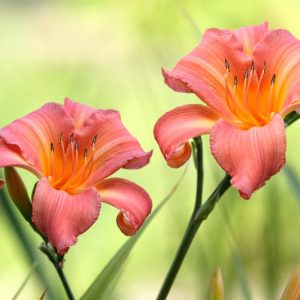
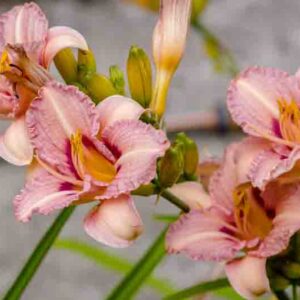
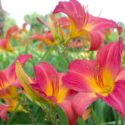
Light yellows, many pinks, and delicate pastels appreciate good sunlight and are logical starting points for exposed sites. Near-white flowers can also be very effective in bright gardens, where they provide visual relief from stronger summer colors.
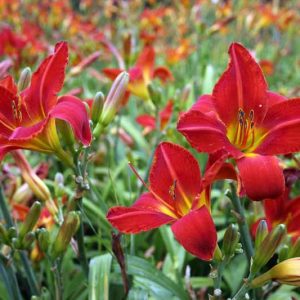
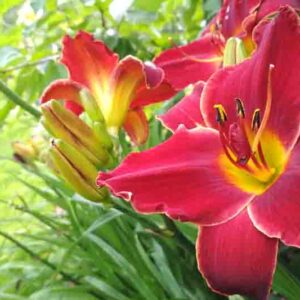
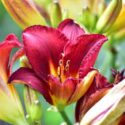
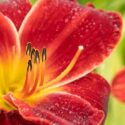
Red, burgundy, purple, and lavender daylilies can also grow and flower successfully in full sun. However, the American Daylily Society advises that many red and purple cultivars benefit from partial shade during the hottest part of the day.
This does not mean dark daylilies belong in shade. They still need enough direct sunlight to bloom well. In very hot regions, the ideal compromise may be abundant morning and midday sun with relief from the most intense late-afternoon exposure.
The following cultivars offer a useful range of flower colors, plant sizes, bloom seasons, and garden roles. Gardenia does not claim that any flower is universally “fade-proof.” Instead, these selections distinguish between documented plant tolerance of sun and summer heat and the way flower color may influence placement in extreme conditions.
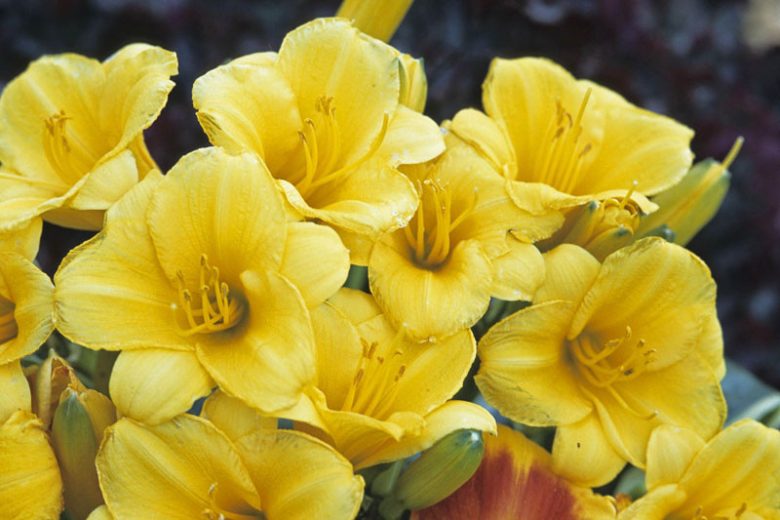 Hemerocallis ‘Stella de Oro’
‘Stella de Oro’ is one of the most useful compact daylilies for sunny landscapes. Its golden-yellow flowers, miniature flower size, fragrance, and repeat flowering have made it a garden standard. Growing only about 11 inches (28 cm) tall, it is particularly useful beside paths, toward the front of borders, on slopes, and in smaller gardens.
Best placement: A strong starting choice for exposed sunny sites.
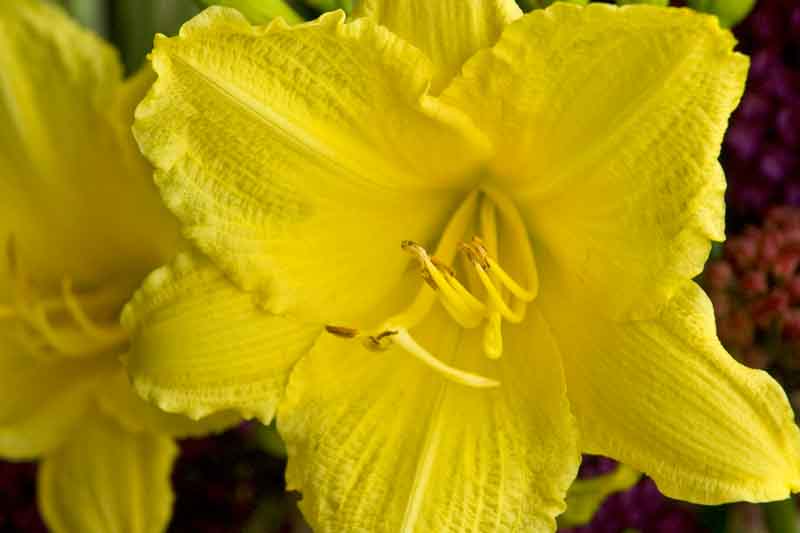 Hemerocallis ‘Happy Returns’
‘Happy Returns’ produces soft canary-yellow flowers on a compact plant and provides a gentler color effect than the richer gold of ‘Stella de Oro’. It begins flowering very early and is capable of repeat bloom, making it valuable where you want a long season from a relatively small footprint.
Best placement: A strong light-colored choice for exposed sun.
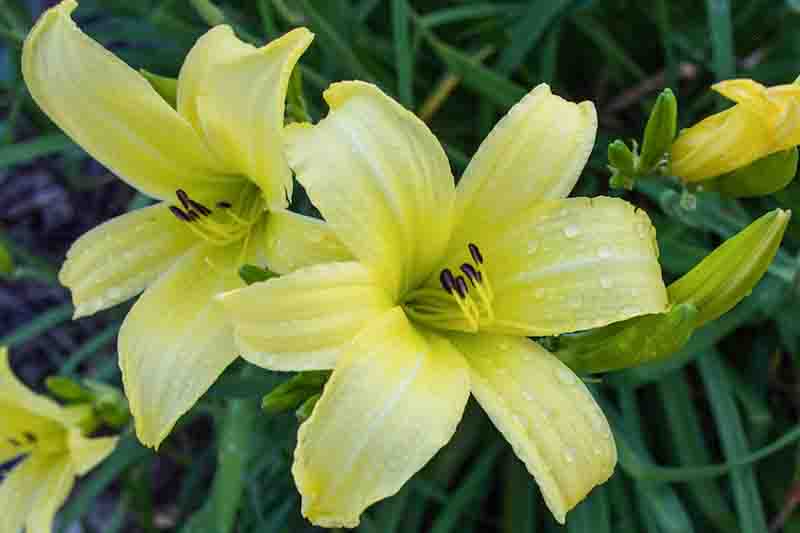 Hemerocallis ‘Hyperion’
‘Hyperion’ is a classic fragrant daylily with canary-yellow flowers carried on tall scapes. Reaching roughly 3-4 feet (90-120 cm), it fills a very different role from compact rebloomers and works beautifully toward the middle or back of a sunny perennial border. Its fragrance and graceful scale have kept it popular for generations.
Best placement: A strong choice for open sunny borders where height and fragrance are desirable.
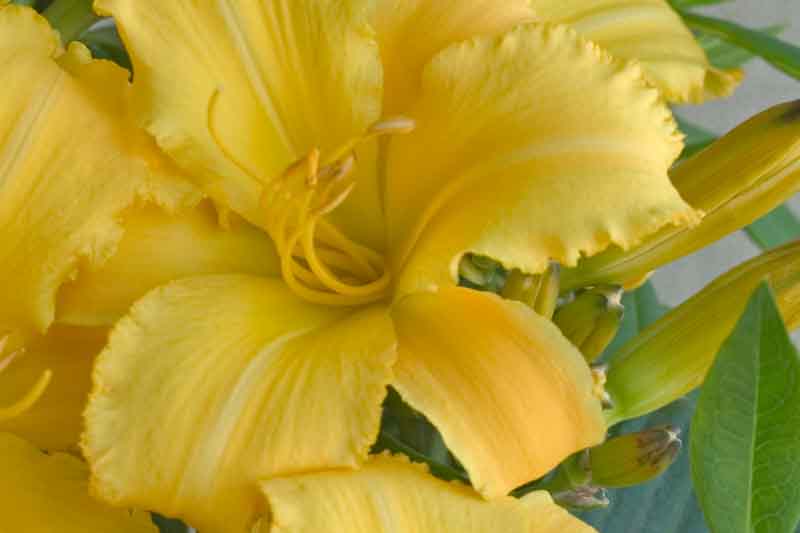 Hemerocallis ‘Mary Todd’
‘Mary Todd’ produces large, softly ruffled pastel-yellow flowers, offering much more visual scale than compact yellow daylilies. It flowers relatively early and grows to about 26 inches (65 cm), making it a useful middle-border plant.
Best placement: A strong light-colored option for exposed sunny perennial borders.
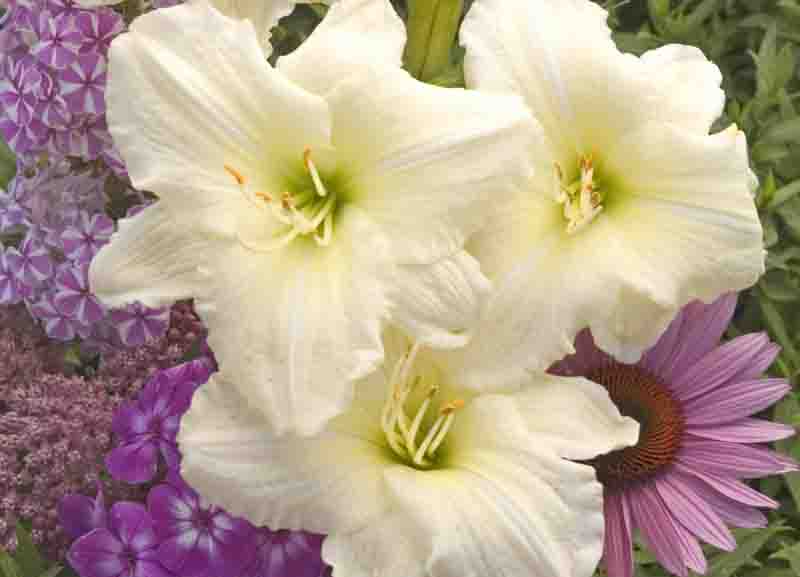 Hemerocallis ‘Joan Senior’
‘Joan Senior’ is one of the best-known near-white daylilies, producing large creamy flowers with fresh lime-green throats. An early midseason rebloomer, it brings light to a hot-colored planting and becomes especially luminous in morning and evening light.
Best placement: A strong pale-flowered choice for sunny borders.
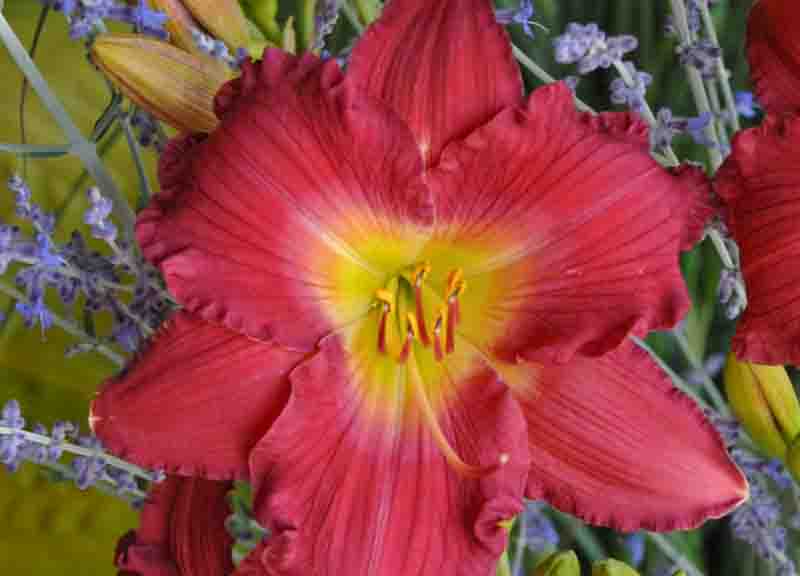 Hemerocallis ‘Romantic Returns’
‘Romantic Returns’ provides a richer alternative to pale pink daylilies, with large deep rose-pink flowers accented by a lighter watermark and green throat. It is fragrant, reblooming, and noted for well-branched scapes and a generous bud count.
Best placement: Suitable for full sun. In exceptionally hot exposures, compare flower quality in morning and afternoon before deciding whether some late-day protection would be beneficial.
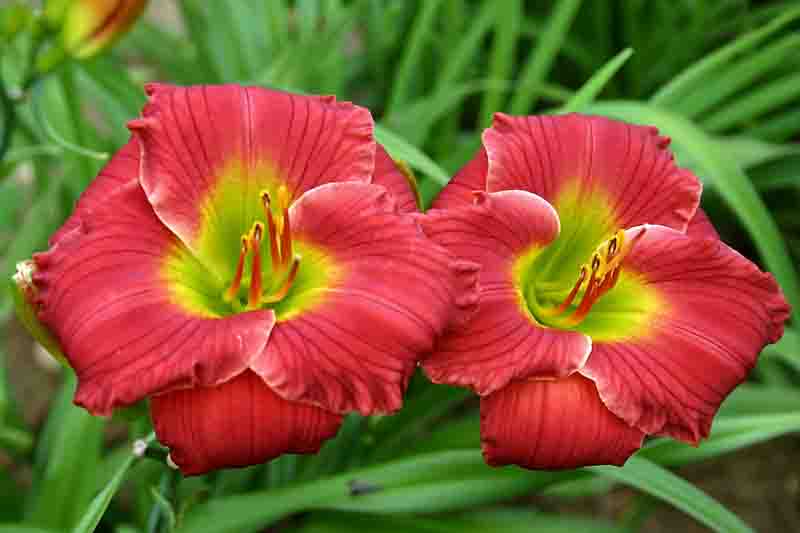 Hemerocallis ‘Red Hot Returns’
‘Red Hot Returns’ combines vibrant crimson-red flowers with strong repeat-bloom potential. Its 5-inch (12 cm) flowers have bright lemon-yellow throats, and the well-branched scapes can carry an impressive bud count. It is an excellent choice when you want red rather than yellow from a long-season daylily.
Best placement: The plant performs in full sun and summer heat. In climates with extreme afternoon temperatures, some late-day protection may improve the appearance of its dark red flowers.
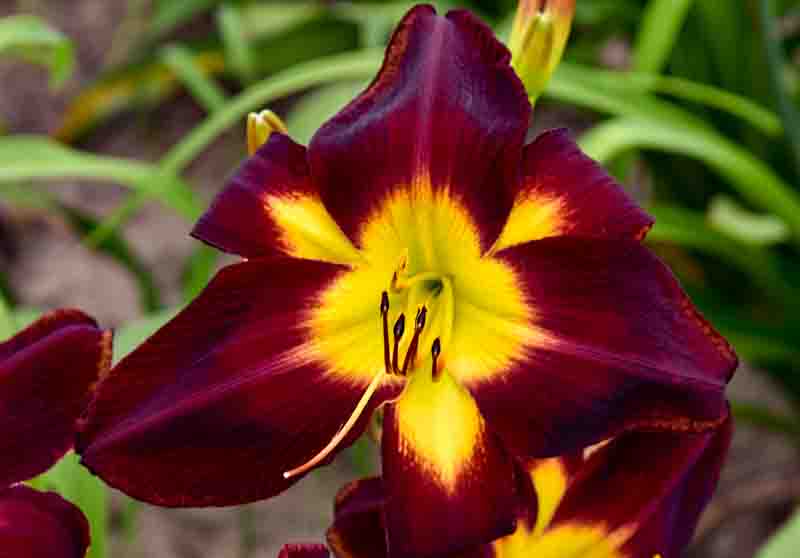 Hemerocallis ‘Persian Ruby’
‘Persian Ruby’ is a dramatic choice for gardeners who want size as well as saturated color. Its huge ruby-red flowers can approach 8 inches (20 cm) across, creating a bold focal point among grasses and summer perennials.
Best placement: A heat-tolerant full-sun plant. Because of its dark ruby flowers, afternoon protection is worth considering in exceptionally hot, exposed gardens.
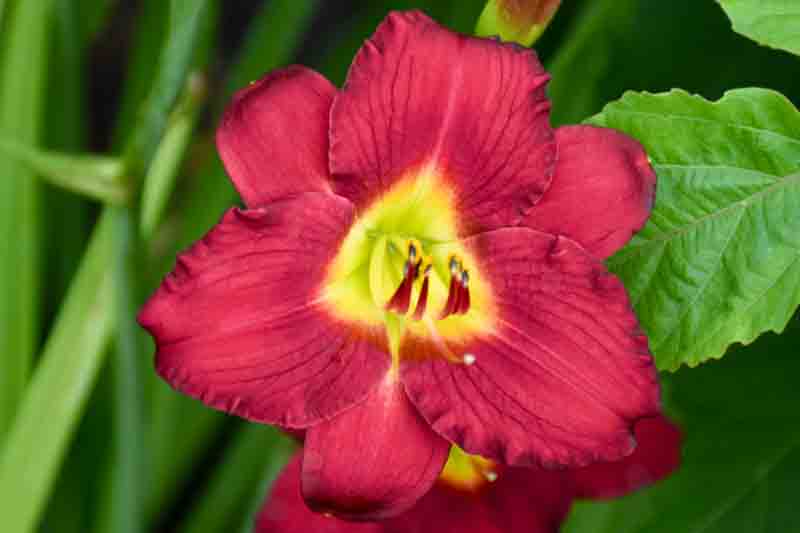 Hemerocallis ‘Pardon Me’
‘Pardon Me’ packs considerable garden value into a compact plant. Its rich burgundy-red flowers are fragrant and nocturnal, opening later in the day and remaining open into the evening and following morning. Repeat bloom adds to its usefulness in smaller borders.
Best placement: Suitable for full sun, but its dark flower color makes afternoon protection a reasonable option where summer heat is severe.
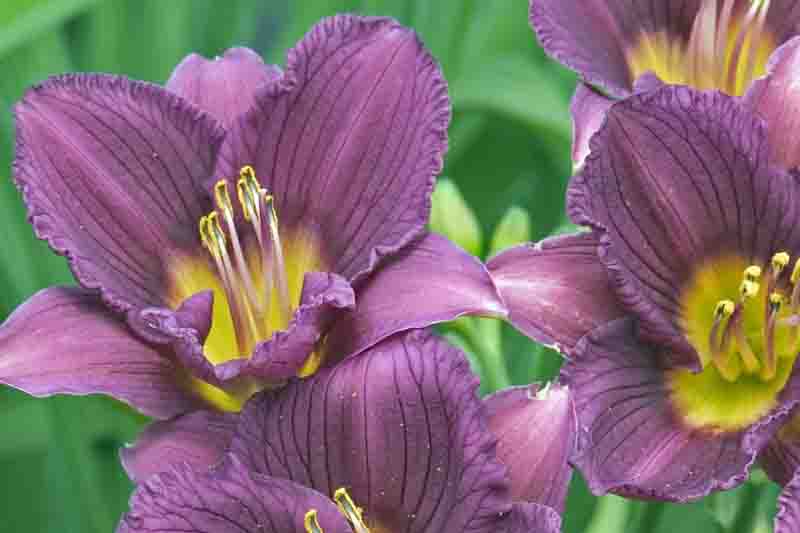 Hemerocallis ‘Little Grapette’
‘Little Grapette’ proves that a small daylily can still make a strong color statement. Growing only about 12 inches (30 cm) tall, it produces miniature grape-purple flowers with green throats and works especially well near paths, in small gardens, and in containers.
Best placement: The plant tolerates sun and summer heat. In very hot climates, afternoon protection is worth considering because of its deep purple flower color.
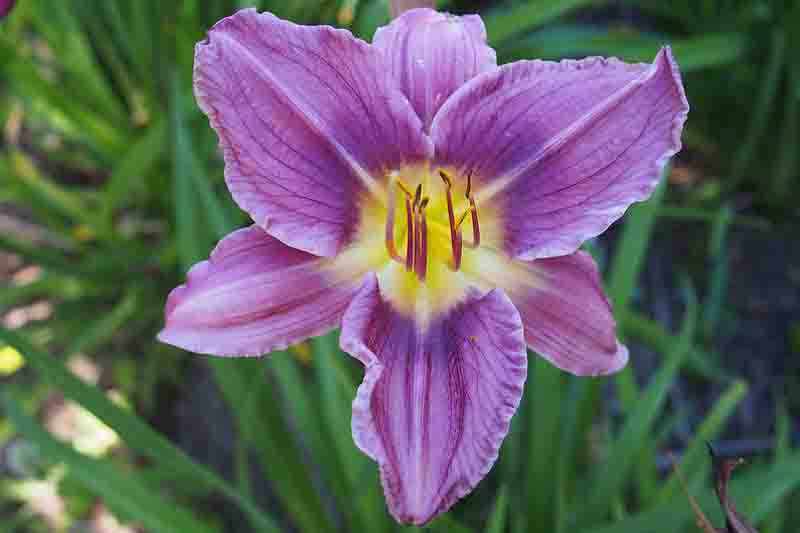 Hemerocallis ‘Prairie Blue Eyes’
‘Prairie Blue Eyes’ adds cooler color to a daylily planting, with lavender flowers, blue-purple eyezones, and lime-green throats. It grows to roughly 2-3 feet (60-90 cm), making it an excellent middle-border cultivar when yellow, orange, and red daylilies dominate the palette.
Best placement: A full-sun-capable, heat-tolerant plant. In extreme heat, afternoon protection is worth considering because of its lavender-purple coloring rather than because the cultivar has been proven to fade.
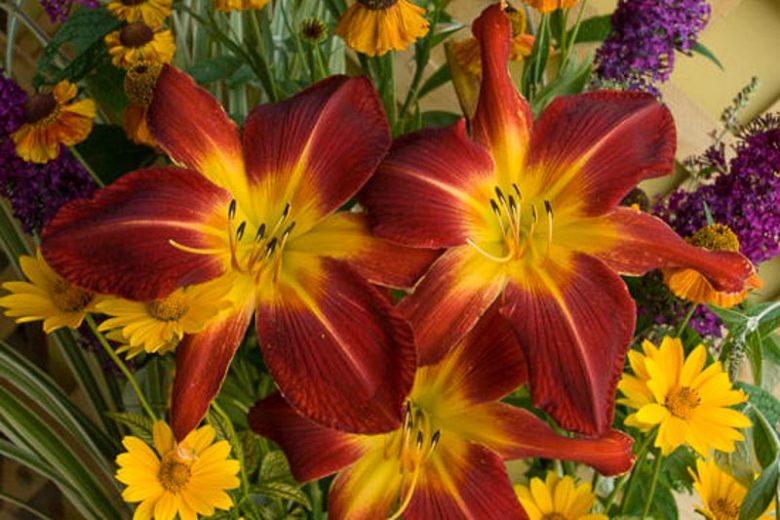 Hemerocallis ‘Ruby Spider’
‘Ruby Spider’ is one of the most dramatic plants in this selection. Enormous ruby-red flowers, reaching about 9 inches (22 cm) across, open around glowing golden throats. The plant reaches about 34 inches (85 cm) tall and makes a spectacular focal point in a mixed sunny border.
Best placement: The plant tolerates sun and summer heat, but gardeners in exceptionally hot climates may obtain better flower quality where it escapes the harshest late-afternoon exposure.
Find the right daylily for your garden: Use Gardenia’s Plant Finder to explore plants by color, size, bloom season, exposure, and other garden traits, or use the Daylily Comparison Tool to compare cultivars side by side. Use the Garden Design Tool to combine plants, compare their seasons and sizes, and build a planting palette for your own garden. You can also browse Gardenia’s daylily garden ideas for more planting inspiration.
Gardenia compared characteristics in its Hemerocallis cultivar database, including sun exposure, heat tolerance, flower color, bloom season, mature size, fragrance, and reblooming habit. We then applied established American Daylily Society guidance on flower color and intense sun to distinguish between plants that tolerate summer heat and darker flowers that may benefit from afternoon protection.
The placement advice below is not a claim of laboratory-tested fade resistance. It is a practical synthesis of cultivar characteristics, established daylily guidance, and the way gardeners actually use these plants.
Gardenia’s practical shortcut: For the hottest, most exposed part of the garden, begin with light-colored, heat-tolerant cultivars such as ‘Hyperion’, ‘Mary Todd’, ‘Happy Returns’, ‘Stella de Oro’, or ‘Joan Senior’. Richly colored daylilies can still thrive in full sun, but in extreme climates position them where they receive abundant direct light without necessarily taking the full force of late-afternoon heat.
Daylilies are remarkably resilient once established, but water is important for good flowering. The American Daylily Society notes that adequate water can increase the number and size of blooms and that moisture is particularly important during spring scape and bud development and throughout the bloom season.
Water deeply rather than repeatedly wetting only the soil surface. Deep irrigation encourages moisture to penetrate the root zone and lasts longer during hot weather.
Newly planted daylilies, container-grown plants, and specimens growing beside paving or heat-reflecting walls need closer attention because their root zones can dry faster.
A layer of mulch can help retain soil moisture and moderate soil temperatures. Keep mulch away from the crown rather than piling it against the base of the plant.
If foliage becomes yellow, spotted, streaked, or unusually brown despite adequate moisture, do not automatically blame summer heat. Gardenia’s guide to daylily problems, yellow leaves, spots, and poor bloom can help distinguish water stress from disease, pests, normal foliage aging, and other problems.
A healthy daylily plant does not necessarily tell you how well its flowers are handling the site. Look at blooms at different times of day.
A dark red or purple flower may look rich and saturated when it opens but become noticeably less attractive during intense afternoon heat. Petals may develop pale areas, crisp edges, or deteriorate unusually quickly under severe conditions.
Remember, however, that individual daylily flowers naturally last only about a day. A bloom declining toward evening is normal. What matters is whether flowers deteriorate prematurely, unevenly, or consistently more rapidly in the hottest exposure.
If flower quality is disappointing but the plant is otherwise healthy and blooming freely, deep shade is rarely the solution. Even a modest change in exposure can help. Morning sun with some late-day relief may be enough.
Flower color is not the only consideration. Bloom season can also help gardeners manage extreme summer conditions.
A dark cultivar whose main display occurs before the harshest heat of summer may look superb in a location where a later-flowering dark cultivar struggles. Conversely, gardeners in regions with relatively mild summers may find that this distinction matters very little.
For a longer display, combine early-blooming daylilies, midseason daylilies, and late-blooming daylilies rather than planting several cultivars that all peak together.
Add reblooming daylilies for additional flowering potential. Remember that rebloom depends on cultivar genetics, climate, growing-season length, plant vigor, and available moisture, so it should never be treated as equally reliable in every garden.
Gardeners wanting the longest possible display can also follow these tips on how to keep daylilies blooming longer.
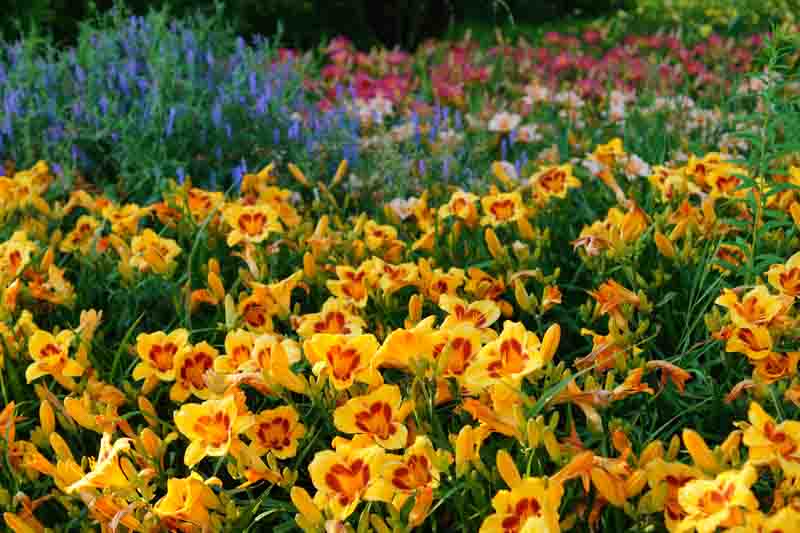
Daylilies work best when they are integrated into a mixed planting rather than treated as isolated clumps. Their arching, strap-shaped leaves need contrast, particularly once the main flush of flowers is over.
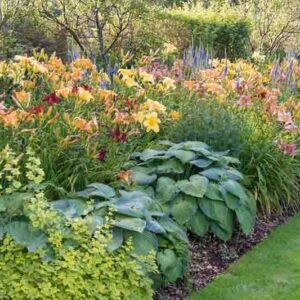
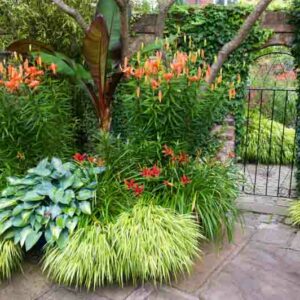
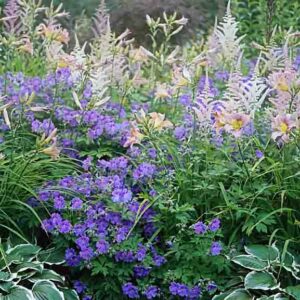
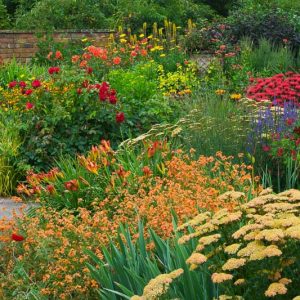
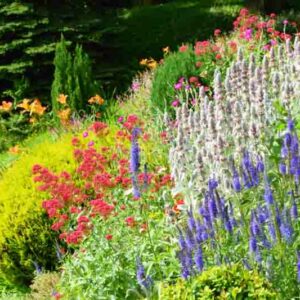
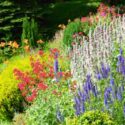
Yellow and golden daylilies are striking with blue-violet Salvia, Nepeta, Agastache, and ornamental grasses. Near-white cultivars such as ‘Joan Senior’ can cool a border dominated by intense summer colors. Pink daylilies soften stronger reds and oranges, while purple and burgundy cultivars provide valuable depth.
Tall ‘Hyperion’ can rise through a mixed planting, while ‘Stella de Oro’, ‘Happy Returns’, ‘Little Grapette’, and ‘Pardon Me’ work much closer to the front. Large flowers such as ‘Persian Ruby’ and ‘Ruby Spider’ are most effective when they have enough visual space to act as focal points.
Choose companions that share similar sun, soil, drainage, and moisture requirements. Gardenia’s guide to great companion plants for daylilies can help create a border that remains attractive before, during, and after the daylily season.
Daylilies deserve their reputation as durable, sun-loving perennials. But choosing the right cultivar for a hot garden requires more thought than simply finding a plant labeled “full sun.”
Start with the actual conditions in your garden. How many hours of direct sun does the site receive? Is that gentle morning light or intense west-facing afternoon exposure? Does paving reflect additional heat? Can the soil retain enough moisture during flowering?
Then consider the cultivar itself. Light yellow, many pink, and pastel-colored daylilies are excellent candidates for sunny locations. Dark reds, burgundies, purples, and lavenders can also thrive in full sun, but some may display their best flower quality with protection during the hottest part of the day.
The key is to separate the plant’s ability to tolerate heat from the flower’s response to extreme exposure. That distinction explains why two healthy daylilies can grow equally well in the same sunny garden while their flowers respond differently during a heat wave.
Choose for flower color, plant scale, bloom season, rebloom potential, and your actual microclimate. Provide adequate moisture during active growth and flowering. Do that, and your daylilies can do much more than simply survive summer – they can remain one of the most rewarding features in the garden.
Yes. Most daylilies perform best with at least six hours of direct sunlight each day. In climates with extreme summer heat, some dark red and purple flowers may benefit from protection during the hottest part of the afternoon.
Light yellow cultivars, many pinks, and delicate pastels are strong starting choices for sunny positions. Red, burgundy, purple, and lavender daylilies can also grow in full sun, but many darker flowers benefit from some protection during extreme afternoon heat.
Many daylilies tolerate summer heat very well once established. However, plant heat tolerance and flower performance are not identical. A vigorous plant may remain healthy while deeply colored flowers respond differently to extreme afternoon exposure.
Yes. Red daylilies can grow and flower successfully in full sun. In very hot climates, however, many dark red cultivars may display better flower quality with some protection from the most intense late-afternoon heat.
Not necessarily. Most daylilies need abundant direct sunlight to flower well. However, many dark red and purple cultivars benefit from some shade during the hottest part of the day in regions with extreme summer heat.
Adequate water improves daylily performance, especially while scapes and buds are forming and during flowering. Established plants tolerate some dry periods, but deep watering during prolonged heat generally supports better foliage, bud production, and flowers.
American Daylily Society – Daylily FAQ – guidance on daylily sun requirements, flower color, watering, soil, heat tolerance, and general culture.
Gardenia – Hemerocallis Daylilies – cultivar characteristics, growing requirements, photographs, bloom information, and individual plant profiles.
| Hardiness |
3 - 9 |
|---|---|
| Heat Zones |
2 - 11 |
| Climate Zones | 2, 3, 4, 5, 6, 7, 8, 9, 10, 11, 12, 13, 14, 15, 16, 17, 18, 19, 20, 21, 22, 23, 24, H1, H2 |
| Plant Type | Perennials |
| Genus | Hemerocallis |
| Exposure | Full Sun, Partial Sun |
| Season of Interest | Summer (Early, Mid, Late), Fall |
| Maintenance | Low |
| Water Needs | Average |
| Soil Type | Chalk, Clay, Loam, Sand |
| Soil pH | Acid, Alkaline, Neutral |
| Soil Drainage | Moist but Well-Drained, Well-Drained |
| Characteristics | Showy |
| Tolerances | Drought, Rabbit, Dry Soil, Salt |
| Attracts | Butterflies, Hummingbirds |
| Landscaping Ideas | Banks And Slopes, Beds And Borders, Patio And Containers |
| Garden Styles | City and Courtyard, Coastal Garden, Informal and Cottage, Traditional Garden |
| Hardiness |
3 - 9 |
|---|---|
| Heat Zones |
2 - 11 |
| Climate Zones | 2, 3, 4, 5, 6, 7, 8, 9, 10, 11, 12, 13, 14, 15, 16, 17, 18, 19, 20, 21, 22, 23, 24, H1, H2 |
| Plant Type | Perennials |
| Genus | Hemerocallis |
| Exposure | Full Sun, Partial Sun |
| Season of Interest | Summer (Early, Mid, Late), Fall |
| Maintenance | Low |
| Water Needs | Average |
| Soil Type | Chalk, Clay, Loam, Sand |
| Soil pH | Acid, Alkaline, Neutral |
| Soil Drainage | Moist but Well-Drained, Well-Drained |
| Characteristics | Showy |
| Tolerances | Drought, Rabbit, Dry Soil, Salt |
| Attracts | Butterflies, Hummingbirds |
| Landscaping Ideas | Banks And Slopes, Beds And Borders, Patio And Containers |
| Garden Styles | City and Courtyard, Coastal Garden, Informal and Cottage, Traditional Garden |
Create a membership account to save your garden designs and to view them on any device.
Becoming a contributing member of Gardenia is easy and can be done in just a few minutes. If you provide us with your name, email address and the payment of a modest $25 annual membership fee, you will become a full member, enabling you to design and save up to 25 of your garden design ideas.
Join now and start creating your dream garden!
Create a membership account to save your garden designs and to view them on any device.
Becoming a contributing member of Gardenia is easy and can be done in just a few minutes. If you provide us with your name, email address and the payment of a modest $25 annual membership fee, you will become a full member, enabling you to design and save up to 25 of your garden design ideas.
Join now and start creating your dream garden!