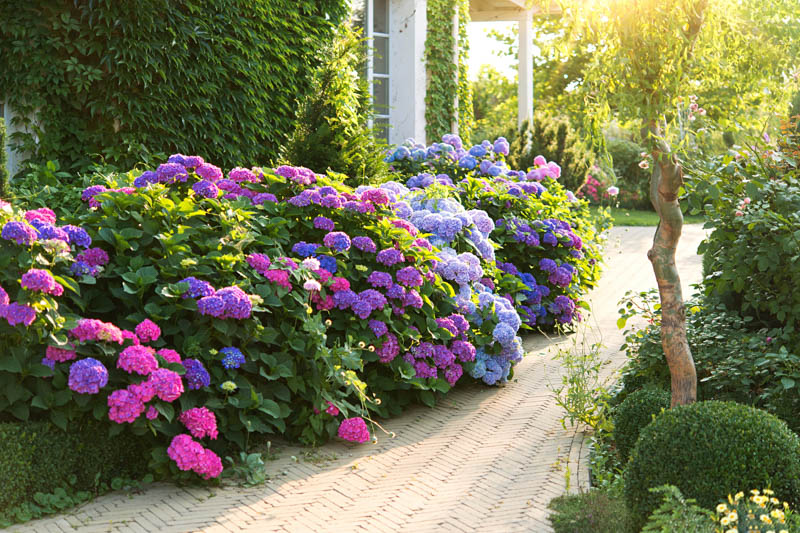
Flowering Foundation Planting Guides
A flowering foundation garden can make even a modest house feel wonderfully welcoming. But how do you plant shrubs beneath windows without letting them grow too tall? Why do hydrangeas thrive in one front yard and wilt in another? And when should you prune spring-flowering shrubs without removing next year’s blossoms? Planting close to a house brings challenges that ordinary flower borders don’t always face, from compacted soil and dry shade beneath eaves to intense reflected summer heat. Whether you’re starting a new foundation bed or replacing an overgrown planting, discover how to design, plant, water, prune, and maintain healthy flowering shrubs and perennials for beautiful, lasting curb appeal.
Learn How to Design and Plant a Flowering Foundation Bed with Correct Spacing, Soil, and Drainage
The most successful foundation plantings are planned around the house rather than planted directly against it. Start with the building’s proportions, windows, entrance, and available bed depth, then choose flowering plants that will fit comfortably when mature.
Seven steps for planting a beautiful flowering foundation garden:
- Measure the site: Record bed depth, window sill heights, path widths, walls, vents, and utility access.
- Observe sunlight: Check morning and afternoon sun, shade from overhangs, and reflected heat near walls.
- Assess the soil: Identify compaction, construction debris, drainage problems, and dry areas beneath eaves.
- Choose plants for mature dimensions: Compare eventual height and spread, not just nursery-pot size.
- Arrange compatible flowering plants: Group shrubs and perennials with similar sunlight, drainage, and moisture needs.
- Plant correctly: Maintain appropriate root flare or crown depth and avoid piling soil or mulch against stems.
- Water and maintain: Establish healthy roots and preserve clear access to windows, pathways, building vents, and drainage.
How far from the house should flowering shrubs be planted? Use the plant’s mature width as a guide. A shrub expected to grow 4 feet wide will ordinarily extend approximately 2 feet from its center, and additional space may be needed for maintenance and airflow. There is no universal distance suitable for every shrub or building.
How deep should a foundation flower bed be? Deep enough for the mature shrubs and lower plants you intend to grow. A shallow strip may be better suited to low perennials and bulbs than to multiple rows of flowering shrubs.
How do you arrange shrubs and perennials in layers? Position the main shrubs where they complement the house, then add lower-growing perennials toward the front of the bed. Avoid a rigid arrangement when a few relaxed, repeated groups would look more natural.
What soil is best for flowering foundation plants? Requirements differ. Roses and many spireas prefer well-drained soil, hydrangeas generally need reliable moisture, and fothergilla appreciates acidic soil with appropriate moisture and drainage. Select compatible plants rather than assuming one soil preparation suits every species.
Why is drainage particularly important beside a house? Water should not accumulate against vulnerable building structures. Keep existing grading, drains, vents, weep holes, and damp-proofing details functioning correctly. Correct pooling water or serious drainage problems before planting.
Can you raise the soil level against the wall? Avoid doing so without proper building guidance. Raising soil or mulch against siding, masonry details, or moisture barriers can create dampness and maintenance problems.
When is the best time to plant flowering shrubs? Spring and early fall are often good choices in temperate climates. Select a planting period that avoids extreme heat, frozen soil, and severe drought, and allows roots time to establish.
How many flowering plants are needed? Use mature spacing, not the appearance of newly purchased plants. Repeating a few compatible cultivars generally produces a more cohesive design than filling every gap immediately.
Can different hydrangeas be planted together? Yes, where the space and growing conditions permit. However, their mature dimensions, sunlight preferences, and pruning requirements may differ. A compact panicle hydrangea and an oakleaf hydrangea should not automatically receive the same care.
Should foundation planting be symmetrical? Not necessarily. A balanced design can feature a larger planting group near one corner and smaller repeated flowers elsewhere, particularly when the entrance and windows are asymmetrical.
Gardenia’s planting advice: Draw the shrubs at their mature dimensions before planting. A little empty space during the first season is preferable to overcrowded roots, hidden windows, and constant corrective pruning later.
Explore Gardenia’s Foundation Shrub Selection Guide, Compact Flowering Shrubs, and Growing and Caring for Hydrangeas.
Discover How to Water, Feed, Deadhead, and Prune Flowering Shrubs for More Blooms
Flowering foundation beds need consistent care during establishment, but mature plants should not require constant attention simply to fit the space. The most important maintenance tasks are appropriate watering, selective pruning, and preserving the flowering wood of each species.
How often should newly planted foundation shrubs be watered? Check the root zone rather than following a rigid schedule. Frequency varies with soil texture, rainfall, temperature, and plant size. Shrubs beneath a roof overhang may receive far less rainfall than plants growing just a few feet away.
How should hydrangeas be watered near a house? Hydrangeas need adequate root-zone moisture, particularly during establishment and summer heat. Water thoroughly when needed rather than repeatedly wetting only the soil surface, and avoid keeping the roots constantly saturated.
Should flowering foundation shrubs be fertilized each spring? Not automatically. Healthy shrubs in suitable soil may need little additional feeding. Excessive nitrogen can favor foliage growth and reduce flowering in some circumstances. Assess soil conditions and plant health before applying fertilizer.
When should Bobo Hydrangea be pruned? Hydrangea paniculata ‘Bobo’ flowers on new growth. Appropriate late-winter or early-spring pruning can help maintain shape and encourage healthy flowering stems. Avoid reducing the shrub so severely that its natural proportions are spoiled.
How do you prune Munchkin Oakleaf Hydrangea? Hydrangea quercifolia ‘Munchkin’ produces flowers on older wood. Remove damaged branches when appropriate and prune for shaping shortly after flowering if needed. Heavy winter or spring pruning may remove flower buds.
When should spring-flowering viburnums be pruned? A shrub such as Viburnum carlesii ‘Compactum’ is generally best pruned after its spring flowering period if shaping is necessary. Repeated pruning before bloom can greatly reduce its fragrant display.
How should fothergilla be maintained? Fothergilla gardenii generally needs little pruning beyond removal of damaged growth or modest shaping. Preserve its natural habit and avoid cutting away spring flower buds unnecessarily.
Does spirea need pruning after flowering? Timing depends on the type. Spring-flowering spireas often benefit from shaping after bloom, while summer-flowering types may be managed differently. Identify the exact cultivar before cutting.
Should you deadhead flowering foundation shrubs? Sometimes. Removing spent rose flowers may encourage additional blooms in repeat-flowering varieties, while many hydrangea flowerheads can remain decorative as they mature. Deadheading needs differ among species.
How do you keep low flowering perennials looking attractive? Remove damaged growth and spent flowers where appropriate, maintain suitable moisture, and trim plants that benefit from rejuvenation. Some perennials respond with another flowering flush, while others flower only once each season.
How should flowering shrubs be mulched? Apply a suitable layer of mulch over the root zone to conserve moisture and suppress weeds, while keeping it clear of crowns, trunks, vents, and the building’s vulnerable wall details.
How do you keep a foundation shrub from blocking a window? Start with a plant whose natural mature height fits below the sill. Selective pruning can maintain clearance, but repeated severe cutting indicates that the shrub may be unsuitable for its position.
Gardenia’s flowering care tip: Before pruning, ask one question: does this shrub flower on old wood or new growth? Understanding the answer can prevent removing an entire season’s flowers.
Read Gardenia’s Hydrangea Pruning Guide, Hydrangea Bloom Calendar, and Flowering Shrub Growing and Care Guides.
Solve Flowering Foundation Problems: Few Flowers, Dry Shade, Overgrown Shrubs, and Winter Damage
Even a beautiful foundation garden can become disappointing when shrubs receive insufficient light, dry out beneath eaves, or gradually outgrow their positions. Understanding the cause of a problem is more useful than simply adding fertilizer or cutting everything back.
Why are my foundation shrubs not flowering? Common causes include insufficient sunlight, pruning at the wrong time, immature plants, drought stress, excessive nitrogen, or winter injury to flower buds. Check the species’ normal flowering season and bud formation before treating the plant.
Why is my hydrangea producing leaves but no flowers? Different hydrangeas bloom on different types of growth. Pruning at the wrong time may remove flower buds, particularly on oakleaf and many bigleaf hydrangeas. Insufficient light, immature growth, or winter damage may also contribute.
Why do hydrangeas wilt near a sunny wall? Reflected heat and rapid soil drying can increase water stress, especially during summer. Check moisture around the roots and consider whether the plant is suitable for the exposure. Not all wilting automatically means the soil is dry, so inspect before watering again.
Why is my flowering foundation bed dry even after rain? Roof overhangs can prevent rainfall from reaching the root zone. Plants growing close to a wall may receive significantly less water than those farther into the garden.
Can flowering plants grow in deep shade beneath eaves? Choices are limited. Some shade-tolerant plants may survive with suitable moisture, but abundant flowering is difficult where light is extremely low. Gardenia’s Best Flowers for Full Shade helps distinguish realistic choices from plants that merely tolerate shade.
Why are leaves turning yellow? Waterlogging, drought, nutrient availability, unsuitable soil pH, pests, and natural seasonal changes can cause yellowing. Examine the soil and roots before applying treatments.
How do you repair an overgrown foundation bed? Identify which shrubs can be selectively pruned and which have outgrown their space permanently. Renovating a planting may require replacing oversized shrubs with naturally compact varieties rather than continually cutting them back.
Can flowering shrubs damage exterior walls? Shrubs planted too close may obstruct ventilation, trap moisture against surfaces, or prevent necessary maintenance. Risks depend on plant growth, building materials, drainage, and site conditions. Maintain suitable clearance rather than relying on frequent clipping.
What causes flower buds to die during winter? Severe cold, drying winds, sudden temperature changes, and late frosts may damage developing buds. Plants can survive winter but still fail to flower the following season.
How can you protect flowering shrubs near driveways? Choose plants tolerant of local conditions and keep them clear of traffic and visibility areas. Road salt, snow storage, compacted soil, and reflected heat can all cause damage.
Can you replace an unsuccessful hydrangea with another flowering shrub? Absolutely, but first determine why the original plant failed. A drought-tolerant shrub may be more suitable near a hot, dry wall, while a moisture-loving plant may thrive farther from the building.
What if the foundation bed is too narrow for shrubs? Use suitably sized perennials, spring bulbs, or low-growing plants instead. A shallow planting that remains healthy and proportional is preferable to oversized woody shrubs constantly pruned against the wall.
How do you maintain beautiful flowers over several seasons? Choose shrubs with complementary blooming times, preserve their correct pruning schedules, and include attractive foliage or permanent structure. Not every flowering plant needs to bloom at once.
Gardenia’s final growing advice: Healthy, attractive foundation plantings begin with suitable plants and enough space. Match shrubs to their microclimate, protect the building’s drainage and ventilation, and let each plant flower in its natural season.
Explore Gardenia’s Hydrangea Growing and Troubleshooting Guide, Best Shrubs for Dry Shade, and Low-Maintenance Shrub Selection.