Scarlet Sage, Bedding Sage, Tropical Sage, Ornamental Sage, Saucy Red Salvia, Saucy Red Sage
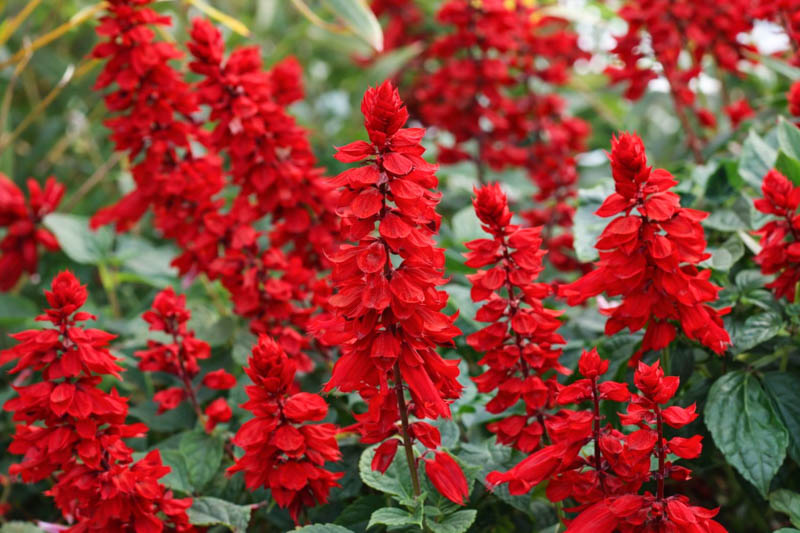
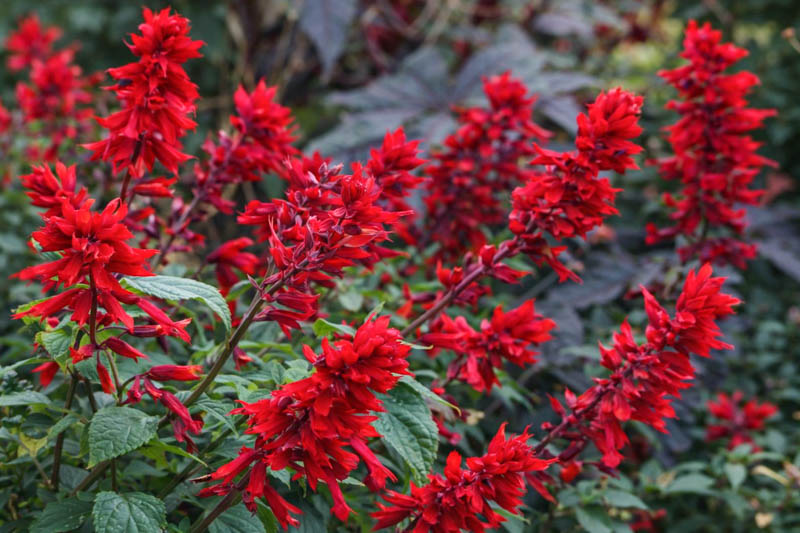


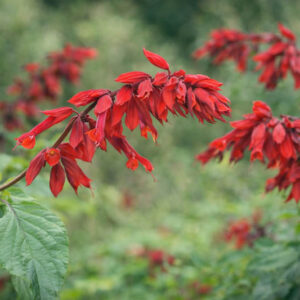
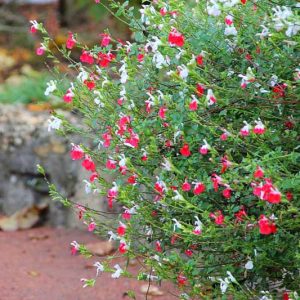
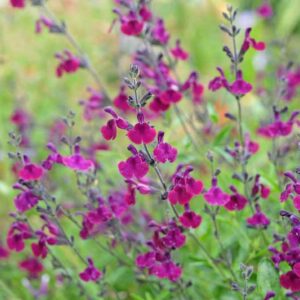
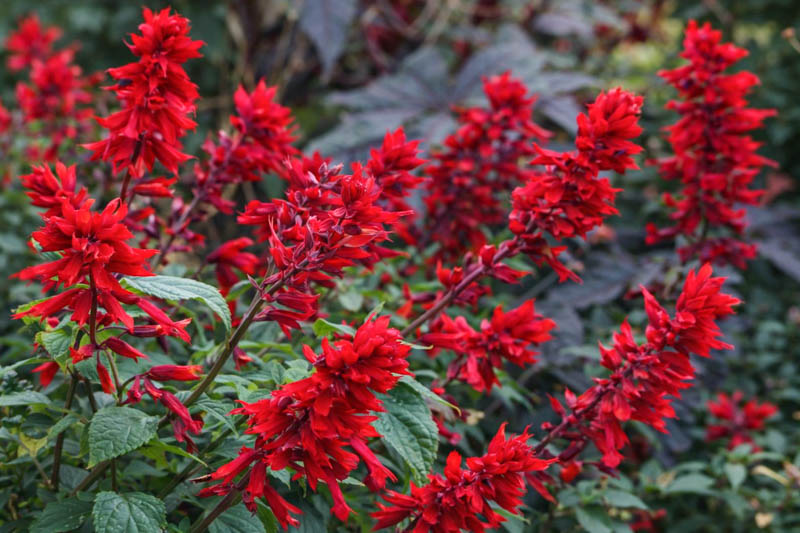
Salvia splendens – Saucy Red is the kind of plant gardeners reach for when they want bold, confident color that looks intentional – fast. This is not a ‘maybe it will bloom’ warm-season bloomer. It is a vigorous, warm-season showstopper that sends up thick, scarlet-red flower spikes above lush green foliage and keeps the performance going from mid-late spring to frost in many climates.
What makes Saucy Red especially easy to love is how tidy it stays. The blooms are typically sterile and self-cleaning, so you are not stuck deadheading every few days to keep it looking sharp. It is equally happy creating a big block of color in a bed, adding vertical punch in a mixed border, or acting as the “thriller” in a container. And yes – it reliably draws hummingbirds, while deer often pass it by.
Summary: A vigorous, tender perennial (often grown as an annual) with upright spikes of long-tubed, scarlet-red flowers and lush green foliage.
Use: Excellent for mixed borders, mass plantings, edging, cottage gardens, cutting gardens, and containers.
Highlight: Continuous bloom from late spring to frost with a tidy, self-cleaning habit in many plantings.
Note: Best in full sun and moist, well-drained soil. Loved by butterflies and hummingbirds; often avoided by deer.
| Botanical Name | Salvia splendens – Saucy Red |
|---|---|
| Family | Mint family (Lamiaceae) |
| Common Names | Scarlet Sage, Red Salvia, Scarlet Bedding Sage |
| Native Range | Species native to Brazil; Saucy Red is a garden selection. |
| Plant Type and Habit | Tender perennial (often grown as an annual); clump-forming, upright, tidy |
| Hardiness (approx. USDA) | Perennial in USDA Zones 9-10; grown as an annual elsewhere |
| Height | 24-36 in. (60-90 cm) |
| Spread | 24-36 in. (60-90 cm) |
| Spacing | 12-18 in. (30-45 cm) for good airflow |
| Sun and Exposure | Best in full sun; part shade tolerated (helpful in extreme heat) |
| Soil | Prefers humus-rich, moderately fertile, moist, well-drained soil |
| Seasonal Interest | Mid-late spring through frost (long season) |
| Flower Color | Rich scarlet red |
| Foliage Color | Deep green, clean foliage that makes the red pop |
| Fragrance | Mild (foliage may be lightly aromatic when crushed) |
| Drought Tolerant | Not truly – best bloom with consistent moisture. For low-water alternatives, see drought-tolerant plants. |
| Heat Tolerant | Yes (best with consistent moisture during heat) |
| Humidity Tolerant | Yes (good airflow helps prevent mildew in humid weather) |
| Pollution Tolerant | Generally performs well in urban environments |
| Nectar / Pollen | Yes (nectar-rich tubular flowers) |
| Attracts | Bees, butterflies, hummingbirds |
| Deer | Often avoided by deer – see deer resistant guidance |
| Toxicity | Ornamental plant – avoid ingestion and use standard caution around pets and kids |
| Invasive Status | Not typically considered invasive in gardens |
Salvia splendens – Saucy Red is a vigorous, tender perennial typically grown as a warm-season annual in cooler climates. It is prized for tall, saturated red flower spikes that stay showy for months. The blooms sit above a lush green base, giving the whole plant a crisp, designed look – even when you do not fuss over it.
The species Salvia splendens is native to Brazil. Saucy Red is a cultivated selection bred for garden performance – strong stems, heavy flowering, and a uniform habit that is easy to use in landscape designs.
Saucy Red grows with a neat, clump-forming habit, typically reaching 2-3 feet tall and wide (60-90 cm). It holds its flower spikes upright without flopping, making it excellent for front-yard visibility, entry plantings, and big seasonal displays where you want clean lines and confident color.
The signature feature is the scarlet-red bloom spike – densely packed tubular flowers that read like vertical flames in the garden. Expect steady flowering from mid to late spring through summer and into fall, often continuing until the first frost. Because many plantings are sterile and self-cleaning, the display stays fresh with less effort.
The foliage is deep green, lush, and clean-looking. That matters: strong foliage is what keeps Saucy Red looking “finished” even between flushes of bloom. In warm winter areas, it may remain evergreen, while in colder regions it is treated as a seasonal annual.
Perennial in USDA Zones 9-10, Saucy Red can be grown as a tender perennial in frost-free areas. In cooler zones, it is commonly grown as an annual because it grows quickly, blooms hard, and finishes the season beautifully.
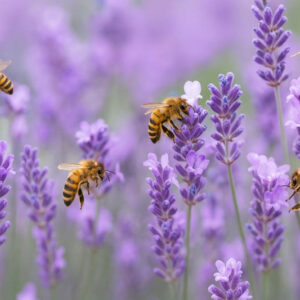
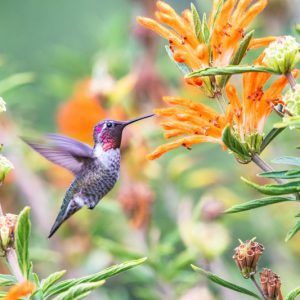
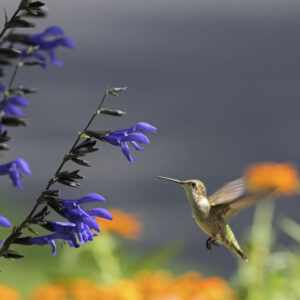
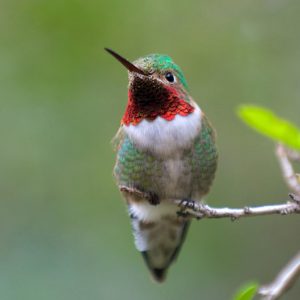
The tubular flowers are nectar-rich, making Saucy Red a consistent performer for pollinator-friendly plantings. It supports bees, butterflies, and especially hummingbirds – a key reason it is so widely planted in sunny gardens.
Saucy Red is often avoided by deer, though no plant is fully deer proof. In areas with heavy browsing, increase success by combining it with other aromatic or textured options from deer resistant lists.
Let us be honest: Saucy Red is not a drought-tolerant salvia. It performs best with consistent moisture in well-drained soil. In beds, mulch helps stabilize moisture. In containers, expect to water more often during hot spells. For low-water landscapes, explore drought-tolerant plants.
Salvia splendens – Saucy Red is grown as an ornamental. Avoid ingestion and use standard garden caution around pets and kids.
Saucy Red is generally well-behaved. It forms clumps rather than spreading aggressively, and because many plantings are sterile, unwanted reseeding is typically minimal.
A balanced slow-release fertilizer at planting time is often enough in beds. In containers, light feeding every 4-6 weeks can boost continuous bloom. Avoid overdoing nitrogen – it can push leafy growth at the expense of flowers.
Saucy Red is generally easy, but check plants during hot, dry spells or when plantings are crowded. You may spot aphids on tender growth or spider mites during dry heat. Strong water sprays, better airflow, and encouraging beneficial insects usually keep issues minor.
Salvia splendens – Saucy Red is a tender perennial in USDA Zones 9-10. In climates with frost, it is commonly grown as an annual because it blooms strongly from late spring to frost.
Saucy Red typically blooms from late spring through frost. Consistent moisture and occasional removal of tired spikes helps keep flowering steady and plants looking fresh.
Full sun produces the most flowers and the strongest stems. Part shade is tolerated, especially in extreme heat, but too much shade reduces bloom density.
Saucy Red commonly reaches 2-3 feet tall and wide (60-90 cm). Spacing plants 12-18 inches apart improves airflow and helps them fill in evenly.
Saucy Red is often avoided by deer, but no plant is fully deer proof when browsing pressure is high. Pair with other deer resistant plants for best results.
You can grow Salvia splendens from seed, but named selections like Saucy Red are best kept true by cuttings. If starting from seed, begin indoors 6-8 weeks before the last spring frost and transplant after frost.
Not really. Saucy Red blooms best with consistent moisture in well-drained soil. It can handle short dry spells once established, but prolonged drought reduces flowering and stresses the plant, especially in containers.
Updated: January 2026 – Reviewed by Gardenia Editors
| Hardiness |
9 - 10 |
|---|---|
| Heat Zones |
1 - 12 |
| Climate Zones | 21, 22, 23, 24, H2 |
| Plant Type | Annuals, Perennials |
| Plant Family | Lamiaceae |
| Genus | Salvia |
| Common names | Sage, Scarlet Sage |
| Exposure | Full Sun |
| Season of Interest | Spring (Mid, Late), Summer (Early, Mid, Late), Fall |
| Height | 2' - 3' (60cm - 90cm) |
| Spread | 2' - 3' (60cm - 90cm) |
| Spacing | 36" (90cm) |
| Maintenance | Low |
| Water Needs | Average |
| Soil Type | Loam, Sand |
| Soil pH | Acid, Alkaline, Neutral |
| Soil Drainage | Moist but Well-Drained, Well-Drained |
| Characteristics | Cut Flowers, Showy, Fragrant |
| Tolerance | Deer |
| Attracts | Bees, Butterflies, Hummingbirds |
| Garden Uses | Beds And Borders, Patio And Containers, Wall-Side Borders |
| Garden Styles | City and Courtyard, Coastal Garden, Informal and Cottage, Mediterranean Garden |


| Hardiness |
9 - 10 |
|---|---|
| Heat Zones |
1 - 12 |
| Climate Zones | 21, 22, 23, 24, H2 |
| Plant Type | Annuals, Perennials |
| Plant Family | Lamiaceae |
| Genus | Salvia |
| Common names | Sage, Scarlet Sage |
| Exposure | Full Sun |
| Season of Interest | Spring (Mid, Late), Summer (Early, Mid, Late), Fall |
| Height | 2' - 3' (60cm - 90cm) |
| Spread | 2' - 3' (60cm - 90cm) |
| Spacing | 36" (90cm) |
| Maintenance | Low |
| Water Needs | Average |
| Soil Type | Loam, Sand |
| Soil pH | Acid, Alkaline, Neutral |
| Soil Drainage | Moist but Well-Drained, Well-Drained |
| Characteristics | Cut Flowers, Showy, Fragrant |
| Tolerance | Deer |
| Attracts | Bees, Butterflies, Hummingbirds |
| Garden Uses | Beds And Borders, Patio And Containers, Wall-Side Borders |
| Garden Styles | City and Courtyard, Coastal Garden, Informal and Cottage, Mediterranean Garden |
How many Salvia splendens Saucy Red (Scarlet Sage) do I need for my garden?
| Plant | Quantity | |
|---|---|---|
| Salvia splendens Saucy Red (Scarlet Sage) | N/A | Buy Plants |
Create a membership account to save your garden designs and to view them on any device.
Becoming a contributing member of Gardenia is easy and can be done in just a few minutes. If you provide us with your name, email address and the payment of a modest $25 annual membership fee, you will become a full member, enabling you to design and save up to 25 of your garden design ideas.
Join now and start creating your dream garden!
Create a membership account to save your garden designs and to view them on any device.
Becoming a contributing member of Gardenia is easy and can be done in just a few minutes. If you provide us with your name, email address and the payment of a modest $25 annual membership fee, you will become a full member, enabling you to design and save up to 25 of your garden design ideas.
Join now and start creating your dream garden!