Daylilies tolerate drought, but reliable moisture produces better flowering. Learn how much water daylilies need, why scape and bud development is the critical watering window, how deeply to irrigate, when plants can be overwatered, and how watering changes through spring, summer, fall, winter, drought, containers, and different soils.
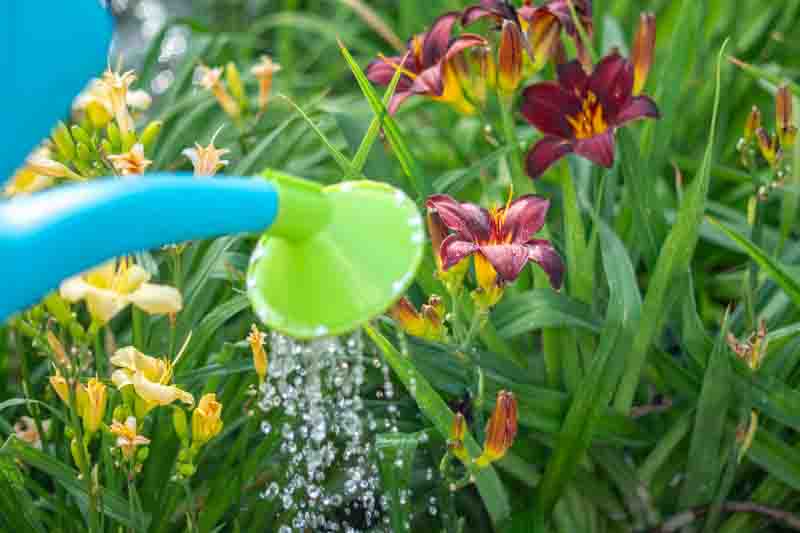


Daylilies have a reputation for toughness, and it is well deserved. An established daylily (Hemerocallis) can survive periods of dry weather that would leave fussier perennials struggling.
But surviving drought and flowering beautifully are not the same thing.
The American Daylily Society says adequate water can increase both the number and size of daylily flowers. It identifies two periods when moisture is particularly important: while flower scapes and buds are developing and during the bloom season. The Royal Horticultural Society similarly notes that established daylilies tolerate drought but perform best with plenty of water during active growth.
So how much water do daylilies need? As a practical Gardenia starting point, around 1 inch (2.5 cm) of water per week from rainfall and irrigation is reasonable during active growth, but it should never become an automatic calendar rule. Sandy soil, clay, heat, wind, mulch, plant age, containers, rainfall, and competition from nearby roots can all change how quickly the root zone dries.
The better question is not simply, “How many times should I water?” It is when does this daylily most need moisture, and is water actually reaching the roots?
Gardenia’s Daylily Watering Rule: Protect the flowering window, then follow the root zone. Moisture matters most while scapes and buds are developing and during bloom. At other times, let soil, weather, plant age, and actual moisture conditions determine whether irrigation is needed.
For established daylilies growing in the ground, about 1 inch (2.5 cm) of water per week from rainfall and irrigation is a useful Gardenia benchmark during active growth.
That is a starting point, not a prescription.
A daylily growing in moisture-retentive loam after a cool, rainy week may need no additional irrigation. The same cultivar in sandy soil during a hot, windy spell may dry much faster. A daylily in a container can need water even more frequently because its roots are confined to a limited volume of growing medium.
The goal is not permanently wet soil. Daylilies perform best when the root zone receives reliable moisture but excess water can drain away.
Think moist but well-drained, particularly during active growth, scape development, and flowering.
One inch is a benchmark, not a watering schedule. Rainfall, soil texture, temperature, wind, mulch, root competition, plant age, and containers all determine how long that moisture remains available.
The American Daylily Society recommends deep watering that penetrates about 8-10 inches (20-25 cm) into the soil rather than repeated shallow sprinkling.
This is one of the most useful watering principles for daylilies.
A quick pass with a hose may darken the surface while leaving most of the active root zone dry. The garden looks watered, but relatively little usable moisture has reached the plant.
Slow, thorough irrigation allows water to move farther into the soil, where it remains available to roots for longer.
This does not mean flooding the bed. Apply water at a rate the soil can absorb. If water runs across the surface or away from the plant, slow the flow or divide the irrigation into shorter cycles.
If you are unsure how deeply water is penetrating, check several inches below the surface with a trowel after irrigation. Moisture should extend well beyond the top layer of soil.
Daylilies do not need identical watering attention from spring emergence through winter dormancy. Their needs shift as the plant grows, flowers, and prepares for the next season.
The Water-Priority Calendar is Gardenia’s practical interpretation of daylily water needs rather than a rigid irrigation timetable. Its purpose is to identify when moisture deserves the greatest attention and when conditions should determine whether additional watering is actually necessary.
Spring is one of the most important watering periods in the daylily year.
New foliage is expanding, roots are active, and flower scapes and buds are developing. ADS specifically identifies this stage as one of the times when water is especially important.
If spring rainfall is regular, additional irrigation may be unnecessary. If conditions turn unusually dry, however, do not let plants remain severely drought-stressed while the season’s flowers are being formed.
This matters even more for newly planted daylilies. Their roots have not yet spread through the surrounding soil volume available to an established clump.
RHS recommends keeping newly planted daylilies moist and watering younger plants during dry spells.
Gardenia’s highest-priority watering window: If water is limited, protect daylilies from serious drought while scapes are elongating and buds are forming. Treating every week of the growing season as equally important misses this critical stage.
Summer brings the daylily’s greatest visual reward and often its greatest moisture challenge.
The American Daylily Society says adequate water can increase both the number and size of flowers. Hot weather, strong sunlight, wind, and limited rainfall can accelerate water loss while a daylily is supporting several flower scapes and opening new blooms in succession.
The goal is reliable moisture, not soggy soil.
Avoid repeated cycles of severe drying followed by flooding. A reasonably consistent moisture supply generally supports better flowering than waiting until the foliage is visibly stressed before irrigating.
Pay particularly close attention during hot weather to newly planted daylilies, sandy soils, containers, windy locations, beds beside heat-reflecting paving or walls, and plants competing with established tree and shrub roots.
If your daylilies grow in especially exposed conditions, see Gardenia’s guide to the best daylilies for full sun and hot summer gardens.
When the last flower fades, the daylily is not finished for the year.
Healthy foliage remains active after flowering. There is no reason to maintain an intensive bloom-season watering routine if temperatures moderate or rainfall increases, but actively growing plants should not be allowed to become severely dry simply because the flowers have finished.
Let conditions guide you.
If rainfall keeps the root zone adequately moist, additional irrigation may not be needed. During prolonged summer drought, established plants may still benefit from occasional deep watering.
Do not cut healthy green foliage simply because flowering is over. Remove spent scapes and declining leaves as needed, but allow healthy foliage to continue functioning.
For seasonal cleanup guidance, see Gardenia’s guide to when to cut back daylilies.
As dormant daylilies move toward seasonal dieback, active water use decreases. Yellowing and collapsing foliage are part of normal dormancy rather than evidence that the plant suddenly needs more irrigation.
In climates with dependable autumn and winter rainfall, established daylilies growing in the ground may need little or no supplemental water.
Evergreen and semi-evergreen cultivars can remain more active in mild climates, so their needs may differ from those of fully dormant plants.
In climates with wet or cold winters, prolonged saturation can become a greater concern than insufficient irrigation. RHS notes that daylilies appreciate moisture during active growth but dislike waterlogged soil.
Where winters are unusually dry, however, check the root zone instead of assuming that winter automatically means moist soil.
A mature daylily’s resilience comes partly from its established root system. A newly planted division does not yet have that advantage.
Water thoroughly after planting so soil settles around the roots, then monitor moisture while new roots establish.
The goal is not permanently wet ground. It is preventing serious drying before the root system has expanded into the surrounding soil.
Plants divided during warm weather deserve especially close attention because they combine disturbed roots with active foliage and potentially high moisture loss.
If you are dividing a clump during dry weather, watering beforehand can also make the soil easier to dig and reduce stress on the plant.
For step-by-step guidance, see Gardenia’s guide to when and how to divide daylilies.
Established and newly planted are not the same. Do not use a mature daylily’s reputation for drought tolerance as the watering standard for a recently planted or divided fan with a limited root system.
The same amount of irrigation behaves very differently in sand, loam, and clay.
Sandy soils usually drain quickly and hold less available moisture. Daylilies growing in them may need closer monitoring and potentially more frequent irrigation during hot, dry weather.
Organic matter can improve moisture retention, while mulch helps reduce evaporation from the soil surface.
Good loam often provides the easiest balance: enough moisture retention to support active growth combined with sufficient drainage to prevent prolonged saturation.
Even good loam can become dry during drought or sustained summer heat, so do not assume it never needs irrigation.
Clay can retain substantial moisture and often dries much more slowly than sandy soil. Daylilies tolerate many clay soils, provided drainage is adequate.
Do not water heavy soil merely because the surface looks dry. Check several inches down. Adding more water to an already saturated root zone can create greater stress than allowing the upper surface to dry temporarily.
Gardenia’s Soil-Speed Test: Instead of asking only, “How often should I water?” ask “How quickly is this root zone losing usable moisture?” Soil texture, mulch, heat, wind, plant size, and competing roots determine the answer.
Checking the soil is more reliable than waiting for the plant to wilt dramatically.
Use a finger or small trowel to examine the soil several inches below the surface near the root zone. If the soil remains comfortably moist below the surface, another irrigation may not be necessary. If much of the upper root zone has become dry during active growth, watering becomes more appropriate.
Possible signs of drought stress include premature yellowing of older foliage, dry brown leaf tips, declining foliage quality during prolonged heat, reduced flowering, and rapid wilting in containers.
But none of those symptoms proves drought by itself.
Yellowing can also result from excessive moisture, normal aging, disease, or root and crown problems. A plant with damaged roots may even wilt while sitting in wet soil.
For a more complete diagnosis, see Gardenia’s guide to daylily problems, yellow leaves, spots, and poor flowering.
Yes.
Daylilies appreciate reliable moisture, but their roots and crowns still need oxygen. Constantly saturated soil is very different from fertile soil that remains moist and then drains properly.
RHS specifically warns that daylilies dislike waterlogged conditions.
Warning signs of a persistently wet root zone can include yellowing, weak growth, or wilting despite abundant moisture. Collapsing fans, leaves that pull loose, or soft crown tissue may indicate crown or root rot and deserve closer investigation.
Do not respond automatically to wilting by adding more water. A plant with injured roots can wilt because those roots are no longer functioning properly, even though the surrounding soil is wet.
If the root zone is already saturated, investigate drainage and crown condition before irrigating again.
Wilting does not always mean dry. Check the soil before reaching for the hose. A wilted daylily in dry soil and a wilted daylily in saturated soil require completely different responses.
When practical, water at soil level rather than routinely wetting open daylily flowers.
Morning watering is often convenient because moisture reaches the roots before the hottest part of the day and flowers and foliage are less likely to remain wet for extended periods.
The American Daylily Society specifically warns that overhead watering during the heat of the day can cause open flowers to spot or wilt. It also notes that watering over blooms in the evening can contribute to spotting on flowers the following day.
This matters because an individual daylily flower normally lasts only about a day. Wetting today’s open blooms can reduce the appearance of that day’s display even when the plant itself remains perfectly healthy.
Drip irrigation, soaker hoses, or careful watering directed toward the soil can minimize unnecessary wetting of flowers and foliage.
Water the roots, not the flowers. The goal is to replenish soil moisture. Routine overhead watering of open daylily blooms can reduce flower quality without delivering any additional benefit to the root system.
A daylily growing in a container cannot draw moisture from the surrounding garden soil. Every drop available to its roots comes from the limited growing medium inside the pot.
RHS therefore recommends watering container-grown daylilies regularly during the growing season.
How frequently depends on container size, plant size, potting mix, exposure, temperature, wind, pot material, and how much rainfall actually reaches the container.
Small pots and terracotta containers can dry particularly quickly. Large containers containing a moisture-retentive but freely draining mix usually dry more slowly.
Check the potting mix rather than following a rigid timetable. When water is needed, irrigate thoroughly so the rootball is moistened and excess water drains freely from the base.
Never compensate for a frequently dry container by blocking drainage. Daylilies need reliable moisture and good drainage at the same time.
For complete container guidance, see Gardenia’s Daylilies in Pots: Best Varieties and How to Grow Them in Containers.
A layer of organic mulch can make daylily moisture management considerably easier.
RHS recommends mulching daylilies with well-rotted organic matter because it helps retain soil moisture and suppress weeds.
Mulch reduces evaporation from exposed soil and can moderate temperature fluctuations around the root zone. It also reduces competition from weeds that would otherwise draw on the same moisture supply.
Useful materials include compost, shredded leaves, and composted bark, depending on your garden and local conditions.
Avoid piling thick layers directly over the crown. A correctly planted daylily can gradually become buried if mulch is repeatedly added around its base year after year.
The goal is to conserve moisture throughout the surrounding root zone without creating a permanently wet mound around the crown.
Partial shade often slows evaporation, but that does not mean every shaded daylily needs less water.
Plants growing beneath trees may face intense competition from established woody roots. Tree canopies can also intercept rainfall before much of it reaches the soil.
A bed beneath a roof overhang can be shaded and surprisingly dry at the same time.
Check the root zone rather than assuming shade equals moisture.
The timing of shade also matters. Afternoon shade may reduce heat stress and slow moisture loss, while a deeply shaded site beneath dense roots may provide both too little sunlight and too little available water.
For more detail, see Gardenia’s guide to growing daylilies in partial shade.
Adequate moisture can help a reblooming daylily perform to its potential, but water cannot create rebloom genetics.
A cultivar capable of producing additional flower scapes is more likely to perform well when it receives sufficient light, moisture, nutrients, and a long enough growing season.
A once-blooming cultivar does not become a rebloomer simply because it receives more irrigation.
Likewise, a cultivar that reblooms strongly in one climate may repeat less reliably in another because temperature, growing-season length, moisture, and overall plant vigor all influence performance.
If you want the longest possible season of flowers, combine good watering with cultivars selected for different primary bloom seasons and proven rebloom potential.
See Gardenia’s guide to how to keep daylilies blooming longer.
Find the right daylily for your garden: Use Gardenia’s Plant Finder to explore plants by bloom season, size, color, exposure, soil, and other characteristics. Use the Daylily Comparison Tool to compare cultivars side by side, then use the Garden Design Tool to combine plants and compare their mature sizes and flowering seasons.
Daylilies are resilient once established, but their ability to survive dry conditions should not be confused with their requirements for their best flowering performance.
As a practical Gardenia benchmark, around 1 inch (2.5 cm) of water per week from rainfall and irrigation is a useful starting point during active growth, adjusted for soil, heat, wind, rainfall, mulch, plant age, and growing situation.
More important than following a rigid weekly number is understanding when water matters most. Scape and bud development and the flowering season deserve particular attention.
Water deeply enough to reach the root zone rather than relying on brief surface sprinkling. Check soil moisture before irrigating, especially in heavy soils, and remember that wilting can occur in both excessively dry and excessively wet conditions.
New plants and divisions need closer attention than established clumps. Containers need regular monitoring because their moisture reservoir is limited. In fall and winter, watering requirements usually decline as active growth slows, while drainage remains essential.
The most useful daylily watering strategy is therefore not a fixed schedule. It is a response to growth stage + root-zone moisture + soil + weather + growing situation.
Protect the flowering window, understand how quickly your soil loses moisture, and let the root zone – rather than the calendar – tell you when to water.
As a practical Gardenia starting point, around 1 inch (2.5 cm) of water per week from rainfall and irrigation is reasonable during active growth. Actual needs vary with soil, heat, wind, plant age, rainfall, mulch, root competition, and whether the daylily grows in a container.
Water is especially important while flower scapes and buds are developing and during the bloom season. These are the stages when reliable moisture deserves the greatest attention for flowering performance.
The American Daylily Society recommends deep watering that penetrates about 8-10 inches (20-25 cm) into the soil rather than repeated shallow surface watering. Apply water slowly enough to reach the root zone.
Established daylilies tolerate periods of dry weather, but drought tolerance does not mean drought produces their best flowering. Reliable moisture during scape development and bloom generally supports stronger flower performance.
Yes. Daylilies prefer moist but well-drained soil and should not remain waterlogged. Persistently saturated conditions can stress roots and crowns. Check the soil before adding more water if a plant is yellowing or wilting.
Morning is often a practical time to water, especially when irrigation is directed toward the soil. Avoid routinely wetting open flowers, particularly during hot conditions or in the evening, because overhead watering can cause spotting or wilting of blooms.
Container-grown daylilies need more frequent monitoring because their roots have access to much less stored moisture than plants growing in the ground. Water thoroughly when needed and allow excess water to drain freely.
Established dormant daylilies generally need far less supplemental water in winter, especially where seasonal rainfall is adequate. Avoid prolonged waterlogging, but check soil during unusually dry winters rather than assuming every winter garden remains moist.
American Daylily Society – Daylily FAQ – specialist guidance on deep watering, critical watering periods, drought tolerance, and overhead watering of flowers.
Royal Horticultural Society – How to Grow Hemerocallis – guidance on moisture, drought tolerance, younger plants, container watering, drainage, and mulching.
Gardenia – How to Grow and Care for Daylilies – complete guidance covering watering, soil, planting, sunlight, fertilizing, flowering, and seasonal care.
Gardenia – Daylily Problems: Yellow Leaves, Spots and Poor Bloom – diagnostic guidance for separating drought, excessive moisture, disease, pests, crown problems, and normal foliage decline.
Gardenia – How to Keep Daylilies Blooming Longer – guidance on moisture, bloom timing, cultivar selection, rebloom, feeding, and season-long flowering.
Updated: August 2026 • Reviewed by Gardenia Editors
| Hardiness |
3 - 9 |
|---|---|
| Heat Zones |
2 - 11 |
| Climate Zones | 2, 3, 4, 5, 6, 7, 8, 9, 10, 11, 12, 13, 14, 15, 16, 17, 18, 19, 20, 21, 22, 23, 24, H1, H2 |
| Plant Type | Perennials |
| Genus | Hemerocallis |
| Exposure | Full Sun, Partial Sun |
| Season of Interest | Summer (Early, Mid, Late), Fall |
| Maintenance | Low |
| Water Needs | Average |
| Soil Type | Chalk, Clay, Loam, Sand |
| Soil pH | Acid, Alkaline, Neutral |
| Soil Drainage | Moist but Well-Drained, Well-Drained |
| Characteristics | Showy |
| Tolerances | Drought, Rabbit, Dry Soil, Salt |
| Attracts | Butterflies, Hummingbirds |
| Landscaping Ideas | Banks And Slopes, Beds And Borders, Patio And Containers |
| Garden Styles | City and Courtyard, Coastal Garden, Informal and Cottage, Traditional Garden |
| Hardiness |
3 - 9 |
|---|---|
| Heat Zones |
2 - 11 |
| Climate Zones | 2, 3, 4, 5, 6, 7, 8, 9, 10, 11, 12, 13, 14, 15, 16, 17, 18, 19, 20, 21, 22, 23, 24, H1, H2 |
| Plant Type | Perennials |
| Genus | Hemerocallis |
| Exposure | Full Sun, Partial Sun |
| Season of Interest | Summer (Early, Mid, Late), Fall |
| Maintenance | Low |
| Water Needs | Average |
| Soil Type | Chalk, Clay, Loam, Sand |
| Soil pH | Acid, Alkaline, Neutral |
| Soil Drainage | Moist but Well-Drained, Well-Drained |
| Characteristics | Showy |
| Tolerances | Drought, Rabbit, Dry Soil, Salt |
| Attracts | Butterflies, Hummingbirds |
| Landscaping Ideas | Banks And Slopes, Beds And Borders, Patio And Containers |
| Garden Styles | City and Courtyard, Coastal Garden, Informal and Cottage, Traditional Garden |
Create a membership account to save your garden designs and to view them on any device.
Becoming a contributing member of Gardenia is easy and can be done in just a few minutes. If you provide us with your name, email address and the payment of a modest $25 annual membership fee, you will become a full member, enabling you to design and save up to 25 of your garden design ideas.
Join now and start creating your dream garden!
Create a membership account to save your garden designs and to view them on any device.
Becoming a contributing member of Gardenia is easy and can be done in just a few minutes. If you provide us with your name, email address and the payment of a modest $25 annual membership fee, you will become a full member, enabling you to design and save up to 25 of your garden design ideas.
Join now and start creating your dream garden!