Turn a packet of tomato seeds into sturdy, garden-ready plants. Learn exactly when to sow, how deep to plant, the best germination temperature, how much light seedlings need, when to pot them up, how to fix leggy growth, prevent damping-off, and harden tomatoes successfully before planting outdoors.
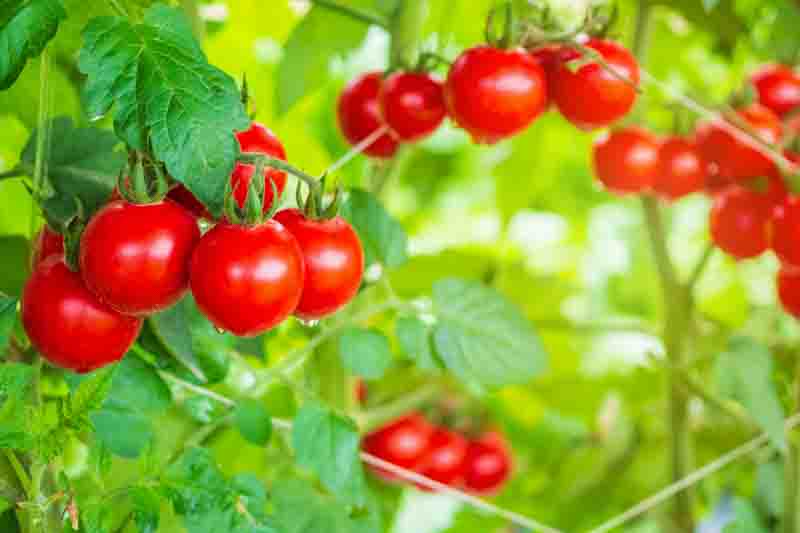


Starting tomatoes from seed is one of the most rewarding ways to grow this favorite garden crop. A single packet can produce dozens of plants, and seed catalogs offer far more choice than most garden centers – from tiny cherry tomatoes and richly flavored heirlooms to compact container varieties, paste tomatoes, and disease-resistant hybrids.
The process is not difficult, but timing matters. Start too late and your seedlings may still be tiny when outdoor conditions are ready. Start too early and you can spend weeks trying to keep oversized, root-bound plants healthy indoors.
The goal is not to grow the tallest tomato plant before transplanting day. It is to produce a compact, vigorous seedling with a sturdy stem, healthy leaves, a well-developed root system, and enough momentum to establish quickly once planted outside.
Gardenia seed-starting principle: Count backward from when your tomato seedlings can realistically be transplanted outdoors. The goal is a transplant-ready plant at the right moment – not the earliest possible sowing date.
For most gardeners, a good starting point is to sow tomato seeds indoors about 5-7 weeks before you realistically expect to transplant them into the garden.
That is deliberately different from saying “5-7 weeks before your last frost date.”
The average last frost date is useful, but it cannot tell you whether spring is running colder than normal, whether your soil is still chilly and wet, or whether a cold spell is approaching just as your seedlings are ready.
Tomatoes are warm-season plants. They establish best when frost danger has passed and both soil and weather are warm enough to support active growth.
Gardenia’s When to Plant Tomatoes Outside guide combines frost risk, soil warmth, the forecast, seedling hardening, and site readiness instead of relying on a single calendar date.
Gardenia’s Backward Seed-Starting Plan: Estimate your realistic outdoor planting window first. Allow roughly 7-10 days for hardening off, then about 5-6 weeks for indoor seedling development. Work backward from there and adjust for your growing conditions rather than automatically sowing earlier.
Starting tomatoes eight, ten, or twelve weeks early does not necessarily produce an earlier harvest. Seedlings held indoors too long become harder to light properly, use water and nutrients rapidly, may become root-bound, and sometimes begin flowering while still waiting for suitable outdoor conditions.
You do not need an elaborate propagation setup, but a few basic supplies make success much easier:
Tomato seeds: Choose cultivars suited to your climate, available space, preferred fruit type, and intended use.
Clean containers: Use cell trays, plug trays, small pots, or recycled containers with drainage holes.
Seed-starting mix: Use a lightweight, fine-textured, well-drained soilless mix rather than garden soil.
Labels: Label every cultivar at sowing time because young tomato seedlings can look nearly identical.
Grow lights: Strong overhead light is one of the most important tools for producing stocky seedlings.
Watering tray or small watering can: Young seedlings need controlled moisture rather than flooding.
Heat mat, optional: Useful when your seed-starting area is cool and you want faster, more uniform germination.
Humidity dome, optional: Helpful before germination, but remove it once seedlings emerge.
Good seed starting begins with choosing a cultivar that fits your garden rather than simply picking the most appealing fruit photo.
First decide whether you want a determinate or indeterminate tomato. Determinate plants reach a genetically limited size and tend to ripen much of their crop over a relatively concentrated period. Indeterminate tomatoes continue growing, flowering, and setting fruit for as long as conditions remain favorable.
Examples of determinate tomatoes include:
‘Roma’ – a classic determinate paste tomato with meaty fruit suited to sauces, cooking, and preserving.
‘Celebrity’ – a productive determinate slicer with manageable growth and useful disease resistance.
‘Bush Early Girl’ – a compact, early-producing determinate tomato well suited to smaller gardens and containers.
Examples of indeterminate tomatoes include:
‘Sungold’ – a vigorous orange cherry tomato that continues producing sweet fruit over an extended season.
‘San Marzano’ – a traditional indeterminate paste tomato valued for its meaty fruit and excellent cooking qualities.
‘Cherokee Purple‘ – a famous indeterminate heirloom slicer with large, dusky fruit and rich flavor.
Do not choose by fruit type alone. “Roma,” “cherry,” “beefsteak,” and “heirloom” do not tell you whether a tomato is determinate or indeterminate. Growth habit varies by cultivar, so always check the specific variety.
Before sowing, also consider:
Growth habit: determinate, indeterminate, semi-determinate, or dwarf.
Days to maturity: especially important in short growing seasons.
Climate adaptation: some cultivars cope better with heat or cool summers.
Disease resistance: useful where recurring tomato diseases are common.
Fruit type: cherry, plum, slicing, beefsteak, or specialty tomatoes.
Garden space: compact cultivars are easier in containers and small beds.
Intended use: fresh eating, sauces, preserving, or mixed use.
Explore Gardenia’s Tomato Varieties collection to compare cultivars, or see Determinate vs. Indeterminate Tomatoes for a deeper comparison of growth habit, harvest pattern, pruning, support, and container use.
Tomato seeds need moisture, oxygen, and warmth to germinate successfully. Dense garden soil is poorly suited to small indoor containers because it may compact, drain unevenly, and introduce weed seeds or disease organisms.
A commercial seed-starting mix is designed to remain lightweight and well aerated while holding enough moisture for germination.
Moisten the mix before filling your containers. It should feel evenly damp but not saturated or dripping.
More water does not mean better germination. Tomato seeds need oxygen as well as moisture. Waterlogged mix can slow germination and encourage seedling disease.
Sow tomato seeds about 1/4 inch (6 mm) deep.
For clean, even sowing:
Fill containers with pre-moistened seed-starting mix.
Sow one or two seeds per cell, or several seeds in a larger container for later separation.
Cover seeds lightly with about 1/4 inch of mix.
Gently firm the surface so the seeds remain in contact with the moist medium.
Water carefully if needed so seeds are not washed too deeply.
Label every variety immediately.
If several seedlings emerge in one cell, keep the strongest or separate them carefully once true leaves begin to develop.
Tomato seeds germinate fastest and most uniformly in warm growing mix.
Best germination range: about 75-85°F (24-29°C).
Near-optimum temperature: around 80°F (27°C).
If your room is cool: use a seedling heat mat to warm the root zone.
With bottom heat: check moisture more often because warm mix dries faster.
After emergence: aim for roughly 65-70°F (18-21°C) during the day, with somewhat cooler nights if practical.
Warm to germinate, bright to grow. Heat helps tomato seeds emerge. Once green shoots appear, strong light becomes the priority. Warm seedlings growing in weak light quickly become tall and soft.
Under warm, evenly moist conditions, tomato seeds commonly emerge within about a week, although germination time varies with temperature, cultivar, seed age, and moisture.
If germination is slow or uneven, check:
Temperature: cool growing mix can delay emergence considerably.
Moisture: seeds may fail if the mix dries completely.
Drainage: continuously saturated mix can reduce oxygen around the seed.
Sowing depth: seeds planted too deeply may emerge slowly or fail.
Seed age: older seed may germinate more slowly or at a lower percentage.
Storage: tomato seed lasts much longer when stored cool and dry than when exposed to heat and humidity.
Do not dig seeds up after only a few days. Give them reasonable time, especially if your growing area has been cooler than ideal.
Tomato seed can remain viable for several years when properly stored, but germination percentage generally declines with age and poor storage conditions.
Insufficient light is one of the most common reasons homegrown tomato seedlings become tall, thin, and floppy.
As soon as seedlings emerge, place them under strong overhead light.
A useful starting point is:
Light duration: provide roughly 14-16 hours per day.
Light position: keep fixtures at the appropriate distance above the seedlings according to the manufacturer’s recommendations.
Adjust as plants grow: raise lights so the canopy remains evenly illuminated.
Provide darkness: give seedlings a normal dark period every night rather than leaving lights on continuously.
Watch plant shape: rapid stretching or leaning is a sign that usable light is insufficient.
Grow lights are generally more reliable than an ordinary windowsill because they provide consistent intensity from directly above.
A sunny window is not automatically strong seedling light. Glass, short spring days, clouds, and light arriving from one direction can all contribute to leggy tomato seedlings.
Keep the growing mix evenly moist, but never permanently soggy.
Before emergence: keep the mix consistently moist so germinating seeds do not dry out.
After emergence: water when the surface begins to lose moisture.
Avoid standing water: roots need oxygen as well as moisture.
Bottom watering: allow the mix to absorb water from below, then remove excess from the tray.
As plants grow: check more frequently because larger seedlings use water faster.
Do not follow a rigid daily watering schedule. Container size, temperature, light, airflow, and seedling size all influence how quickly the mix dries.
The first leaves to unfold are the cotyledons, or seed leaves. They are relatively smooth and simple and do not resemble mature tomato foliage.
The next leaves are the first true leaves, which begin developing the familiar tomato shape.
Once true leaves appear:
Thin crowded cells: keep the strongest seedling when several are growing together.
Separate seedlings carefully: move extras while roots are still relatively small and easy to disentangle.
Pot up when roots begin filling the cell: do not wait until seedlings are severely root-bound.
Plant lanky seedlings somewhat deeper: tomatoes can form adventitious roots along buried stems.
Handle seedlings by a leaf: avoid squeezing the delicate stem whenever possible.
Newly germinated seedlings do not need heavy feeding.
Seed-starting mixes differ. Some contain almost no fertilizer, while potting mixes may provide enough nutrients for several weeks.
Begin feeding when seedlings need it rather than automatically fertilizing from the moment they emerge.
Wait for true leaves: cotyledons support the plant during its earliest stage.
Check the growing mix: a fertilized potting mix may already contain nutrients.
If feeding is needed: use a dilute complete soluble fertilizer according to the label.
Increase gradually: larger seedlings use more nutrients as roots fill their pots.
Avoid concentrated feeding: excessive fertilizer can cause salt injury and soft growth.
Fast growth is not the same as strong growth. Fertilizer cannot compensate for poor light and may contribute to soft growth, salt injury, or stressed roots when overused.
The ideal transplant is compact and sturdy rather than exceptionally tall.
Focus on four things:
Strong light: prevents excessive stretching.
Moderate temperatures after emergence: prevent overly rapid soft growth.
Enough root space: pot up before seedlings become badly root-bound.
Gentle air movement: a small fan on low or occasional brushing can encourage sturdier stems.
Gardenia Seedling Strength Test: Judge a tomato transplant by stem strength, leaf quality, root development, and proportion – not height alone. A shorter, stockier seedling can establish faster than a tall plant that has outgrown its indoor conditions.
Leggy tomato seedlings usually result from inadequate light, excessive warmth relative to light, overcrowding, or starting seeds too early.
If seedlings begin stretching:
Increase usable light immediately.
Move grow lights closer if appropriate for your fixture.
Separate crowded seedlings so neighboring plants do not compete for light.
Pot lanky seedlings deeper when moving them into larger containers.
Avoid extra fertilizer as a response to weak, stretched growth.
Check your timing: seedlings started too early may continue outgrowing their indoor setup.
Tomatoes are forgiving because buried stem tissue can form additional roots, so a somewhat leggy seedling can still become an excellent plant. Correct the underlying light or timing problem so new growth develops more strongly.
Damping-off describes several seedling diseases caused by soilborne pathogens. Seeds may rot before emerging, or young seedlings may develop thin, water-soaked stems and collapse.
Risk increases with:
Overwatering.
Poor drainage.
Cool, persistently wet growing media.
Low light and slow seedling growth.
Excess fertilizer salts.
Contaminated containers or growing mix.
Crowded seedlings and poor air movement.
Reduce the risk by using clean containers, fresh soilless mix, adequate warmth, strong light, good drainage, and careful watering.
Once a seedling has collapsed from damping-off, it generally does not recover. Remove affected seedlings and improve conditions for those that remain.
Unusual seedling color does not automatically mean the plant needs fertilizer.
Possible explanations include:
Cool root-zone temperatures: can temporarily reduce phosphorus uptake even when phosphorus is present.
Genetics: some cultivars naturally develop stronger purple pigmentation.
General stress: check light, temperature, roots, and growth before adding fertilizer.
Possible causes include:
Overwatering: saturated mix can deprive roots of oxygen.
Insufficient light: weak seedlings may become pale as well as elongated.
Nutrient depletion: more likely after plants have spent several weeks in a low-fertility mix.
Root crowding: seedlings may stall as their containers fill with roots.
Disease or root injury: especially when yellowing is accompanied by collapse, lesions, or poor root health.
Look at the pattern and growing conditions rather than assuming every yellow seedling needs nitrogen.
If symptoms do not make sense, Gardenia’s Tomato Problems: What Is Wrong With My Plant? guide provides a broader symptom-first diagnostic approach.
A few early flowers do not mean the plant is ruined, and healthy transplant-ready seedlings do not automatically need every blossom removed.
Use the plant’s condition as your guide:
Healthy and ready to transplant soon: a few flowers are not a problem.
Small but flowering very early: check whether the seedlings were started too soon.
Root-bound or stressed: pot up if possible and correct the underlying problem.
Unable to plant outside for some time: pinching the earliest flowers can be reasonable so the plant can focus on establishment.
The better long-term solution is timing. Ideally, seedlings reach transplant size shortly before outdoor conditions become suitable instead of spending several weeks flowering indoors.
Indoor-grown seedlings are accustomed to mild temperatures, artificial or filtered light, limited wind, and relatively stable moisture. Moving them directly into strong outdoor sun and wind can cause severe stress or leaf scorch.
Begin hardening tomatoes about 7-10 days before transplanting.
Days 1-2: put seedlings outside for a few hours in a shaded, protected spot.
Days 3-5: gradually extend outdoor time and introduce some gentle morning sun.
Days 5-7: increase direct sun and normal air movement as plants adjust.
Final days: allow seedlings to spend most of the day outside when weather permits.
Throughout hardening: monitor moisture closely because small pots can dry quickly outdoors.
If a cold spell arrives: bring plants back inside rather than forcing tender seedlings through damaging conditions.
Hardening is acclimation, not deliberate drought stress. Do not repeatedly wilt seedlings in an effort to “toughen them up.”
Hardening changes the plant, not the weather. A hardened tomato is better prepared for outdoor conditions, but it remains a frost-tender warm-season crop. Hardening cannot make freezing weather or cold soil desirable.
Do not judge transplant readiness by height alone. Check both the plant and the weather.
The seedling should have:
A sturdy stem.
Several healthy true leaves.
Compact, balanced growth.
A well-developed but not severely root-bound root system.
No significant pest or disease symptoms.
Successful hardening to outdoor conditions.
The garden should have:
No meaningful frost risk.
Soil warm enough for active root growth.
A reasonably mild near-term forecast.
A prepared planting site with adequate light and drainage.
Roughly 60°F (16°C) can be a useful practical soil-temperature benchmark, but it should not be treated as an absolute rule.
Continue with Gardenia’s complete outdoor tomato planting guide as your seedlings approach transplant size.
| Stage | What Matters Most |
|---|---|
| About 5-7 weeks before transplanting | Sow seeds about 1/4 inch deep in moist seed-starting mix. |
| Germination | Keep the mix warm, roughly 75-85°F (24-29°C), and evenly moist. |
| Immediately after emergence | Remove covers and provide strong overhead light for about 14-16 hours daily. |
| First true leaves | Thin or separate crowded seedlings and begin monitoring root space. |
| Roots filling small cells | Pot up before seedlings become severely root-bound. |
| 7-10 days before planting | Begin gradual hardening outdoors. |
| Transplant day | Plant when both the seedlings and outdoor conditions are ready. |
Starting too early. More indoor growing time does not automatically mean an earlier harvest.
Relying on weak windowsill light. This is one of the fastest routes to lanky seedlings.
Leaving seedlings warm after emergence without enough light. Warmth encourages growth, but weak light cannot support sturdy development.
Keeping the mix saturated. Germinating seeds and roots need oxygen.
Using garden soil in small trays. It is often too dense and may introduce pathogens.
Fertilizing heavily while seedlings are tiny. Balanced growth matters more than maximum speed.
Allowing severe root binding. Pot up before roots become excessively crowded.
Skipping hardening off. Indoor leaves are not instantly prepared for full sun and wind.
Planting because the calendar says it is time. Check frost risk, soil warmth, the forecast, and seedling readiness together.
The goal is synchronization. Successful tomato seed starting means having a healthy, hardened transplant ready at the same time your garden becomes suitable for active tomato growth.
Once your seedlings move outside, continue with Gardenia’s How to Grow Tomatoes: Complete Planting & Care Guide for watering, fertilizing, support, pruning, problems, and harvest. For plant characteristics and growing requirements, visit the Tomato (Solanum lycopersicum) profile.
Start tomato seeds about 5-7 weeks before you realistically expect to transplant outdoors. Base the date on frost risk, soil warmth, local weather, and the time needed to harden seedlings rather than simply counting backward from an average last frost date.
Plant tomato seeds about 1/4 inch (6 mm) deep in a lightweight, moist seed-starting mix. Cover them lightly and keep the medium evenly moist but not waterlogged.
A growing-medium temperature around 75-85°F (24-29°C) promotes fast, uniform tomato germination, with approximately 80°F (27°C) near the optimum. After emergence, temperatures around 65-70°F (18-21°C) during the day are suitable under strong light.
Tomato seeds often emerge in about a week under warm, evenly moist conditions. Germination can take longer when the growing mix is cool, the seed is older, or moisture conditions are less favorable.
Strong grow lights are the most reliable way to produce stocky tomato seedlings indoors. Ordinary windows often provide insufficient or one-sided light. About 14-16 hours of strong overhead light per day is a useful starting point.
The correct distance depends on the type and intensity of the fixture. Fluorescent systems are often kept relatively close to seedlings, while more powerful LEDs may require greater distance. Follow the manufacturer’s recommendations and watch plants for stretching or light stress.
Leggy tomato seedlings are usually caused by inadequate light, excessive warmth relative to light, crowding, or starting seeds too early. Increase light, separate crowded plants, and pot seedlings deeper when necessary rather than trying to fix stretching with fertilizer.
Pot seedlings up after true leaves have developed and roots are beginning to fill their original cells or containers. Do not wait until plants are severely root-bound. Tomato stems can be planted somewhat deeper because buried stem tissue can produce additional roots.
Not immediately. Seed-starting and potting mixes vary in fertility. Once true leaves develop and nutrients in the mix begin to run low, seedlings can be fed with a dilute complete fertilizer according to the product label. Avoid heavy feeding of very young plants.
Purple coloration can occur when cool root conditions reduce phosphorus uptake even when phosphorus is present. Genetics can also contribute. Check root-zone temperature and overall seedling health before automatically applying phosphorus fertilizer.
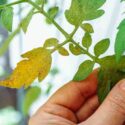
Yellow seedlings can result from overwatering, poor root aeration, inadequate light, depleted nutrients, crowded roots, or disease. Examine the growing conditions and the pattern of yellowing before assuming the plant needs more nitrogen.
Seedlings that develop thin, rotted stems and collapse may have damping-off. Reduce risk by using clean containers, fresh soilless mix, adequate warmth and light, good drainage, and careful watering instead of keeping the growing medium continuously wet.
Yes. Tomatoes can develop roots along buried stem tissue, so lanky seedlings can be planted deeper when repotted or transplanted. Correct the inadequate-light or timing problem as well so new growth remains sturdier.
Allow roughly 7-10 days for gradual hardening, sometimes longer during difficult weather. Begin in a sheltered, shaded location and gradually increase outdoor time, sunlight, and wind exposure without deliberately allowing seedlings to wilt.
Look for a sturdy stem, several healthy true leaves, balanced compact growth, a developed but not severely root-bound root system, and successful hardening. Frost danger should also have passed and the soil and weather should be warm enough for active growth.
Updated: September 2026 • Reviewed by Gardenia Editors
| Hardiness |
2 - 11 |
|---|---|
| Climate Zones | 1, 1A, 1B, 2, 2A, 2B, 3, 3A, 3B, 4, 5, 6, 7, 8, 9, 10, 11, 12, 13, 14, 15, 16, 17, 18, 19, 20, 21, 22, 23, 24, A1, A2, A3, H1, H2 |
| Plant Type | Fruits |
| Plant Family | Solanaceae |
| Genus | Solanum, Tomatoes |
| Common names | Love Apple, Tomato |
| Exposure | Full Sun |
| Season of Interest | Spring (Late), Summer (Early, Mid, Late), Fall |
| Height | 3' - 10' (90cm - 3m) |
| Spread | 1' - 4' (30cm - 120cm) |
| Spacing | 24" - 36" (60cm - 90cm) |
| Maintenance | Average, High |
| Water Needs | Average |
| Soil Type | Clay, Loam, Sand |
| Soil pH | Acid, Neutral |
| Soil Drainage | Moist but Well-Drained |
| Tolerance | Rabbit, Clay Soil |
| Attracts | Bees |
| Landscaping Ideas | Patio And Containers |
| Garden Styles | City and Courtyard, Informal and Cottage, Pollinator Garden |
| Hardiness |
2 - 11 |
|---|---|
| Climate Zones | 1, 1A, 1B, 2, 2A, 2B, 3, 3A, 3B, 4, 5, 6, 7, 8, 9, 10, 11, 12, 13, 14, 15, 16, 17, 18, 19, 20, 21, 22, 23, 24, A1, A2, A3, H1, H2 |
| Plant Type | Fruits |
| Plant Family | Solanaceae |
| Genus | Solanum, Tomatoes |
| Common names | Love Apple, Tomato |
| Exposure | Full Sun |
| Season of Interest | Spring (Late), Summer (Early, Mid, Late), Fall |
| Height | 3' - 10' (90cm - 3m) |
| Spread | 1' - 4' (30cm - 120cm) |
| Spacing | 24" - 36" (60cm - 90cm) |
| Maintenance | Average, High |
| Water Needs | Average |
| Soil Type | Clay, Loam, Sand |
| Soil pH | Acid, Neutral |
| Soil Drainage | Moist but Well-Drained |
| Tolerance | Rabbit, Clay Soil |
| Attracts | Bees |
| Landscaping Ideas | Patio And Containers |
| Garden Styles | City and Courtyard, Informal and Cottage, Pollinator Garden |
Create a membership account to save your garden designs and to view them on any device.
Becoming a contributing member of Gardenia is easy and can be done in just a few minutes. If you provide us with your name, email address and the payment of a modest $25 annual membership fee, you will become a full member, enabling you to design and save up to 25 of your garden design ideas.
Join now and start creating your dream garden!
Create a membership account to save your garden designs and to view them on any device.
Becoming a contributing member of Gardenia is easy and can be done in just a few minutes. If you provide us with your name, email address and the payment of a modest $25 annual membership fee, you will become a full member, enabling you to design and save up to 25 of your garden design ideas.
Join now and start creating your dream garden!