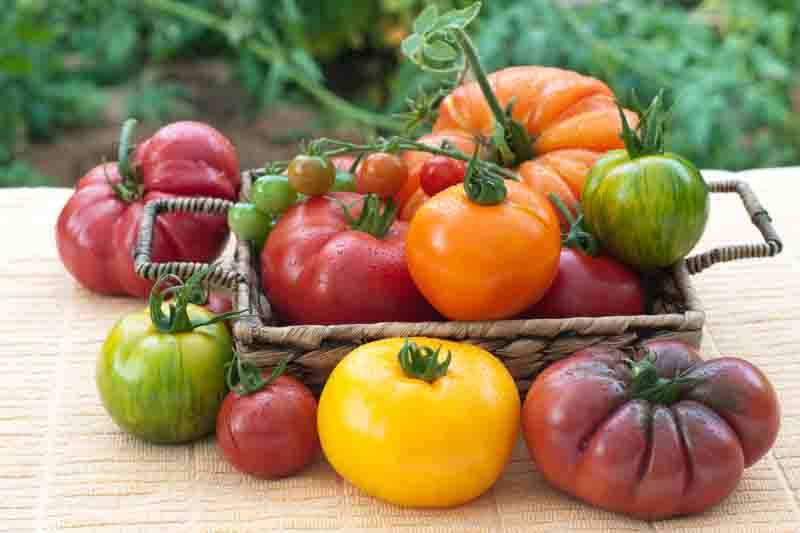
Tomatoes
Tomatoes (Solanum lycopersicum) are among the most popular edible plants for home gardens, with thousands of varieties differing in growth habit, fruit size, flavor, color, harvest season, and disease resistance. From prolific cherry tomatoes such as ‘Super Sweet 100’ and richly flavored dark cherries such as ‘Black Cherry’ to large slicing tomatoes and productive paste types, the best choice depends on how you want to grow and use them. Start by deciding between determinate and indeterminate tomatoes, then compare fruit type, days to maturity, climate adaptation, and resistance to common tomato diseases.
Choose Determinate or Indeterminate Tomatoes
The first decision is growth habit. Determinate tomatoes, often called bush tomatoes, reach a more limited size and tend to produce much of their crop over a relatively concentrated period. They are useful for containers, small gardens, preserving, and gardeners who want a more compact plant. A classic example is ‘Roma’, a widely grown paste tomato valued for its meaty fruit.
Indeterminate tomatoes continue growing, flowering, and setting fruit through the season until cold weather or disease stops them. They usually need strong staking, caging, or trellising, but can provide a longer harvest. Popular examples include the early-season slicer ‘Early Girl’ and vigorous cherry tomato ‘Black Cherry’. Compare plant size and growth habit carefully before planting – an indeterminate tomato can easily exceed 6 ft. (1.8 m) in favorable conditions. See Gardenia’s guide to tomato plant spacing before laying out the bed.
Choose Tomatoes by Fruit Type and How You Will Use Them
Tomato varieties range from tiny currant and grape tomatoes to fruits weighing well over a pound. Cherry tomatoes are generally prolific and excellent for snacking and salads. ‘Sungold’ produces intensely sweet orange fruit, while ‘Super Sweet 100’ carries long clusters of sweet red cherries.
Slicer tomatoes balance size, juiciness, and flavor for everyday use. For something darker and more complex, ‘Cherokee Purple’ is a famous dusky heirloom slicer. Large beefsteak tomatoes are prized for sandwiches and fresh eating; examples include ‘Mortgage Lifter’ and the classic ‘Beefsteak’.
Paste and plum tomatoes usually contain more flesh and less juice, making them useful for sauces, roasting, and preserving. ‘San Marzano’ is a famous indeterminate paste tomato, while determinate ‘Roma’ is useful where a more concentrated harvest is desirable. Tomatoes also come in red, pink, orange, yellow, green, purple, and near-black shades. Color can influence flavor, but productivity, texture, disease resistance, maturity, and adaptation to your climate matter just as much.
Match Tomato Varieties to Your Climate and Season
Days to maturity can make the difference between an abundant harvest and green fruit at the end of the season. Early-season tomatoes are especially valuable in cool climates or short growing seasons. ‘Early Girl’, for example, is an indeterminate slicer valued for producing a useful first crop relatively early while continuing to bear through the season. Midseason and late varieties can produce larger or more complex-flavored fruit where summers are long enough.
Gardeners starting their own plants can use Gardenia’s guide to starting tomatoes from seed, then check when to plant tomatoes outside before transplanting.
Heat matters too. Tomato pollen becomes less effective during extreme heat, and very high temperatures can cause blossom drop and poor fruit set. Gardeners in hot climates should look for varieties known to set fruit under heat, while those in cool-summer regions benefit from cultivars bred to ripen at lower temperatures. If plants are blooming but failing to produce fruit, see Gardenia’s guide to tomato plants that are not flowering or fruiting.
Disease resistance is also worth checking, particularly where Fusarium wilt, Verticillium wilt, nematodes, or tomato viruses are recurring problems. Gardenia’s tomato disease guide can help identify the major diseases and the conditions that favor them.