Lily 'Viva la Vida'
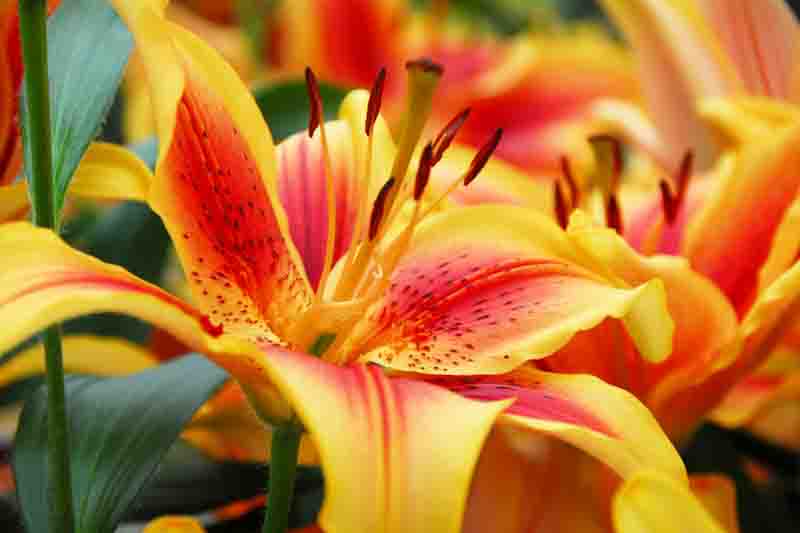
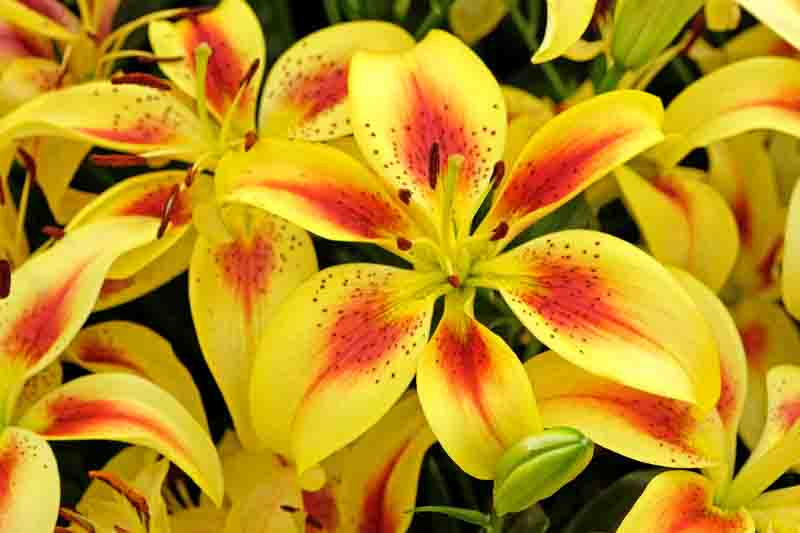
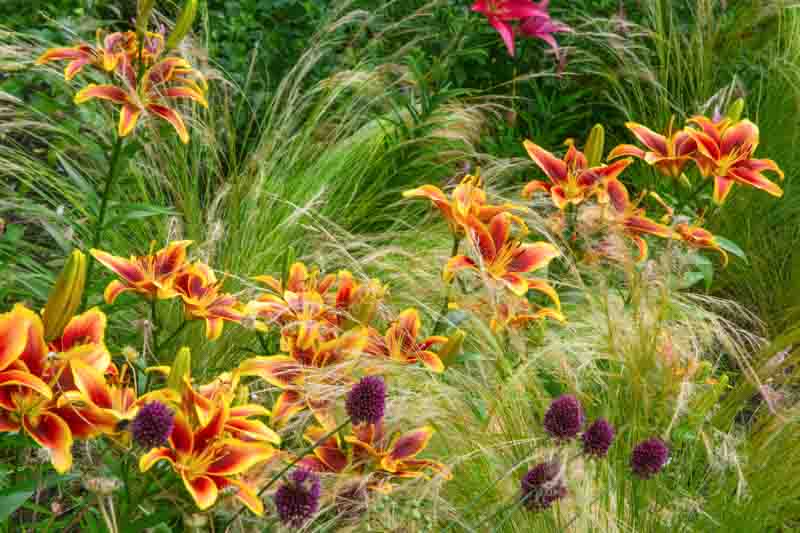


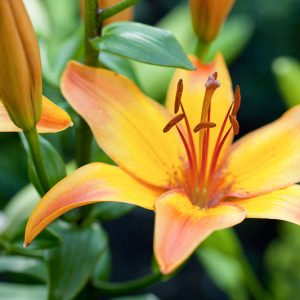
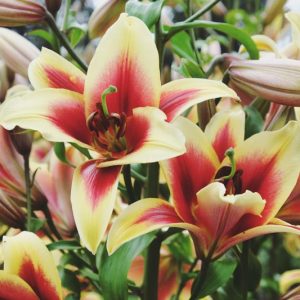
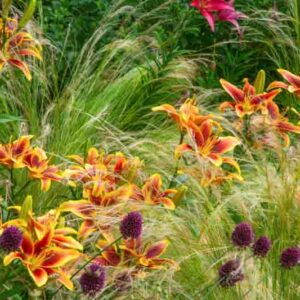
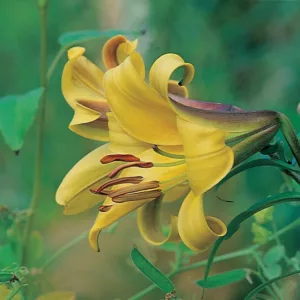
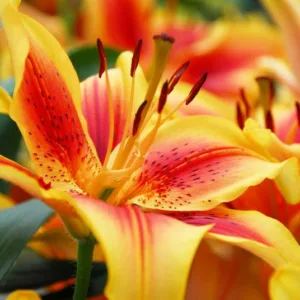
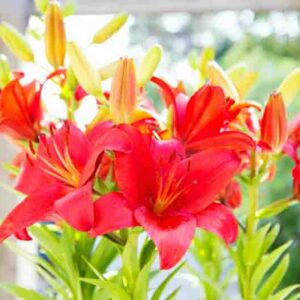
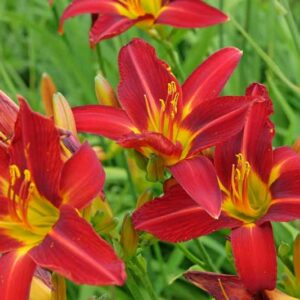
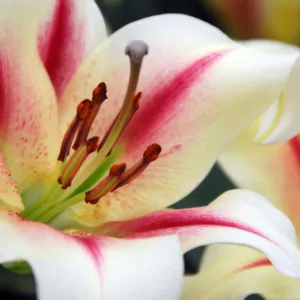
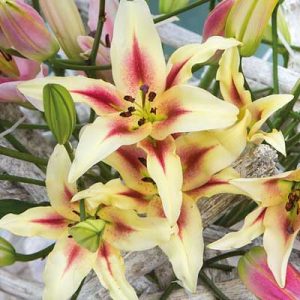
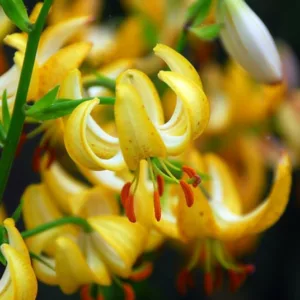
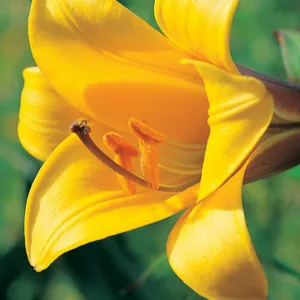
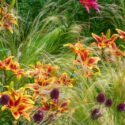
Lilium ‘Viva La Vida’ is a spectacular hybrid lily with large golden-yellow flowers dramatically marked with broad crimson-red brushstrokes and dark spotting toward the center. Bold without looking coarse, it creates an instant focal point in summer borders and makes an outstanding cut flower.
This interdivisional lily combines Asiatic and Oriental ancestry. It retains the vivid coloring and garden toughness associated with Asiatic hybrids while producing substantial flowers with a light fragrance. Upright stems clothed in glossy, lance-shaped leaves typically reach about 3-4 ft. (90-120 cm), although height varies with climate and growing conditions.
Summary: Upright interdivisional hybrid lily with large golden-yellow flowers dramatically brushed and spotted deep red.
Use: Excellent for sunny borders, cottage gardens, cutting gardens, containers, and mixed perennial beds.
Highlight: Exceptional yellow-and-crimson coloring combines the visual punch of an Asiatic lily with larger flowers and light fragrance.
Note: Plant where the flowers can rise above lower companions without the lily foliage being completely hidden.
| Botanical Name | Lilium ‘Viva La Vida’ |
|---|---|
| Family | Liliaceae |
| Hybrid Group | Division VIII interdivisional hybrid; commonly described as AOA / Asiatic-Oriental-Asiatic |
| Plant Type and Habit | Bulbous herbaceous perennial; upright, clump-forming |
| Hardiness | Generally USDA Zones 4-9; RHS hardiness H6 |
| Size | Usually about 3-4 ft. tall (90-120 cm); height varies by climate and culture |
| Sun | Full sun to partial shade |
| Soil | Fertile, humus-rich, moist but well-drained clay, loam, or sandy soil; acidic to neutral preferred |
| Bloom Time | Early to midsummer, often June-July depending on climate |
| Flowers | Large golden-yellow flowers with broad deep-red markings, darker spotting, and somewhat reflexed petals |
| Fragrance | Lightly fragrant; scent intensity may vary |
| Special Features | Showy, lightly fragrant, excellent cut flower, container suitable |
| Toxicity | Highly toxic to cats; true Lilium species and hybrids can cause acute kidney injury |
Published descriptions of ‘Viva La Vida’ vary considerably, particularly for height and fragrance. RHS records a plant around 80 cm tall, while specialist North American and European growers commonly report roughly 90-120 cm or more. Gardenia therefore treats 3-4 ft. as a practical garden range rather than presenting one unusually precise height as universal.
‘Viva La Vida’ belongs to the newer generation of interdivisional lilies created by crossing different established lily groups. Specialist growers describe it as an Asiatic-Oriental-Asiatic or AOA-type hybrid, while RHS places it within Division VIII, the interdivisional group. This mixed ancestry helps explain its unusual combination of saturated Asiatic-style coloring, large flowers, and detectable fragrance.
Strong upright stems emerge from perennial bulbs in spring and carry narrow, glossy dark-green leaves. Plants generally reach about 3-4 ft. (90-120 cm), making ‘Viva La Vida’ substantial enough for the middle of a perennial border without the towering proportions of many Orienpet lilies.
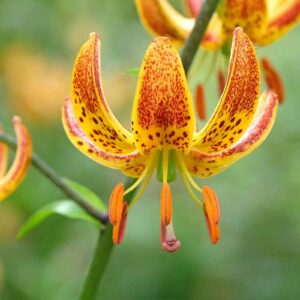
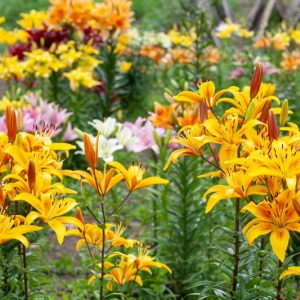
The foliage is narrow and lance-shaped, forming a clean vertical framework beneath the flowers. The blooms are the real event: rich golden yellow petals carry broad crimson-red central markings and red to maroon spotting, producing an almost painted effect. The petals curve backward slightly as flowers mature.
Unlike most classic Asiatic lilies, ‘Viva La Vida’ can produce a noticeable scent inherited from its Oriental ancestry. Specialist descriptions range from slight to fragrant, so it is better considered lightly fragrant rather than assuming the intense perfume typical of many pure Oriental lilies.
The bulbs are winter dormant and hardy through cold temperate climates. Shoots emerge in spring, flowering follows in early to midsummer, and the foliage gradually yellows afterward before disappearing for winter.
Lily flowers may attract pollinating insects and hummingbirds. They should nevertheless be grown primarily for ornamental value rather than considered a major pollinator resource.
Browsing varies locally. Rabbits and other small mammals may damage emerging shoots, and lilies should not be assumed to be reliably deer-proof where browsing pressure is high.
‘Viva La Vida’ is not a plant for persistently dry soil. It performs best with reasonably consistent moisture during active growth while demanding good drainage around the bulb.
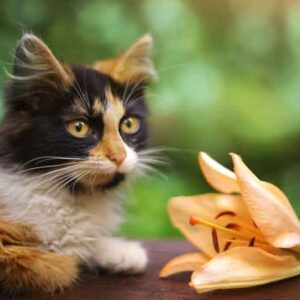
True lilies are extremely dangerous to cats. Leaves, flowers, stems, pollen, and even water from a vase containing cut lilies can pose a risk. Exposure can cause acute kidney failure and requires immediate veterinary attention. ASPCA distinguishes this severe feline toxicity from the effects in dogs and horses.
‘Viva La Vida’ is a cultivated bulbous perennial and is not considered invasive. Established bulbs may produce offsets and gradually form a larger clump.
Full sun promotes strong stems and generous flowering, although partial shade is tolerated. A particularly effective arrangement gives the flowering stems good light while lower companions shade the soil around the root zone.
Grow in fertile, humus-rich, moist but well-drained soil. RHS lists clay, loam, and sand with acidic to neutral pH. Whatever the soil texture, persistent winter wet is more dangerous than modest differences in fertility.
Water during prolonged dry spells while stems, leaves, and flower buds are developing. Reduce irrigation as growth naturally dies back, and never leave dormant bulbs sitting in saturated soil.
Top-dress with compost in spring or use a balanced fertilizer as shoots develop. Avoid excessive nitrogen, which encourages soft growth at the expense of sturdy flowering stems.
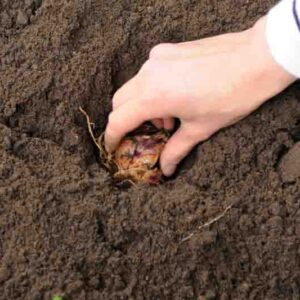
Plant bulbs in fall or spring and give them enough depth for healthy rooting. Because lily planting depth depends on bulb size and rooting habit, see Gardenia’s How Deep to Plant Lily Bulbs: Depth & Spacing Guide rather than applying one fixed depth to every lily.
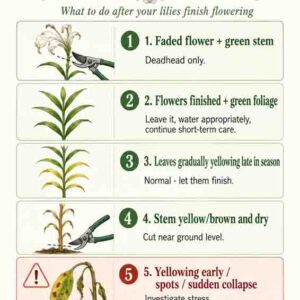
Deadhead faded flowers if seed is not required, but leave the leafy stem standing until it turns yellow naturally. Those leaves continue photosynthesizing after bloom and replenish the bulb for next year’s flowers. See How to Grow Lilies: Planting, Care & Troubleshooting.
Propagate established plants by carefully separating offsets or by scaling. Vegetative propagation preserves the characteristics of the cultivar; seedlings should not be expected to reproduce ‘Viva La Vida’ faithfully.
Healthy lilies are generally straightforward to grow when drainage, light, and air circulation are good, but several problems deserve attention. For help identifying symptoms, see Gardenia’s Lily Pests & Diseases: Identify, Prevent and Treat.
Do not cut a lily to ground level when the last flower fades. The remaining green leaves are rebuilding the bulb. Remove only the spent flowers, then wait until the stem and foliage have yellowed naturally.
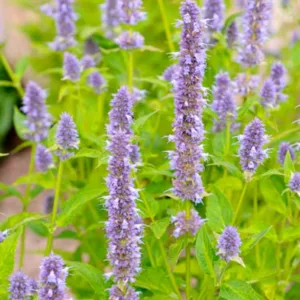
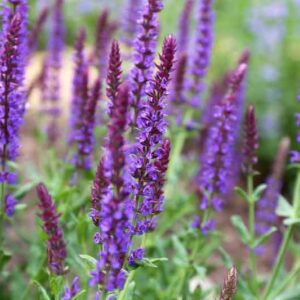
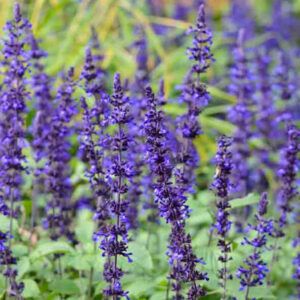
For ‘Viva La Vida’, Gardenia prioritizes companions that overlap in hardiness, full sun to partial sun, well-drained soil, and moderate summer moisture. Their second job is design: cool blues and violets temper the lily’s intense yellow-red coloring while lower foliage disguises the bases of the stems.
Gardenia does not choose companions simply because their flowers photograph well together. For ‘Viva La Vida’, first match light, drainage, moisture, and hardiness; then use mature height, bloom timing, flower shape, and color to build the composition. The practical rule is Match – Layer – Extend.
Explore the full reasoning in Gardenia’s Best Companion Plants for Lilies, or use the Plant Finder and Garden Design Tool to check your own combination against actual garden conditions.
Lilium ‘Viva La Vida’ is an interdivisional hybrid commonly described as an AOA or Asiatic-Oriental-Asiatic lily. RHS places it in Division VIII, which contains interdivisional hybrids.
It commonly reaches about 3-4 ft. tall, although mature height varies with climate, soil, bulb size, and growing conditions.
The large flowers are golden yellow with broad crimson-red markings and darker red to maroon spotting toward the center.
Yes. It is generally described as lightly or slightly fragrant, although scent intensity can vary.
It generally flowers in early to midsummer, often around June or July depending on climate and seasonal conditions.
Yes. It grows in full sun or partial shade, although good light generally produces the strongest stems and flowering.
Yes. Like other true Lilium lilies, it is extremely dangerous to cats. Exposure to leaves, flowers, pollen, stems, or even vase water can cause acute kidney injury and requires immediate veterinary attention.
Good companions include Geranium ‘Rozanne’, Salvia ‘Caradonna’, Nepeta ‘Walker’s Low’, and Allium ‘Purple Sensation’. They provide compatible growing conditions and useful contrasts in height, flower shape, and color.
Royal Horticultural Society – Lilium ‘Viva la Vida’: RHS Plant Profile
Iowa State University Extension – Types and Divisions of Garden Lilies: Interdivisional Lily Hybrids
ASPCA – Lily Toxicity: Lilium Species and Cats
Gardenia – Lily Companion Plants: https://www.gardenia.net/guide/great-companion-plants-for-lilies
Gardenia – How to Grow Lilies: https://www.gardenia.net/guide/learn-how-to-plant-and-care-for-your-lilies/1000
Updated: September 2026 • Reviewed by Gardenia Editors
| Hardiness |
4 - 9 |
|---|---|
| Heat Zones |
1 - 8 |
| Climate Zones | 1, 2, 3, 4, 5, 6, 7, 8, 9, 14, 15, 16, 17, 18, 19, 20, 21, 22, 23, 24, A1, A2, A3 |
| Plant Type | Bulbs, Perennials |
| Plant Family | Liliaceae |
| Genus | Lilium |
| Common names | Asiatic Lily, Lily |
| Exposure | Full Sun, Partial Sun |
| Season of Interest | Summer (Early, Mid) |
| Height | 3' - 4' (90cm - 120cm) |
| Spread | 10" - 1' (25cm - 30cm) |
| Spacing | 10" - 12" (25cm - 30cm) |
| Depth | 6" (15cm) |
| Maintenance | Low |
| Water Needs | Average |
| Soil Type | Chalk, Clay, Loam, Sand |
| Soil pH | Acid, Alkaline, Neutral |
| Soil Drainage | Moist but Well-Drained, Well-Drained |
| Characteristics | Fragrant, Cut Flowers, Showy |
| Tolerances | Clay Soil, Fire |
| Attracts | Bees |
| Garden Uses | Beds And Borders, Patio And Containers |
| Garden Styles | City and Courtyard, Cutting Garden, Informal and Cottage, Pollinator Garden |
| Toxic to Humans | No known toxicity |
| Toxic to Cats | Toxic |
| Toxic to Dogs | Not toxic |
| Toxic to Horses | Not toxic |


| Hardiness |
4 - 9 |
|---|---|
| Heat Zones |
1 - 8 |
| Climate Zones | 1, 2, 3, 4, 5, 6, 7, 8, 9, 14, 15, 16, 17, 18, 19, 20, 21, 22, 23, 24, A1, A2, A3 |
| Plant Type | Bulbs, Perennials |
| Plant Family | Liliaceae |
| Genus | Lilium |
| Common names | Asiatic Lily, Lily |
| Exposure | Full Sun, Partial Sun |
| Season of Interest | Summer (Early, Mid) |
| Height | 3' - 4' (90cm - 120cm) |
| Spread | 10" - 1' (25cm - 30cm) |
| Spacing | 10" - 12" (25cm - 30cm) |
| Depth | 6" (15cm) |
| Maintenance | Low |
| Water Needs | Average |
| Soil Type | Chalk, Clay, Loam, Sand |
| Soil pH | Acid, Alkaline, Neutral |
| Soil Drainage | Moist but Well-Drained, Well-Drained |
| Characteristics | Fragrant, Cut Flowers, Showy |
| Tolerances | Clay Soil, Fire |
| Attracts | Bees |
| Garden Uses | Beds And Borders, Patio And Containers |
| Garden Styles | City and Courtyard, Cutting Garden, Informal and Cottage, Pollinator Garden |
| Toxic to Humans | No known toxicity |
| Toxic to Cats | Toxic |
| Toxic to Dogs | Not toxic |
| Toxic to Horses | Not toxic |
How many Lilium ‘Viva la Vida’ (Longiflorum-Asiatic Lily) do I need for my garden?
| Plant | Quantity | |
|---|---|---|
| Lilium ‘Viva la Vida’ (Longiflorum-Asiatic Lily) | N/A | Buy Plants |
Create a membership account to save your garden designs and to view them on any device.
Becoming a contributing member of Gardenia is easy and can be done in just a few minutes. If you provide us with your name, email address and the payment of a modest $25 annual membership fee, you will become a full member, enabling you to design and save up to 25 of your garden design ideas.
Join now and start creating your dream garden!