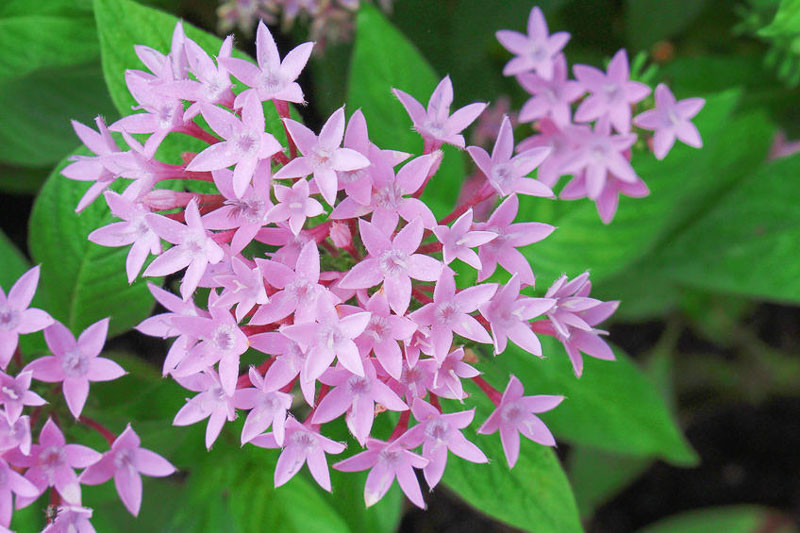
Pentas (Star Cluster)
Pentas, also known as Egyptian starcluster, are tropical flowering perennials loved for vivid, star-shaped blooms and strong pollinator appeal. With a bushy habit, these colorful plants typically grow 2 to 3 feet tall and nearly as wide, bringing easy structure, bright color, and wildlife value to sunny garden beds, borders, and containers.
Gardeners choose pentas because they bloom generously, handle heat well, and keep butterflies, hummingbirds, and bees coming back all season. In warm climates, they grow as perennials. In cooler regions, they are often grown as annuals for reliable summer color.
Hardiness
Pentas thrive as tender perennials in USDA Zones 10 to 11. In colder climates, they are usually grown as annual flowers, where they provide continuous color from summer until the first frost.
Flowers
Pentas produce clusters of small, star-shaped flowers in pink, red, white, lavender, bright purple, and deep purple. Each floret joins others in a rounded umbel, creating a cheerful starburst effect. Their long bloom season makes them excellent plants that bloom all summer.
Pollinator Benefits
Pentas are outstanding pollinator plants. Their nectar-rich flowers attract butterflies, hummingbirds, and bees, helping support local ecosystems while adding movement, life, and color to the garden.
Garden Uses
Use pentas as bedding plants for bold seasonal color, in borders for upright structure, or in patio containers where their compact, bushy form can shine. They are especially valuable in butterfly gardens, pollinator gardens, tropical plantings, and sunny mixed displays.
Easy Care
Pentas grow best in warm weather, bright light, and well-drained soil. Once established, they are relatively low maintenance and bloom heavily with regular watering, occasional feeding, and removal of faded flowers to encourage fresh buds.
Bright, resilient, pollinator-friendly, and easy to grow, pentas are a smart choice for gardeners who want months of tropical color and meaningful wildlife support in a sunny, low-effort planting.