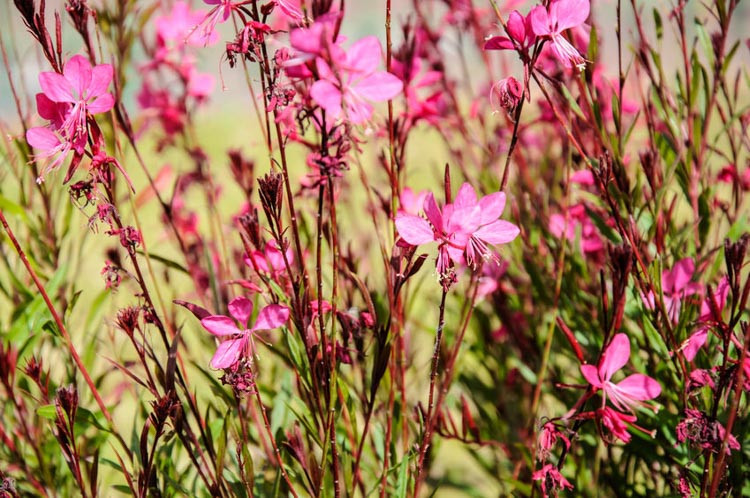
Gaura (Beeblossom)
Characteristics
Gaura, also known as Lindheimer’s beeblossom, wandflower, or butterfly flower, is an airy, sun-loving perennial loved for slender stems, fluttering white or pink flowers, and months of graceful movement. Native to Texas and Louisiana, Gaura lindheimeri brings a wildflower feel to borders, gravel gardens, cottage gardens, prairie plantings, and low-water landscapes. For a broad overview, explore the Gaura lindheimeri genus guide.
Why Grow Gaura?
Gaura is perfect when a border needs softness, height, and long bloom without a heavy look. Its butterfly-like flowers dance above narrow foliage, filling gaps between sturdier plants and adding natural movement. Once established, it handles heat and dry spells well, making it a strong choice for drought-tolerant plants, Mediterranean gardens, and wildlife-inspired plantings featuring Texas wildflowers.
Growing Tips
Plant gaura in full sun and well-drained soil. The key advice is simple: avoid soggy soil and heavy feeding. Too much fertility can make stems floppy, while wet winter soil can shorten plant life. Water regularly during the first season, then reduce irrigation once plants are established. Cut back in early spring, and lightly trim tired stems in summer if plants need refreshing.
Popular Varieties
For a classic white, butterfly-like display, choose Gaura ‘Whirling Butterflies’. For rosy pink flowers, try Gaura ‘Siskiyou Pink’. For white flowers edged in pink, plant Gaura ‘Rosy Jane’. For compact containers and bold color, use BELLEZA® Dark Pink, or choose BELLEZA® White for a neat white-flowering form.
Garden Uses
Use gaura in loose drifts, mixed perennial borders, cottage gardens, meadow-style plantings, and containers. It pairs beautifully with salvias, ornamental grasses, lavender, yarrow, coneflowers, and agastache. Place it where its delicate stems can weave through stronger plants, softening the design and extending summer-to-fall interest.
Light, resilient, and full of motion, Gaura is a standout perennial for gardeners who want drought tolerance, long bloom, pollinator appeal, and a graceful wildflower look in sunny gardens.