Tomato 'Mountain Magic'
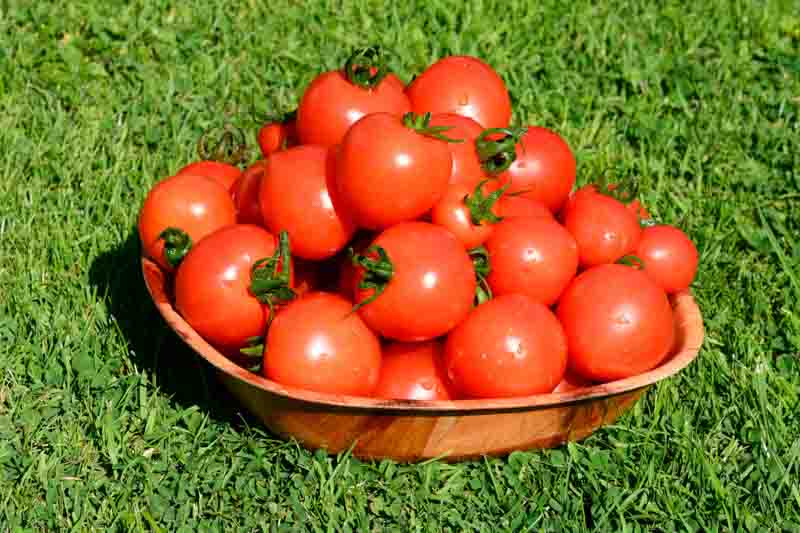


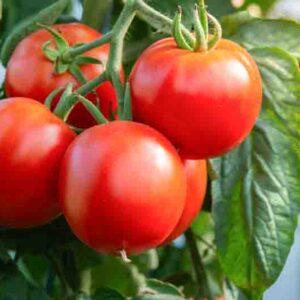
Solanum lycopersicum ‘Mountain Magic’ F1 is a disease-resistant cocktail tomato developed by North Carolina State University’s tomato breeding program. Its compact indeterminate vines produce heavy crops of smooth, round, bright red fruits weighing about 2 oz. (55-60 g), combining sweet, rich flavor with firm texture, high crack resistance, and an unusually strong disease-resistance package.
Mountain Magic is especially valuable where late blight is a recurring threat. The hybrid carries the late-blight resistance alleles Ph-2 and Ph-3 in heterozygous form, inherited through its parent NC 2 CELBR. It also has useful early-blight, Fusarium wilt, and Verticillium wilt resistance, although Fusarium race notation is not presented identically across breeder and current commercial sources.
Gardenia cultivar insight: Mountain Magic is not simply a flavorful tomato that happens to resist disease. Its documented pedigree explains much of the finished cultivar: late- and early-blight resistance from NC 2 CELBR, combined with compact indeterminate growth, sweetness, firmness, and shelf-life traits from NC 2 Grape.
| Botanical Name | Solanum lycopersicum ‘Mountain Magic’ F1 |
|---|---|
| Family | Solanaceae |
| Common Name | Mountain Magic tomato |
| Breeder | North Carolina State University tomato breeding program; associated with breeder Randolph G. “Randy” Gardner |
| Parentage | NC 2 CELBR × NC 2 Grape |
| Seed Type | F1 hybrid; saved seed should not be expected to reproduce Mountain Magic true to type |
| Plant Type and Habit | Warm-season fruiting annual; compact but vigorous indeterminate vine requiring support |
| Growth Habit | Compact indeterminate; continues flowering and producing through the season |
| Tomato Type | Cocktail / salad tomato; sometimes grouped with cherry or Campari-type tomatoes |
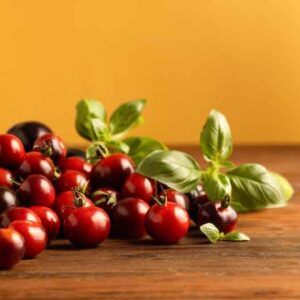
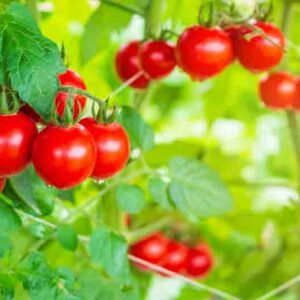
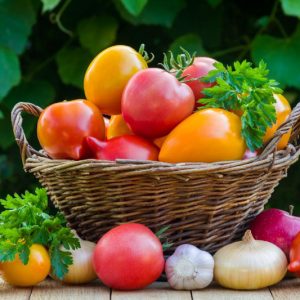
| Fruit | Smooth, round, uniform bright red cocktail tomatoes, generally about 2 oz. (55-60 g) |
| Flavor | Sweet, rich tomato flavor with very good eating quality |
| Days to Maturity | Approximately 66-75 days from transplanting, depending on seed source and growing conditions |
| Sun and Exposure | Full sun; at least 6 hours of direct sunlight, preferably 8 or more |
| Soil | Fertile, organically rich, moist but well-drained soil; ideally around pH 6.0-6.8 |
| Spacing | 24-36 in. (60-90 cm) between supported plants |
| Crack Resistance | High; strong breeder and commercial support, though no tomato is completely immune to splitting under extreme moisture fluctuations |
| Disease Resistance | High late-blight resistance associated with heterozygous Ph-2 + Ph-3; moderate/intermediate early-blight resistance; Verticillium resistance; Fusarium resistance. Race notation varies among sources and should remain source-specific. |
| Harvest | Harvest when fruit is uniformly bright red and slightly yielding while still firm |
| Best Uses | Fresh snacking, salads, sandwiches, tomato platters, roasting, salsa, and specialty-market trusses |
| Container Suitability | Good in a large container with sturdy support; compact indeterminate does not mean dwarf |
Mountain Magic occupies a useful middle ground between tiny cherry tomatoes and full-sized slicers. Its approximately 2-ounce fruits are large enough to halve or slice into salads and sandwiches but still compact enough for snacking and whole-fruit roasting.
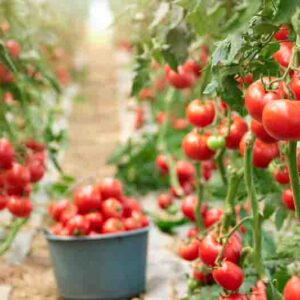
The fruits are smooth, round, bright red, uniform, firm, and highly resistant to cracking. They also hold well after harvest, making Mountain Magic useful for home gardeners as well as market growers.
Its defining technical advantage, however, is disease resistance. Mountain Magic was deliberately bred to combine high fruit quality with strong resistance to several important tomato diseases, especially late blight.
Best reason to grow Mountain Magic: Choose it when disease reliability matters but you do not want to sacrifice flavor. It is particularly valuable where late blight repeatedly threatens susceptible cultivars before the season is over.
Mountain Magic was developed by the tomato breeding program at North Carolina State University, whose work has produced numerous disease-resistant cultivars carrying the “Mountain” name.
The cultivar is the F1 hybrid of two NC State breeding lines:
NC 2 CELBR, a large-fruited line bred for early-blight resistance and carrying the late-blight resistance genes Ph-2 and Ph-3.
NC 2 Grape, a compact indeterminate grape tomato line selected for high sugar, firmness, and extended shelf life and carrying the rin ripening-inhibitor gene.
Because Mountain Magic is the F1 offspring of those lines, it carries the resistant alleles at Ph-2 and Ph-3 in heterozygous form. The finished hybrid combines strong disease resistance with compact indeterminate growth, good sweetness, firmness, and post-harvest holding quality.
Gardenia breeding insight: Mountain Magic’s traits are not a random collection of catalog claims. Its pedigree explains much of the finished cultivar: Ph-2 + Ph-3 late-blight resistance and early-blight resistance through NC 2 CELBR, combined with compact indeterminate growth, high-sugar genetics, firmness, and shelf-life traits through NC 2 Grape.
Mountain Magic is most usefully described as a cocktail tomato. Its fruits weigh around 2 ounces, placing them between many classic cherry tomatoes and full-sized slicing tomatoes.
Authoritative sources do not all use the same category. Cornell has grouped Mountain Magic with cherry tomatoes, commercial seed companies commonly describe it as a cocktail tomato, and NC State and commercial breeders have described it as Campari type.
These classifications overlap because cherry, salad, cocktail, and Campari are market or size categories rather than strict botanical divisions.
Gardenia classification rule: Mountain Magic may appear under “cherry,” “cocktail,” or “Campari type” depending on the source. Gardenia treats it primarily as a cocktail tomato because its approximately 2-ounce fruit falls most naturally into that size class.
Disease resistance is Mountain Magic’s defining technical advantage, but resistance labels need to be interpreted rather than copied mechanically.
The NC State breeder record documents:
Late blight: high resistance
Early blight: moderate resistance
Fusarium wilt: documented resistance
Verticillium wilt: documented resistance
Late-blight resistance is particularly well characterized. Mountain Magic carries the resistant alleles at Ph-2 and Ph-3 in heterozygous form. Cultivars combining both resistance genes have generally provided stronger and broader protection than tomatoes relying on a single major late-blight gene.
That does not mean Mountain Magic is immune. Resistance can slow disease development, preserve foliage longer, and reduce crop loss, but pathogen strain, inoculum pressure, weather, and plant health still matter.
Gardenia late-blight rule: “Resistant” does not mean “cannot become infected.” Mountain Magic’s Ph-2 + Ph-3 combination provides strong genetic protection, but sanitation, airflow, monitoring, and appropriate disease management still matter during severe outbreaks.
Fusarium race notation is not presented consistently across Mountain Magic sources. NC State’s cultivar record specifies resistance to Fusarium wilt races 1 and 2, while some current U.S. seed suppliers list races 1-3. Other commercial breeder coding uses different notation again.
Those records should not simply be merged into one enlarged universal resistance claim.
Gardenia resistance-data rule: Gardenia preserves the Fusarium notation used by each breeder or seed source rather than taking the union of every resistance code found online. When resistance to a particular Fusarium race is important, use the coding supplied with the specific seed lot you are buying.
For disease identification and management, see Gardenia’s Tomato Diseases: Identification, Treatment & Prevention, Late Blight, Early Blight, Fusarium Wilt, and Verticillium Wilt.
Mountain Magic is indeterminate, so its stems continue growing, flowering, and setting fruit throughout the season.
NC State describes the cultivar more specifically as compact indeterminate. This refers to its relatively manageable vine architecture, not to a dwarf or determinate growth habit.
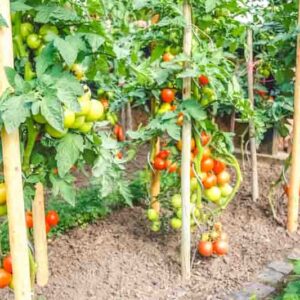
Mountain Magic still needs support and can become a substantial plant under favorable growing conditions. Install a sturdy cage, trellis, stake, or string system early.
Gardenia habit rule: “Compact indeterminate” describes the vine’s architecture, not a miniature final size. Mountain Magic continues producing vertically over an extended season and should not be treated like a dwarf patio tomato.
For more on tomato growth habit, see Gardenia’s Determinate vs. Indeterminate Tomatoes. For pruning guidance, see How and When to Prune Tomatoes.
Grow Mountain Magic in full sun, with at least 6 hours of direct sunlight and preferably 8 or more for strong flowering, fruit set, ripening, and flavor.
Plant in fertile, organically rich, moist but well-drained soil. Aim for a slightly acidic to neutral pH around 6.0-6.8.
Allow approximately 24-36 inches (60-90 cm) between supported plants. Good spacing improves airflow and makes harvesting and disease monitoring easier.
Maintain reasonably even root-zone moisture. Mountain Magic has excellent genetic crack resistance, but steady watering still supports consistent fruit development and overall plant health.
Use balanced fertility and avoid excessive nitrogen, which can encourage unnecessary foliage at the expense of balanced fruit production.
For the best crop: Disease-resistant genetics work best alongside good culture. Give Mountain Magic full sun, good airflow, fertile soil, steady moisture, and reliable support rather than expecting resistance genes to compensate for avoidable plant stress.
For complete tomato care, see Gardenia’s Tomato (Solanum lycopersicum) profile.
Mountain Magic’s crack resistance is unusually well documented. NC State specifically identifies the cultivar as highly resistant to fruit cracking, and current commercial sources consistently emphasize the same trait.
This is useful for fruit intended to ripen fully on the vine or remain intact in clusters. Mountain Magic also combines firmness, uniform ripening, and good shelf life, traits that increase its value both in the garden and after harvest.
Gardenia cracking note: Mountain Magic has strong breeder and commercial support for high crack resistance. Even so, “highly resistant” should not be rewritten as “cannot crack” under extreme moisture or weather conditions.
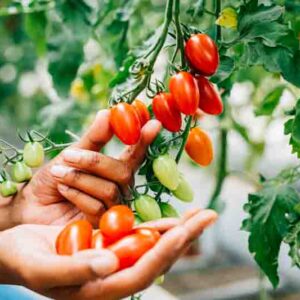
Mountain Magic is ready to harvest when the fruit has developed an even, bright red color and begins to yield slightly under gentle pressure while remaining firm.
Because the cultivar was bred for firmness and shelf life, fully ripe fruit may remain noticeably firmer than a soft heirloom slicer.
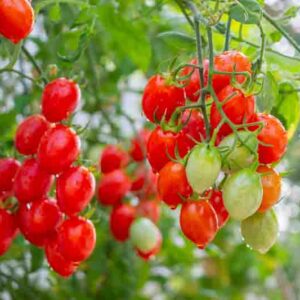
Clusters can ripen evenly enough for truss harvesting, although home gardeners can pick individual fruits as they reach peak color.
Gardenia harvest cue: Look for uniform bright red color plus slight give, not softness. Mountain Magic can be fully ripe while still feeling firm.
Mountain Magic generally reaches maturity in about 66-75 days from transplanting. Once production begins, the indeterminate vines continue ripening fruit through the season.
The cocktail size is one of the cultivar’s practical strengths. The fruits are large enough to halve or quarter into salads, small enough for snacking, and firm enough to roast without immediately collapsing.
They also work well in salsa, pasta dishes, tomato platters, lunch boxes, and sandwiches.
Kitchen cue: Mountain Magic is especially useful when you want more substance than a tiny cherry tomato without committing to a large slicer. Its approximately 2-ounce fruit sits comfortably between the two.
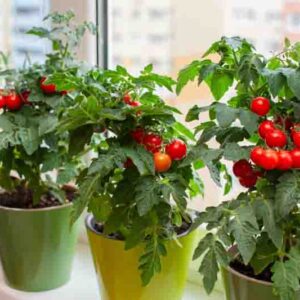
Mountain Magic can perform well in a container, and its compact indeterminate architecture makes it somewhat easier to manage than extremely rampant indeterminate cultivars.
It is not, however, a dwarf tomato. Use a substantial container, preferably around 10 gallons or more, with fertile, well-drained potting mix and sturdy vertical support.
Container plants need particularly consistent watering because the restricted root zone can dry rapidly during hot weather.
Container reality: “Compact indeterminate” does not mean patio-sized. Mountain Magic remains a continuously growing vine, so choose a container and support system capable of carrying a productive plant through the season.
Choose companions that share full sun and compatible moisture and soil conditions without crowding Mountain Magic’s productive canopy.
Basil (Ocimum basilicum) shares similar sun and moisture requirements and fits naturally into an edible tomato bed.
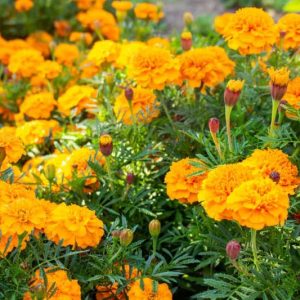
French Marigold (Tagetes patula) thrives in full sun and can flower around bed edges.
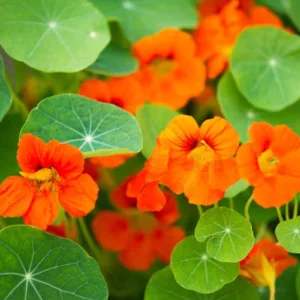
Nasturtium (Tropaeolum majus) can trail around bed margins without occupying the tomato’s vertical canopy.
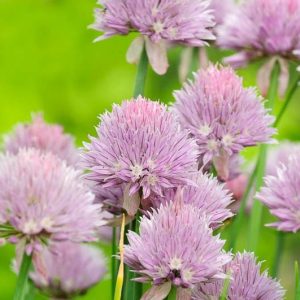
Garlic (Allium sativum) can occupy garden space before tomatoes reach full summer size.
For more companion ideas based on practical compatibility rather than folklore, see Gardenia’s Companion Plants for Tomatoes.
Mountain Magic is indeterminate. NC State describes it more specifically as compact indeterminate, meaning its vine architecture is comparatively manageable but it continues growing, flowering, and producing through the season.
Yes. Mountain Magic is the F1 hybrid of the NC State breeding lines NC 2 CELBR and NC 2 Grape. Saved seed should not be expected to reproduce Mountain Magic true to type.
Mountain Magic generally produces smooth, round, bright red cocktail tomatoes weighing about 2 ounces (55-60 g).
Current sources place Mountain Magic at approximately 66-75 days from transplanting.
Yes. Mountain Magic carries the resistant alleles at Ph-2 and Ph-3 in heterozygous form and has high documented late-blight resistance. Resistance can greatly reduce disease development but does not make the plant immune under every pathogen strain or disease pressure.
Mountain Magic has moderate or intermediate resistance to early blight. This can reduce disease severity but should not be interpreted as complete immunity.
Mountain Magic also has documented Verticillium and Fusarium wilt resistance. Fusarium race notation differs among breeder and commercial sources, so Gardenia recommends using the resistance coding supplied with the specific seed lot when race-specific resistance matters.
Mountain Magic has strong documented crack resistance and was bred for firm, uniform fruit. Extreme moisture fluctuations can still cause occasional splitting, so crack resistant should not be interpreted as crack-proof.
It is sometimes grouped with cherry tomatoes, but its approximately 2-ounce fruit is more usefully classified as cocktail size. Some breeder sources also describe it as Campari type.
Yes. Its compact indeterminate habit can be useful in a container, but it is not a dwarf tomato. Use a large container, preferably around 10 gallons or more, with full sun, consistent moisture, fertile potting mix, and sturdy support.
You can save the seeds, but Mountain Magic is an F1 hybrid, so its offspring will segregate genetically and should not be expected to reproduce the original cultivar reliably.
| Hardiness |
2 - 11 |
|---|---|
| Climate Zones | 1, 1A, 1B, 2, 2A, 2B, 3, 3A, 3B, 4, 5, 6, 7, 8, 9, 10, 11, 12, 13, 14, 15, 16, 17, 18, 19, 20, 21, 22, 23, 24, A1, A2, A3, H1, H2 |
| Plant Type | Annuals, Fruits, Perennials |
| Plant Family | Solanaceae |
| Genus | Solanum, Tomatoes |
| Common names | Tomato |
| Exposure | Full Sun |
| Season of Interest | Summer (Early, Mid, Late), Fall |
| Height | 4' - 5' (120cm - 150cm) |
| Spread | 2' - 3' (60cm - 90cm) |
| Spacing | 24" - 36" (60cm - 90cm) |
| Maintenance | High |
| Water Needs | Average |
| Soil Type | Clay, Loam, Sand |
| Soil pH | Acid, Neutral |
| Soil Drainage | Moist but Well-Drained |
| Tolerance | Rabbit, Clay Soil |
| Attracts | Bees |
| Garden Uses | Beds And Borders, Patio And Containers, Wall-Side Borders |
| Garden Styles | City and Courtyard, Informal and Cottage, Pollinator Garden |


| Hardiness |
2 - 11 |
|---|---|
| Climate Zones | 1, 1A, 1B, 2, 2A, 2B, 3, 3A, 3B, 4, 5, 6, 7, 8, 9, 10, 11, 12, 13, 14, 15, 16, 17, 18, 19, 20, 21, 22, 23, 24, A1, A2, A3, H1, H2 |
| Plant Type | Annuals, Fruits, Perennials |
| Plant Family | Solanaceae |
| Genus | Solanum, Tomatoes |
| Common names | Tomato |
| Exposure | Full Sun |
| Season of Interest | Summer (Early, Mid, Late), Fall |
| Height | 4' - 5' (120cm - 150cm) |
| Spread | 2' - 3' (60cm - 90cm) |
| Spacing | 24" - 36" (60cm - 90cm) |
| Maintenance | High |
| Water Needs | Average |
| Soil Type | Clay, Loam, Sand |
| Soil pH | Acid, Neutral |
| Soil Drainage | Moist but Well-Drained |
| Tolerance | Rabbit, Clay Soil |
| Attracts | Bees |
| Garden Uses | Beds And Borders, Patio And Containers, Wall-Side Borders |
| Garden Styles | City and Courtyard, Informal and Cottage, Pollinator Garden |
How many Solanum lycopersicum ‘Mountain Magic’ (Tomato) do I need for my garden?
| Plant | Quantity | |
|---|---|---|
| Solanum lycopersicum ‘Mountain Magic’ (Tomato) | N/A | Buy Plants |
Create a membership account to save your garden designs and to view them on any device.
Becoming a contributing member of Gardenia is easy and can be done in just a few minutes. If you provide us with your name, email address and the payment of a modest $25 annual membership fee, you will become a full member, enabling you to design and save up to 25 of your garden design ideas.
Join now and start creating your dream garden!
Create a membership account to save your garden designs and to view them on any device.
Becoming a contributing member of Gardenia is easy and can be done in just a few minutes. If you provide us with your name, email address and the payment of a modest $25 annual membership fee, you will become a full member, enabling you to design and save up to 25 of your garden design ideas.
Join now and start creating your dream garden!