Muscat Of Alexandria Grape, Muscat Of Alexandria, Muscat D’Alexandrie, Muscat D’Alexandria, Moscatel De Alejandría, Moscatel De Málaga, Moscatel De España, Moscatel Gordo Blanco, Moscatel Graúdo, Zibibbo, Hanepoot, Damaszener Muskat


Vitis vinifera ‘Muscat of Alexandria’, commonly known as the Muscat of Alexandria grape, is one of the most storied and unmistakable white grape cultivars in the world. It belongs to the ancient Muscat family, a group celebrated for intensely aromatic fruit, and it stands out for combining fresh-eating appeal, raisin value, and winemaking usefulness in one vine. That is a rare mix. Many grapes are excellent in one lane. Muscat of Alexandria is memorable in several.
This deciduous grapevine is grown in warm, sunny regions where its berries can fully ripen and develop the variety’s hallmark perfume. Depending on where and how it is grown, Muscat of Alexandria may be used as a table grape, raisin grape, wine grape, or blending grape for aromatic lift. It is also known internationally by names such as Zibibbo in Italy and Moscatel de Alejandría or related local forms across the Mediterranean world.
Vitis vinifera ‘Muscat of Alexandria’ is a classic aromatic grape known for large pale berries, musky floral fragrance, and remarkable versatility. Plant it in full sun with excellent drainage, train it on a strong support, and prune it every year to keep the vine balanced, open, and productive. Expect large clusters of seeded golden-green grapes used for fresh eating, raisins, sweet wines, dry wines in some regions, and fortified styles rather than for neutral juice production.
Use: Primarily grown for fresh eating, raisins, sweet and fortified wines, and aromatic blending.
Highlight: Large pale berries with an intense floral-muscat aroma, rich sugar potential, and warm-climate adaptability.
Design note: Though valued commercially, Muscat of Alexandria can also serve as an ornamental edible vine for pergolas, fences, and trellises where a vigorous fruiting vine is desired.
| Botanical Name | Vitis vinifera ‘Muscat of Alexandria’ |
|---|---|
| Family | Vitaceae |
| Common Name | Muscat of Alexandria Grape |
| Plant Type | Deciduous fruiting vine, aromatic grape, table-wine-raisin grape |
| USDA Hardiness Zones | 7-9, with some sellers listing it as hardy to Zone 6 in favorable warm-summer sites |
| Growth Habit | Vigorous climbing vine with a somewhat drooping habit, requiring structured training or goblet style in suitable climates |
| Height | 15-20 ft. or more depending on pruning and training system |
| Spread | 6-10 ft. or more depending on training method |
| Sun Exposure | Full sun |
| Soil | Well-drained soil; often successful on gravelly, acidic, sandy, or decalcified terroirs that do not stay wet |
| Ripening Season | Late-season, commonly about four weeks after Chasselas in the French reference collection |
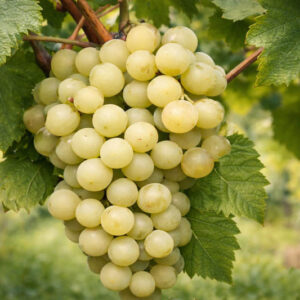
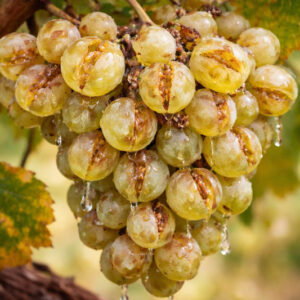
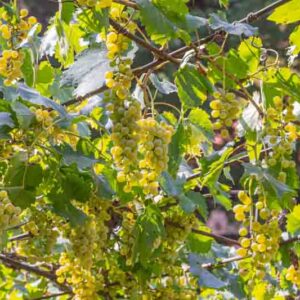
| Fruit | Large clusters with very large, ellipsoid to obovoid, pale yellow-green berries, usually seeded, with distinct muscat flavor |
| Main Uses | Table grape, raisin grape, sweet wine, fortified wine, dry wine in some regions, aromatic blending |
| Flavor Direction | Orange blossom, grape candy, honey, fresh grape, citrus peel, apricot, floral spice, and musky perfume |
| Harvest Goal | High sugar with sound berry condition, full aromatic expression, and enough freshness to avoid heavy or dull wines |
Muscat of Alexandria remains important because it delivers something growers, gardeners, and winemakers rarely get in one variety: a true muscat perfume with real agricultural flexibility. The berries are not merely sweet. They are aromatic in a way people remember. Even before the fruit is tasted, the variety often announces itself through scent – floral, grapey, slightly spicy, and warm. That intense fragrance is what gives Muscat grapes their loyal following and what keeps this old cultivar commercially relevant in modern vineyards.
For growers, Muscat of Alexandria is compelling because it is not trapped in one market category. A vineyard can produce fruit for fresh consumption, drying, dessert wines, fortified wines, or aromatic blending. Foundation Plant Services at UC Davis classifies it directly as a grape used for raisin, table, and wine. That triple-use profile is a major reason the grape has survived for centuries across many countries and production systems.
Why growers keep choosing it: Muscat of Alexandria combines ancient heritage, strong aroma, fresh-market appeal, raisin potential, and sweet wine credibility in a single vine. Few classic cultivars can do all of that well.
| Origin | Ancient Mediterranean; VIVC lists Greece, while long tradition also links the grape to Alexandria and North Africa |
|---|---|
| Identity | A white Vitis vinifera Muscat cultivar recognized under names including Zibibbo, Damaszener Muskat, and Moscatel Graúdo |
| Parentage | Plantgrape reports published genetic analyses indicating a cross between Muscat à petits grains blancs and Heptakilo |
| Fruit color | White to yellow-green |
| Berry size | Very large |
| Cluster type | Large bunches, suited to both table and wine use |
| Skin | Moderately firm for handling but not thick in the way many shipping grapes are |
| Seed presence | Seeded |
| Main uses | Table grape, raisin grape, sweet wine, fortified wine, dry wine, aromatic blending |
Muscat of Alexandria has one of those cultivar histories that feels almost too old to pin down neatly. The variety is clearly ancient, but its exact birthplace is discussed differently by different sources. The international VIVC database lists Greece as the country or region of origin, while the grape’s name and long literary tradition connect it strongly with Alexandria and the eastern Mediterranean or North Africa. The safest accurate summary is that this is an ancient Mediterranean cultivar whose identity has been embedded in Mediterranean viticulture for a very long time.
Modern genetic work has added another layer of precision. Plantgrape reports that published genetic analyses identify Muscat of Alexandria as the result of a cross between Muscat à petits grains blancs and Heptakilo. That matters because it helps explain why the variety combines classic Muscat aroma with larger berry size and broader practical use. Foundation Plant Services also notes a parent-related historical comment involving the ancient Sardinian black berry variety Axina de tres bias in the background literature of the cultivar family. In short, Muscat of Alexandria is not just old – it is genetically and culturally important within the Muscat lineage.
Fragrant fresh fruit: One of the best classic grapes for people who want berries that smell as impressive as they taste.
Sweet and fortified wine production: Excellent in regions that specialize in aromatic Muscat wines.
Warm, dry sites: Especially compelling where sunshine is abundant and rot pressure is moderate to low.
Pergolas and edible landscapes: Large bunches and vigorous growth make it useful as both a crop and a visual feature.
Growers who want flexibility: Ideal when a single variety may be used for table fruit, raisins, and wine.
In practical horticultural terms, Muscat of Alexandria is a multi-purpose grape. That distinction is important. It is not as seedless and convenience-focused as modern supermarket table grapes, but it is also not as narrowly wine-centered as many famous vinifera cultivars. The large bunches and very large berries make it suitable for eating fresh. The sugar potential makes it viable for drying into raisins. The powerful aroma makes it valuable for sweet, fortified, and aromatic wines. Foundation Plant Services explicitly places it in all three use categories: raisin, table, and wine.
That broad usefulness also changes how growers evaluate the crop. A backyard grower may prioritize sweetness, berry size, and fragrance for the table. A raisin grower may care about sugar and drying behavior. A winemaker may care most about aroma intensity, acid retention, and fruit condition. Same grape, different harvest logic. That is part of Muscat of Alexandria’s enduring appeal.
Like most cultivated Vitis vinifera grapes, Muscat of Alexandria is self-pollinating. A single vine can set fruit without needing a second cultivar as a pollinizer. Even so, crop quality still depends on bloom weather, vine balance, and nutrient status. Cold, wet, or windy bloom periods can reduce fruit set and lower bunch quality, especially in regions that are already marginal for this heat-loving grape.
As with other grapevines, fruit is borne on shoots that arise from one-year-old wood. That is why annual dormant pruning is non-negotiable. Productive vines are built through pruning choices that regulate bud number, crop load, and canopy density year after year rather than by letting the vine run wild.
How Long Grapevines Take to Produce Fruit
Muscat of Alexandria is a late-ripening grape. Plantgrape describes it as reaching maturity about four weeks after Chasselas, a useful reference that places it firmly in the late-season camp. It also states that the vine requires hot temperatures both for proper grape ripening and for lignification of the vine wood. That combination tells growers something essential: this is not a cultivar for cool, short seasons that barely finish vinifera grapes. It needs heat.
That late ripening is also part of the flavor story. When harvested too early, Muscat of Alexandria can taste simple, less perfumed, and less texturally satisfying. When allowed to ripen fully in a suitable climate, it becomes much more expressive – more floral, more honeyed, more obviously Muscat.
Harvest tip: Do not pick Muscat of Alexandria only because the berries look pale gold. Taste repeatedly. The best fruit shows a clear shift toward orange blossom, fresh grape perfume, and honeyed richness while still remaining sound and fresh.
Why your Grapevine has Leaves but No Grapes
How to Tell When Grapes Are Ready to Harvest
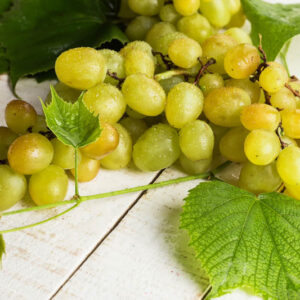
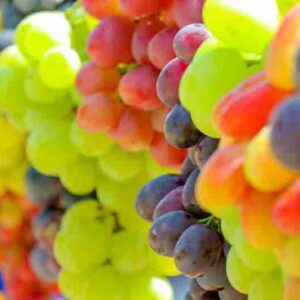
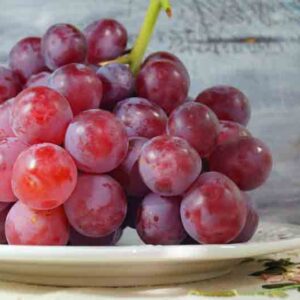
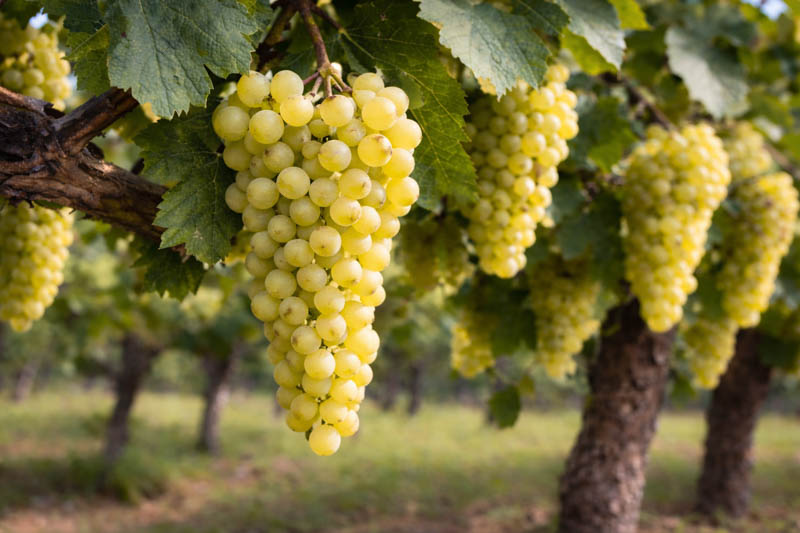
The bunches are large and the berries are very large. The berries are typically pale yellow-green to golden when ripe, often ellipsoid or obovoid, and notably aromatic. Unlike neutral grapes that simply register as sweet, Muscat of Alexandria carries the classic Muscat signature: floral, grapey, musky, citrusy, and honeyed. The berries have muscat flavor, while Wines of Portugal describes Muscat wines with aromas and flavors such as floral notes, citrus, orange peel or tangerine, apricot, butter, and dried fruit with age.
In the vineyard and at the table, that usually translates into a ripe flavor profile of orange blossom, sweet grape, mandarin peel, peach or apricot, honey, and subtle spice. In wine, especially sweet or fortified styles, the aromatic impression can become even more dramatic. This is not a shy grape.
Key fruit traits: very large pale berries, high aromatic intensity, rich sugar potential, and one of the clearest floral-muscat signatures in viticulture.
Muscat of Alexandria is adaptable, but it is not indifferent to site. Plantgrape says the variety is well adapted to drought and performs well on gravelly, acidic, sandy, or decalcified terroirs. Those details matter because they point toward a vine that likes well-drained conditions and does not want to sit in heavy, wet ground. Good drainage helps keep the canopy manageable, reduces unnecessary vigor, and improves fruit exposure.
More broadly, this grape rewards sites that can do two things at once: provide enough heat for ripening and enough soil balance to avoid uncontrolled vegetative growth. Overly fertile or constantly wet soils can produce too much canopy and too much shading. Moderate sites with excellent sun exposure tend to give better aromatic concentration and more reliable ripening.
Site takeaway: Muscat of Alexandria rewards soils that drain well, climates that stay warm, and vineyard conditions that help the vine ripen both fruit and wood fully.
Like many important vinifera grapes, Muscat of Alexandria is not planted as a single uniform global strain. Commercial and certified material exists in different selections and clone systems depending on country. Foundation Plant Services maintains registered selections in California, while Plantgrape notes that France has five certified clones numbered 308, 635, 866, 979, and 1014, plus a conservatory of around twenty clones planted in Pyrénées-Orientales in 2013.
Rootstock selection matters as much as clonal identity. Serious plantings are usually grafted onto rootstocks chosen for soil fit, vigor management, nematode or phylloxera pressure, and water relations. For a grape like Muscat of Alexandria, which can be vigorous yet still needs hot, complete ripening, the right rootstock can make the difference between a lush but mediocre vine and a balanced, productive one.
This is a grape for warm to hot climates. Plantgrape is unusually direct on the point: Muscat of Alexandria requires hot temperatures so the grapes ripen properly and the wood matures well. That is why it has long been associated with Mediterranean and semi-arid regions rather than cool maritime climates.
USDA Hardiness Zones: Muscat of Alexandria is generally best suited to USDA Zones 7-9. Some nursery sources list it as cold hardy to Zone 6, but it performs best where summers are long, hot, and reliable enough to ripen the fruit fully.
Its global footprint reflects that preference. The grape has significant cultural and commercial associations with parts of Portugal, Spain, Italy, Greece, North Africa, Australia, and California. Wines of Portugal, for example, highlights Muscat-based fortified wines with floral and citrus character, especially within Portuguese traditions of Moscatel.
When to Plant Grapes for Healthier Vines
Muscat of Alexandria is generally described as slightly vigorous with a drooping bearing. In garden and vineyard terms, that still means a real climbing vine that needs structure. If left unmanaged, it will make a lot of growth, cast too much shade, and become harder to keep healthy and productive.
The goal is not maximum foliage. The goal is balance. You want enough leaf area to ripen the crop and store reserves, but enough openness that bunches get light and air. Because this grape is prized for aroma, fruit exposure and ripening quality are central to success.
How to Grow Grapes Successfully at Home
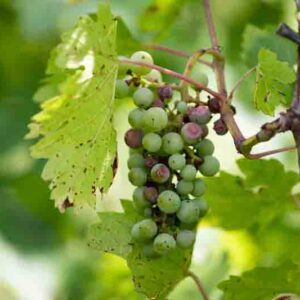
Muscat of Alexandria is not a disease-resistant hybrid. It is a classic Vitis vinifera grape and should be managed with the same seriousness growers bring to other premium vinifera cultivars. Plantgrape specifically states that the variety is sensitive to powdery mildew, grey rot, and insects. Grey rot here refers to botrytis bunch rot risk, which becomes more significant in humid or crowded fruit zones.
That means the core risk pattern is familiar: wet weather, excessive canopy density, weak airflow, and delayed harvest can all increase pressure. In a dry climate with good canopy management, the grape can perform beautifully. In a humid site with crowded foliage, quality can deteriorate quickly.
Watch for: powdery mildew, grey rot, insect damage, heavy canopies, delayed ripening in cool weather, and sites that never get truly hot enough for full Muscat expression.
Common Grapevine Problems and How to Fix Them
Muscat of Alexandria needs a sturdy support system. Plantgrape notes that the variety is generally managed with short pruning in gobelet, which makes sense in warm, traditional vineyard settings. In home gardens and many modern vineyards, trellises, arbors, and pergolas are also practical and attractive options.
The choice of system depends on climate, vigor, spacing, and intended use. A pergola can be beautiful for edible landscaping and family harvests. A trellis is usually easier for consistent pruning, spraying, and fruit exposure. A goblet form can work in classic dry, sunny regions where the grape has long been grown that way.
Annual pruning is essential with Muscat of Alexandria. Because fruit is borne on new shoots arising from one-year-old wood, dormant pruning controls the next season’s crop and strongly shapes vine balance. Plantgrape indicates the variety is commonly handled with short pruning, which fits its agronomic profile in warm climates.
But winter pruning is only half the story. In-season canopy management matters just as much. Selective leaf removal, shoot positioning, lateral control, and crop balancing all help preserve fruit quality. For an aromatic cultivar, shading is expensive. Dense growth can suppress air movement, increase disease pressure, and mute the very fragrance the grower wants.
How to Prune Grapevines for Bigger Harvests: Cane Pruning vs Spur Pruning
These two grapes are closely related in the broader Muscat family, but they are not the same cultivar. Plantgrape identifies Muscat Blanc à Petits Grains as a parent of Muscat of Alexandria, which helps explain the aromatic link. In practical terms, Muscat Blanc à Petits Grains is often viewed as finer, smaller-berried, and more classically wine-focused, while Muscat of Alexandria offers larger berries, broader use, and stronger table-grape practicality.
| Cultivar Name | Relationship | Typical Framing | Best Known For |
|---|---|---|---|
| Muscat of Alexandria | Distinct cultivar | Warm-climate, multi-purpose Muscat | Large berries, table-raisin-wine versatility |
| Muscat Blanc à Petits Grains | Parent in published analyses | Classic fine Muscat wine profile | Refined aromatic wines, smaller berries |
Muscat of Alexandria is not the best long-term container grape, especially if the goal is serious fruit production year after year. A young vine can be grown in a large container for a time, and it can work as a decorative edible feature on a patio, but containers intensify heat, water stress, and nutrient swings. For stable performance, stronger root development, and more meaningful harvests, planting in the ground is the better choice.
How to Grow Grapes in Containers (Expert Pot Guide)
Muscat of Alexandria is best suited to warm-climate gardeners, edible-landscape enthusiasts, home vineyard growers, raisin experimenters, and winemakers who love aromatic fruit. It is a smart fit for people who want more than a generic sweet grape. It is also a strong choice for growers who appreciate historic cultivars with real agricultural personality.
If the goal is easy seedless snacking with minimal management, a modern table grape may be a better fit. But if the goal is fragrance, heritage, and versatility – a vine that can shade a pergola, perfume the harvest basket, and still contribute to wine or raisins – Muscat of Alexandria is hard to beat.
Growers exploring aromatic or classic grapes may also consider Zinfandel, Cabernet Sauvignon, Merlot, and how to grow grapes in the home garden.
Muscat of Alexandria is an ancient white Vitis vinifera grape cultivar known for large aromatic berries and use as a table grape, raisin grape, and wine grape.
Yes. It is widely used as a table grape, but unlike many modern fresh-market grapes it is also valued for raisins and wine.
It typically shows sweet, floral, grapey flavors with notes of orange blossom, honey, citrus peel, apricot, and classic muscat perfume.
It is a late-season grape that needs a long, warm growing season. In the French reference collection, maturity is about four weeks after Chasselas.
Yes. Like most cultivated grapevines with perfect flowers, Muscat of Alexandria is self-pollinating and a single vine can set fruit.
It is used for fresh eating, raisins, sweet wines, fortified wines, dry wines in some regions, and aromatic blending.
It is grown widely because it combines ancient heritage, large attractive berries, strong aroma, and unusual versatility across table, raisin, and wine production.
A Muscat of Alexandria vine can reach 15 to 20 feet or more if left unpruned, so it needs a strong support system and yearly pruning.
Common issues include powdery mildew, grey rot, insect pressure, excessive canopy density, and incomplete ripening where seasons are not hot enough.
Yes. Zibibbo is one of the officially recognized names used for Muscat of Alexandria in Italy and Malta.
Bottom line: Vitis vinifera ‘Muscat of Alexandria’ remains one of the world’s great aromatic grapes because it combines history, fragrance, large attractive fruit, and extraordinary practical range in one vine. With full sun, heat, good drainage, annual pruning, and attentive canopy management, it can deliver grapes suited to the table, the drying rack, or the cellar with equal charisma.
Updated: April 2026
| Hardiness |
7 - 9 |
|---|---|
| Heat Zones |
6 - 9 |
| Climate Zones | 4, 5, 6, 7, 8, 9, 14, 15, 16, 17, 18, 19, 20, 21, 22, 23 |
| Plant Type | Climbers, Fruits, Shrubs |
| Plant Family | Vitaceae |
| Genus | Vitis |
| Common names | Grape |
| Exposure | Full Sun |
| Season of Interest | Summer (Early, Mid, Late), Fall |
| Height | 15' - 20' (4.6m - 6.1m) |
| Spread | 6' - 10' (180cm - 3m) |
| Spacing | 120" (3m) |
| Maintenance | High |
| Water Needs | Average |
| Soil Type | Chalk, Loam, Sand |
| Soil pH | Alkaline, Neutral |
| Soil Drainage | Moist but Well-Drained, Well-Drained |
| Characteristics | Showy, Fruit & Berries |
| Tolerances | Heat, Fire |
| Attracts | Bees, Birds |
| Garden Uses | Arbors, Pergolas, Trellises, Wall-Side Borders, Walls And Fences |
| Garden Styles | City and Courtyard, Informal and Cottage |
| Toxic to Humans | No known toxicity |
| Toxic to Cats | No known toxicity |
| Toxic to Dogs | Toxic |
| Toxic to Horses | No known toxicity |


| Hardiness |
7 - 9 |
|---|---|
| Heat Zones |
6 - 9 |
| Climate Zones | 4, 5, 6, 7, 8, 9, 14, 15, 16, 17, 18, 19, 20, 21, 22, 23 |
| Plant Type | Climbers, Fruits, Shrubs |
| Plant Family | Vitaceae |
| Genus | Vitis |
| Common names | Grape |
| Exposure | Full Sun |
| Season of Interest | Summer (Early, Mid, Late), Fall |
| Height | 15' - 20' (4.6m - 6.1m) |
| Spread | 6' - 10' (180cm - 3m) |
| Spacing | 120" (3m) |
| Maintenance | High |
| Water Needs | Average |
| Soil Type | Chalk, Loam, Sand |
| Soil pH | Alkaline, Neutral |
| Soil Drainage | Moist but Well-Drained, Well-Drained |
| Characteristics | Showy, Fruit & Berries |
| Tolerances | Heat, Fire |
| Attracts | Bees, Birds |
| Garden Uses | Arbors, Pergolas, Trellises, Wall-Side Borders, Walls And Fences |
| Garden Styles | City and Courtyard, Informal and Cottage |
| Toxic to Humans | No known toxicity |
| Toxic to Cats | No known toxicity |
| Toxic to Dogs | Toxic |
| Toxic to Horses | No known toxicity |
How many Vitis vinifera ‘Muscat of Alexandria’ (Grape) do I need for my garden?
| Plant | Quantity | |
|---|---|---|
| Vitis vinifera ‘Muscat of Alexandria’ (Grape) | N/A | Buy Plants |
Create a membership account to save your garden designs and to view them on any device.
Becoming a contributing member of Gardenia is easy and can be done in just a few minutes. If you provide us with your name, email address and the payment of a modest $25 annual membership fee, you will become a full member, enabling you to design and save up to 25 of your garden design ideas.
Join now and start creating your dream garden!
Create a membership account to save your garden designs and to view them on any device.
Becoming a contributing member of Gardenia is easy and can be done in just a few minutes. If you provide us with your name, email address and the payment of a modest $25 annual membership fee, you will become a full member, enabling you to design and save up to 25 of your garden design ideas.
Join now and start creating your dream garden!