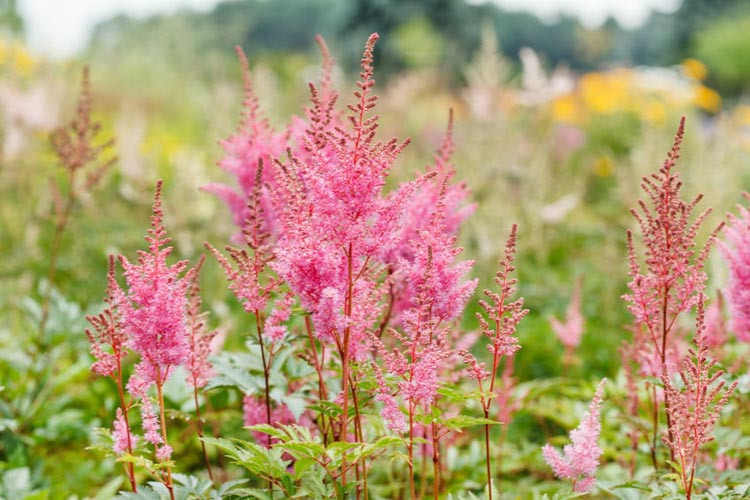
Astilbe
Characteristics
Astilbe, also called false goat’s beard or false spirea, is a graceful shade perennial loved for feathery flower plumes, fern-like foliage, and reliable color in woodland gardens. Blooming in shades of white, cream, pink, rose, red, lavender, or purple, astilbes bring softness, movement, and texture to damp shade, part shade borders, streamside plantings, and low-light cottage gardens. For a broad overview, explore the Astilbe genus guide.
Why Grow Astilbe?
Astilbe is one of the best perennials for shade because it flowers where many sun-loving plants struggle. Its airy plumes brighten dark corners, while its divided foliage stays attractive after bloom. Use astilbe in woodland borders, shaded paths, moist beds, rain gardens, and naturalistic plantings. It is especially useful in gardens needing long-lasting color without constant fuss. Discover more great perennial plants for shade.
Growing Tips
Plant astilbe in partial shade to full shade and consistently moist, humus-rich, well-drained soil. The key advice is simple: do not let astilbe dry out, especially in hot weather or sandy soil. Mulch helps keep roots cool and moist, and dividing clumps every few years keeps plants vigorous. Astilbe is a smart choice for many shade gardens, including Zone 6 shade gardens and Zone 8 shade gardens.
Bloom Time and Varieties
To enjoy astilbe flowers for the longest possible season, combine early, mid-season, and late-blooming varieties. Start with early-season astilbe varieties, continue with mid-season astilbe varieties, and finish with late-season astilbe varieties. For a longer floral display, use this guide to extend the blooming season of astilbes.
Elegant, moisture-loving, and wonderfully useful, Astilbe is a standout shade perennial for gardeners who want colorful plumes, beautiful foliage, and dependable performance in cool, dappled, or woodland-style spaces.