Stephan Jasmine, Pink Hybrid Jasmine, Hardy Jasmine, Climbing Jasmine, Madagascar Jasmine, Jasminum stephanense, Jasminum × xizangense
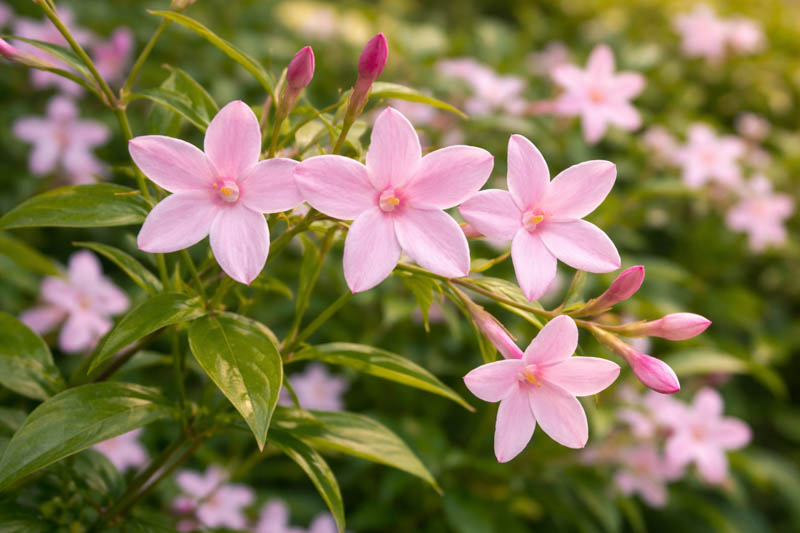


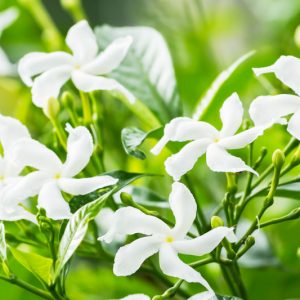
Jasminum × stephanense, commonly called Stephan Jasmine, is one of the most elegant pink-flowering true jasmines for gardeners who want fragrance, movement, and a more romantic look than the usual white jasmine climbers. This hybrid combines the charm of old-fashioned climbing jasmine with soft pink summer flowers, a vigorous twining habit, and the kind of airy beauty that makes walls, arches, obelisks, and trellises feel instantly more refined. Unlike the heaviest and most aggressive vines, Stephan Jasmine is prized for its graceful summer bloom, sweet fragrance, and ability to soften structures without overwhelming them.
Jasminum × stephanense is a deciduous to semi-evergreen climbing jasmine grown for fragrant pale pink flowers in summer. Plant it in full sun to part shade in fertile, well-drained soil, water regularly while establishing, feed modestly, and prune after flowering to keep it balanced, healthy, and flower-rich.
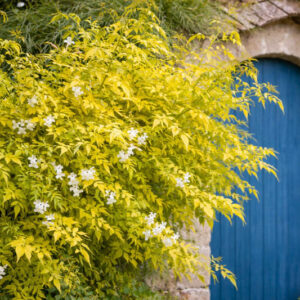
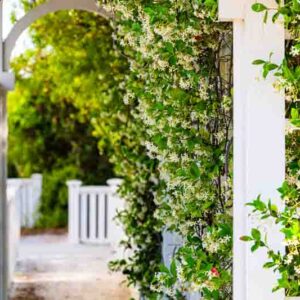
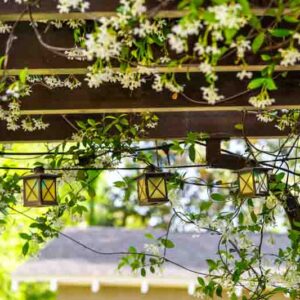
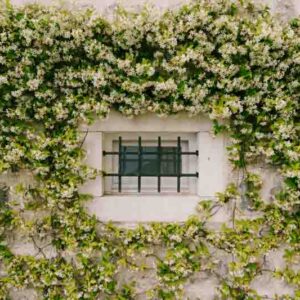
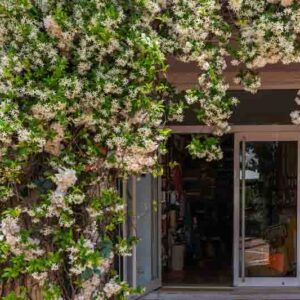
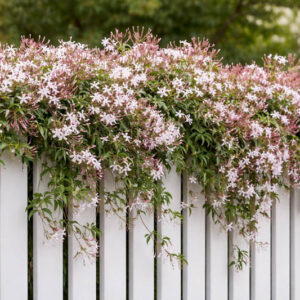
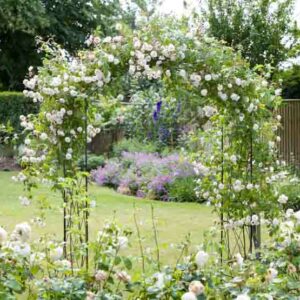
Use: Excellent for trellises, pergolas, warm walls, arches, fences, large containers, and romantic cottage-style planting schemes.
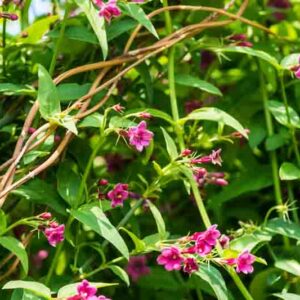
Highlight: Clusters of soft pink fragrant flowers carried on a graceful climbing framework.
Design note: Use it where its twining habit can climb, drape, and soften structure – it looks more elegant when allowed to move naturally.
| Botanical Name | Jasminum × stephanense |
|---|---|
| Family | Olive family (Oleaceae) |
| Common Names | Stephan Jasmine |
| Origin | Garden hybrid of Jasminum officinale × Jasminum grandiflorum |
| Plant Type | Deciduous to semi-evergreen climber, twining vine, scrambling shrub |
| Hardiness (approx. USDA) | Best in USDA Zones 7-10; more reliable in sheltered sites and warm walls |
| Height | 15-20 ft. (4.5-6 m) with support |
| Spread | 2-4 ft. (0.6-1.2 m), depending on training and support width |
| Sun Exposure | Full sun to part shade |
| Soil | Fertile, humus-rich, evenly moist, well-drained soil |
| Bloom Time | Summer, often with the strongest display in early to midsummer |
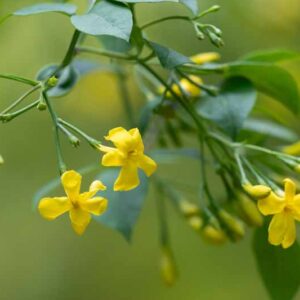
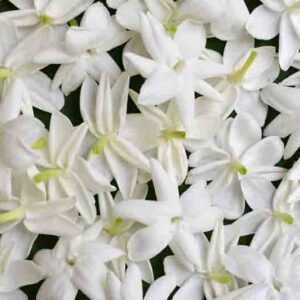
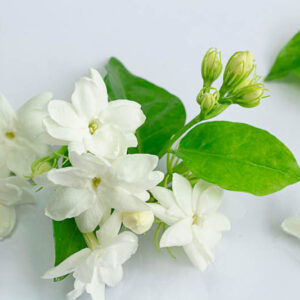
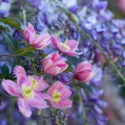
| Flower Color | Pale pink to blush pink tubular flowers opening into starry faces |
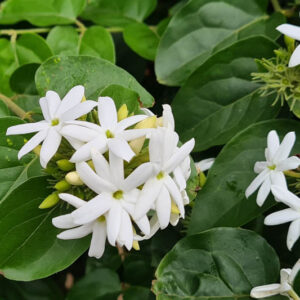
| Fragrance | Sweetly fragrant |
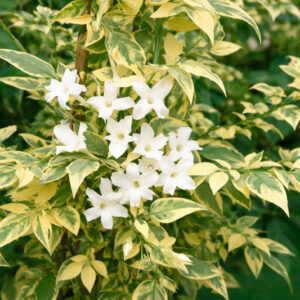
| Foliage | Mid-green leaves; deciduous to partly deciduous depending on climate |
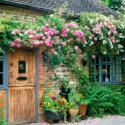
Stephan Jasmine is a true jasmine hybrid valued for its fragrant pale pink flowers and its graceful twining habit. It belongs to the genus Jasminum, and its accepted botanical name is Jasminum × stephanense. Unlike the heaviest climbing vines, it brings a lighter, more refined presence to walls, pergolas, fences, and garden structures. It softens brick, timber, and ironwork without making them look swallowed.
The first thing people notice is softness. This jasmine flowers in pale pink, and the color reads as delicate rather than sugary. The second thing they notice is movement. Its stems twine and climb with an airy, graceful quality that suits classic gardens, cottage borders, and wall-trained planting. The result is polished, light, and deeply garden-worthy.
Jasminum × stephanense is a garden hybrid created from Jasminum officinale and Jasminum grandiflorum. That hybrid background helps explain its combination of pink-toned flowers, fragrance, and a vigorous yet elegant climbing habit.
Expect the main display in summer, usually strongest in early to midsummer. In favorable conditions, scattered bloom may continue beyond the main flush, especially where the season is long and warm.
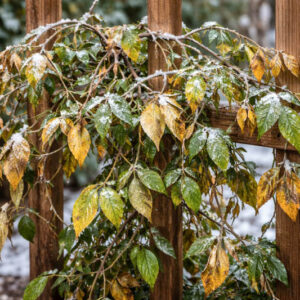
This plant is usually deciduous to semi-evergreen, depending on climate and winter severity. Its habit is best described as twining, climbing, scrambling, or shrub-vining. Given support, it makes a graceful climber. Without support, it can sprawl or form a loose, arching mass.
A mature plant commonly reaches 15-20 ft. (4.5-6 m) tall with support, while its spread depends strongly on how widely it is trained. That makes it a strong candidate for vertical gardening, warm walls, pergolas, arches, and trellises rather than tiny container-only use.
Stephan Jasmine is best in USDA Zones 7-10. In colder areas of that range, it performs best in a protected position such as a sunny wall or sheltered courtyard. In severe winter weather, top growth may be damaged, especially in exposed sites.
Cold-climate tip: Stephan Jasmine performs best where roots are protected, the site is sunny and sheltered, and stems can ripen well before winter. In colder gardens, container culture or a warm wall can make the difference between survival and real performance.
Takeaway: Stephan Jasmine is a high-style climbing jasmine valued for fragrant pink summer flowers, graceful structure, and a lighter, more romantic garden effect than many larger climbers.
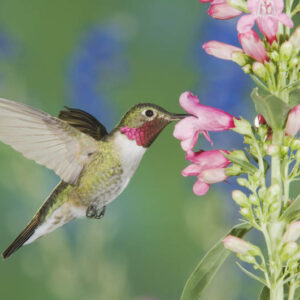
The flowers can attract pollinating insects, such as butterflies and hummingbirds, and the twining framework offers some shelter in mixed planting schemes. It also belongs in broader jasmine care guidance for gardeners building fragrant, layered landscapes with vertical interest.
Stephan Jasmine may be somewhat deer-resistant in some gardens, but it is not deer-proof. Local browsing pressure, seasonal scarcity, and herd behavior always matter more than general labels.
Once established, Stephan Jasmine can tolerate short dry spells better than a newly planted vine, but it flowers best and looks fresher with consistent moisture during active growth. Good drainage still matters more than constant saturation.
Stephan Jasmine is only moderately drought-tolerant once established, and reliable flowering comes from deep watering during dry periods, not neglect.
True jasmines in the genus Jasminum are generally listed as non-toxic to dogs, cats, and horses. As always, non-toxic does not mean pets should be encouraged to chew ornamental plants.
Stephan Jasmine is vigorous, but it is not generally described as an invasive landscape threat in ordinary garden culture. The right practical message is simple: give it support, prune it intelligently, and manage it as a strong but civilized climber.
Stephan Jasmine is better described as vigorous than invasive in most garden settings. It climbs with enthusiasm, but it is usually manageable with proper training and timely pruning.
Feed in spring with compost or a balanced fertilizer. Too much nitrogen pushes leafy growth at the expense of flowers, so moderate feeding wins.
Apply a 2-3 in. mulch layer to cool roots, reduce evaporation, and steady soil moisture. Keep mulch away from the base of the stems.
Design tip: Stephan Jasmine is at its best when it reads as a flowering veil or fragrant drape – not when it is clipped into rigid geometry.
Young stems respond well to loose tying on wires, pergolas, fences, arches, and trellises. Spread shoots outward so flowers display across the framework rather than crowding into a dense knot.
Prune after the main flowering flush. Remove dead, weak, tangled, and oldest stems first, then shorten long growth to keep the plant balanced, open, and flower-friendly.
Pruning tip: The best way to prune Stephan Jasmine is to thin and shape after flowering, preserving the plant’s graceful climbing framework rather than shearing it into stiffness.
In zone-edge gardens, grow it in a protected site, mulch the roots, and shield young plants from severe cold and drying wind. Container plants should be moved before damaging freeze events.
Bloom trigger: For stronger flowering, give Stephan Jasmine bright light, moderate feeding, and enough room to mature without constant hard clipping.
| Task | Best Time |
|---|---|
| Planting | Plant in spring or early fall in mild climates. |
| Feeding | Feed lightly in spring. |
| Pruning | Prune after the main summer bloom flush. |
| Propagation | Take cuttings or layer shoots in warm weather. |
| Mulching | Refresh mulch in spring. |
| Main display | Expect peak flowering in summer, especially early to midsummer. |
Stephan Jasmine is usually propagated by cuttings or layering.
Take semi-ripe cuttings in warm weather, remove lower leaves, and place them in a sharply draining propagation mix. Keep evenly moist, lightly humid, and warm until rooted.
A low, flexible stem can be pinned into soil while still attached to the parent plant. Once it roots well, it can be severed and replanted.
Usually because of shade, weak support training, or overfeeding. This plant wants enough sun and a clear framework to climb through.
Jasminum × stephanense stands out for its soft pink flowers, sweet fragrance, and graceful twining habit. Compared with Common Jasmine, it is pinker, softer in mood, and often chosen more for romance than sheer flower abundance. Compared with Pink Jasmine, it is less dramatic in bud but often more refined in mature garden use. Compared with Spanish Jasmine, it brings hybrid vigor and a cooler, blush-toned flower effect.
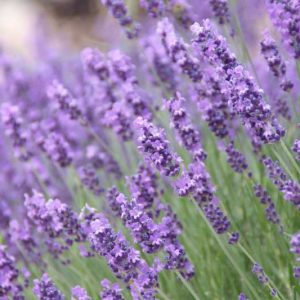
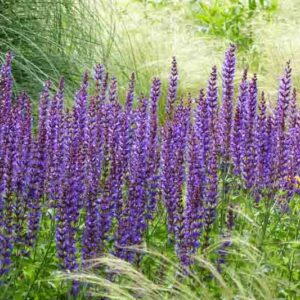
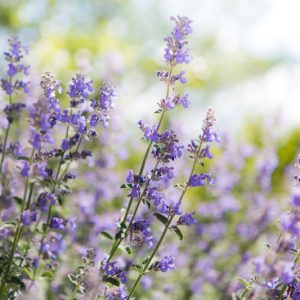
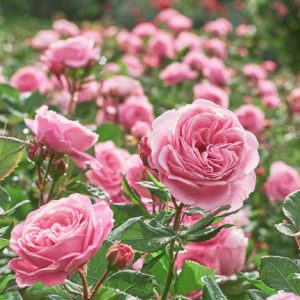
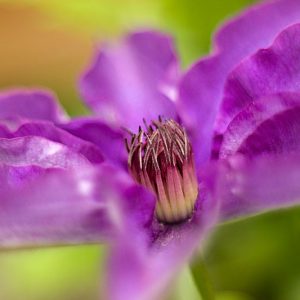
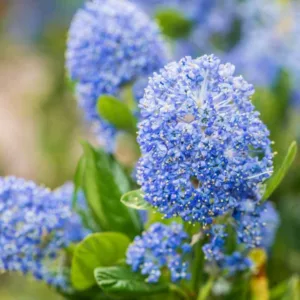
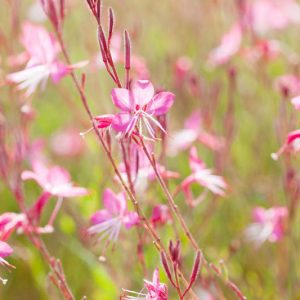
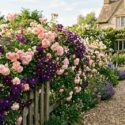
Choose companions that enjoy sun to part shade and well-drained fertile soil while contrasting with the plant’s blush-pink flowers and climbing habit. Excellent partners include lavender, nepeta, salvia, roses, clematis, penstemon, gaura, agapanthus, stachys, pittosporum, boxwood, and soft blue or purple-flowering perennials. The strongest combinations pair clean structure with romantic bloom.
Stephan Jasmine, or Jasminum × stephanense, is a true jasmine hybrid grown for fragrant pale pink flowers, graceful climbing growth, and a romantic summer display on supports.
Yes. It belongs to the genus Jasminum, so it is a true jasmine.
Yes. It is sweetly fragrant, though the intensity can vary with climate, siting, and plant maturity.
It mainly blooms in summer, often with the strongest display in early to midsummer.
It commonly grows 15 to 20 feet tall with support, while spread depends on how widely it is trained.
It can behave as both. Given support, it is a twining climber. Without support, it can sprawl or form a loose scrambling shrub-like mass.
It performs best in full sun to part shade. More sun usually means better flowering and stronger growth.
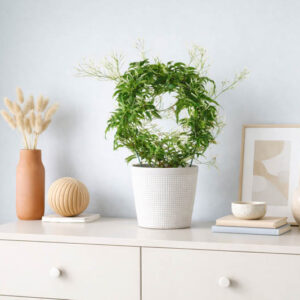
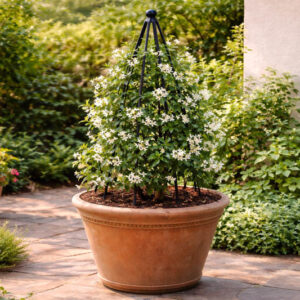
Yes. It grows well in a large, well-drained container with support and is especially useful where winter protection is needed.
Usually it is deciduous to semi-evergreen rather than fully evergreen, especially where winters are cooler.
Prune after flowering by thinning older stems, shortening long shoots, and preserving an open, graceful climbing framework.
The usual causes are too little light, excess fertilizer, badly timed pruning, or cold damage.
True jasmines in the genus Jasminum are generally listed as non-toxic to dogs, cats, and horses, though pets still should not be encouraged to chew garden plants.
Updated: March 2026 – Reviewed for botanical accuracy and garden performance
| Hardiness |
7 - 10 |
|---|---|
| Heat Zones |
8 - 11 |
| Climate Zones | 5, 6, 7, 8, 9, 14, 15, 16, 17, 18, 19, 20, 21, 22, 23, 24 |
| Plant Type | Climbers |
| Plant Family | Oleaceae |
| Genus | Jasminum |
| Common names | Jasmine |
| Exposure | Full Sun, Partial Sun |
| Season of Interest | Summer (Early, Mid) |
| Height | 15' - 20' (4.6m - 6.1m) |
| Spread | 2' - 4' (60cm - 120cm) |
| Spacing | 24" - 48" (60cm - 120cm) |
| Maintenance | Low |
| Water Needs | Average |
| Soil Type | Chalk, Clay, Loam, Sand |
| Soil pH | Acid, Neutral, Alkaline |
| Soil Drainage | Moist but Well-Drained, Well-Drained |
| Characteristics | Showy, Fragrant |
| Tolerances | Drought, Clay Soil, Deer, Humidity |
| Attracts | Butterflies, Hummingbirds |
| Garden Uses | Arbors, Pergolas, Trellises, Patio And Containers |
| Garden Styles | Butterfly Garden, Informal and Cottage, Pollinator Garden |
| Toxic to Humans | No known toxicity |
| Toxic to Cats | Not toxic |
| Toxic to Dogs | Not toxic |
| Toxic to Horses | Not toxic |


| Hardiness |
7 - 10 |
|---|---|
| Heat Zones |
8 - 11 |
| Climate Zones | 5, 6, 7, 8, 9, 14, 15, 16, 17, 18, 19, 20, 21, 22, 23, 24 |
| Plant Type | Climbers |
| Plant Family | Oleaceae |
| Genus | Jasminum |
| Common names | Jasmine |
| Exposure | Full Sun, Partial Sun |
| Season of Interest | Summer (Early, Mid) |
| Height | 15' - 20' (4.6m - 6.1m) |
| Spread | 2' - 4' (60cm - 120cm) |
| Spacing | 24" - 48" (60cm - 120cm) |
| Maintenance | Low |
| Water Needs | Average |
| Soil Type | Chalk, Clay, Loam, Sand |
| Soil pH | Acid, Neutral, Alkaline |
| Soil Drainage | Moist but Well-Drained, Well-Drained |
| Characteristics | Showy, Fragrant |
| Tolerances | Drought, Clay Soil, Deer, Humidity |
| Attracts | Butterflies, Hummingbirds |
| Garden Uses | Arbors, Pergolas, Trellises, Patio And Containers |
| Garden Styles | Butterfly Garden, Informal and Cottage, Pollinator Garden |
| Toxic to Humans | No known toxicity |
| Toxic to Cats | Not toxic |
| Toxic to Dogs | Not toxic |
| Toxic to Horses | Not toxic |
How many Jasminum x stephanense (Stephan Jasmine) do I need for my garden?
| Plant | Quantity | |
|---|---|---|
| Jasminum x stephanense (Stephan Jasmine) | N/A | Buy Plants |
Create a membership account to save your garden designs and to view them on any device.
Becoming a contributing member of Gardenia is easy and can be done in just a few minutes. If you provide us with your name, email address and the payment of a modest $25 annual membership fee, you will become a full member, enabling you to design and save up to 25 of your garden design ideas.
Join now and start creating your dream garden!
Create a membership account to save your garden designs and to view them on any device.
Becoming a contributing member of Gardenia is easy and can be done in just a few minutes. If you provide us with your name, email address and the payment of a modest $25 annual membership fee, you will become a full member, enabling you to design and save up to 25 of your garden design ideas.
Join now and start creating your dream garden!