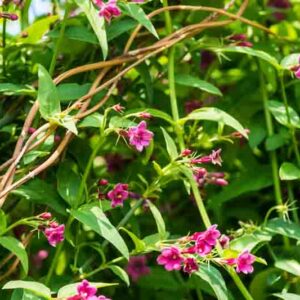
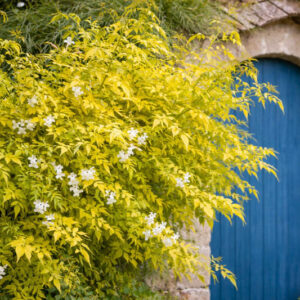
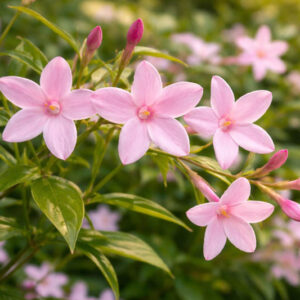
Jasmine ‘Aureovariegatum’, ariegated Common Jasmine, Golden Variegated Jasmine, Jasminum officinale ‘Aureum’, Jasminum officinale var. aureovariegatum, Jasminum affine argenteovariegatum
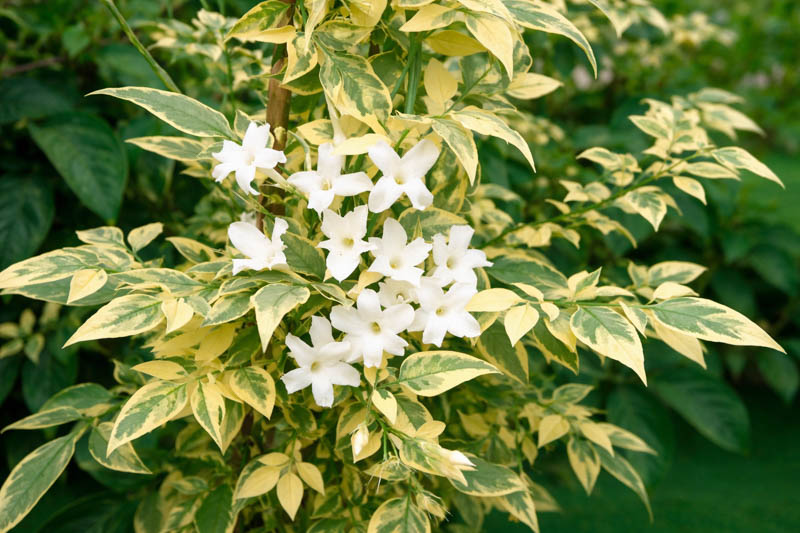


Jasminum officinale ‘Aureovariegatum’, often treated in horticultural references alongside the RHS-listed variegated form Jasminum officinale ‘Aureum’ (v), is a vigorous deciduous twining climber grown for two standout traits: intensely fragrant white flowers and mid-green foliage boldly splashed and blotched bright yellow. It delivers the classic perfume of true jasmine, but with far greater visual presence than plain green Common Jasmine, making it a premium choice for trellises, pergolas, arches, obelisks, fences, warm walls, and large containers.
Jasminum officinale ‘Aureovariegatum’ is a deciduous woody climber with fragrant white summer flowers and conspicuously yellow-variegated foliage. Grow it in full sun to part shade in fertile, well-drained soil, train it onto sturdy support, water regularly while establishing, and prune after flowering or in early spring to keep it floriferous, balanced, and bright.
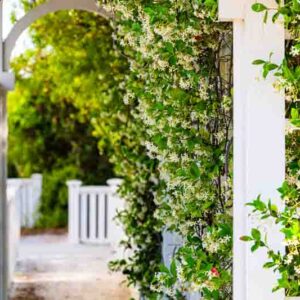
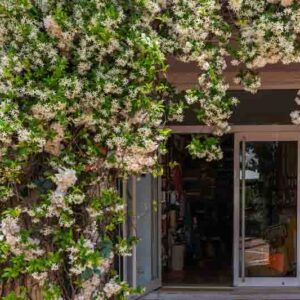
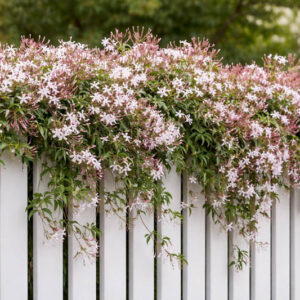
Use: Excellent for trellises, pergolas, arches, fences, pillars, warm walls, and large containers.
Highlight: Combines bright yellow-variegated foliage with sweetly fragrant white flowers from summer into early fall.
Design note: Plant it where both the leaf pattern and fragrance can be appreciated – near patios, seating areas, doors, and pathways.
| Botanical Name | Jasminum officinale ‘Aureovariegatum’ |
|---|---|
| Related RHS Listing | Jasminum officinale ‘Aureum’ (v), the RHS-listed yellow-variegated form associated with this cultivar |
| Family | Olive family (Oleaceae) |
| Common Name | Variegated Common Jasmine |
| Native Range | Garden cultivar of Jasminum officinale, a species native from western and central Asia into the Himalayas and China |
| Plant Type | Deciduous woody vine or twining climber, sometimes semi-evergreen in mild climates |
| Hardiness (approx. USDA) | Best in USDA Zones 7-10 |
| Height | 20-30 ft. (6-10 m) in favorable conditions |
| Spread | 6-15 ft. (1.8-4.5 m), depending on training and pruning |
| Sun Exposure | Full sun to part shade |
| Soil | Moderately fertile, evenly moist but well-drained soil |
| Bloom Time | Throughout summer into early autumn |
| Flower Color | White, sometimes lightly flushed pale pink |
| Foliage | Mid-green, ferny foliage conspicuously blotched and variegated bright yellow |
| Fragrance | Strong, classic jasmine fragrance, especially noticeable in warm weather |
| Deer Resistant | Generally considered deer resistant |
| Attracts | Pollinators, including bees and other beneficial insects |
| Pet Safety | Jasminum species are listed by ASPCA as non-toxic to dogs, cats, and horses |
| Edible Flowers | Sometimes treated like Common Jasmine flowers in culinary use, but only flowers from clean, unsprayed plants grown specifically for edible use should ever be considered |
Jasminum officinale ‘Aureovariegatum’ is a high-value ornamental form of Common Jasmine grown for fragrance, foliage, and vertical impact. It is the kind of climber that still looks interesting before the first flower opens because the leaves themselves provide color and contrast. Once flowering begins, the plant shifts from decorative to unforgettable, with clusters of starry white blooms that perfume the surrounding air for weeks.
Good to know: Jasminum officinale ‘Aureovariegatum’ is a true jasmine. It belongs to the genus Jasminum, unlike Trachelospermum, which includes Star Jasmine and other jasmine-like plants.
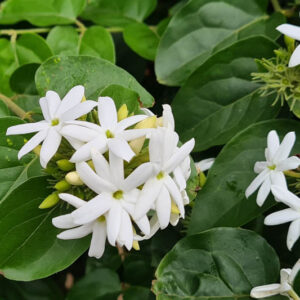
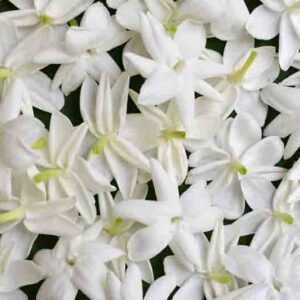
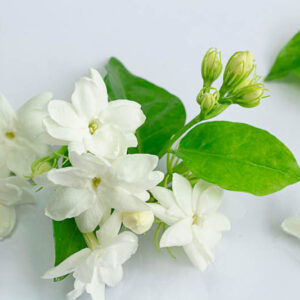
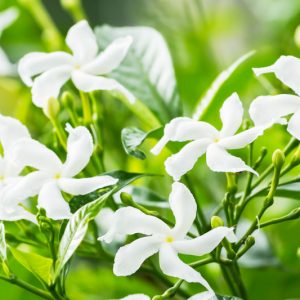
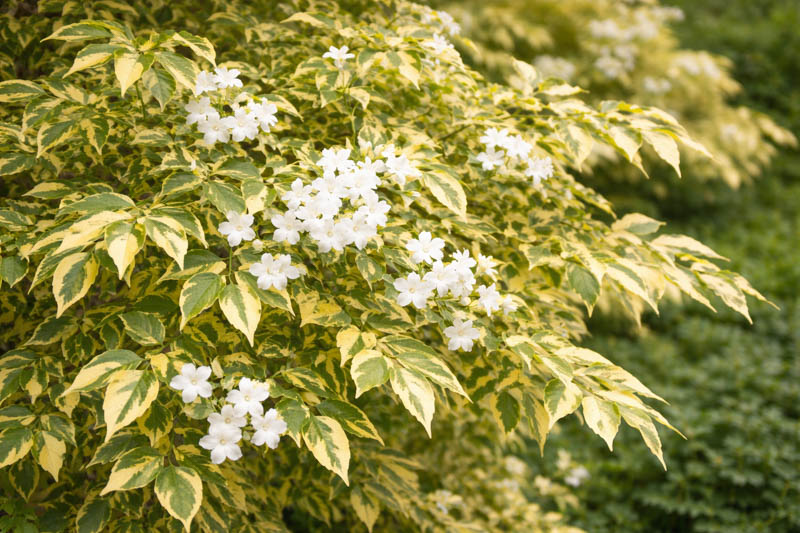
This cultivar is a deciduous, twining, woody climber with ferny compound leaves and a distinctly bright, variegated look. The RHS describes the foliage as mid-green leaves conspicuously blotched and variegated bright yellow, which is a much more precise way to understand its effect than simply calling it “golden.” The flowers are fragrant, star-shaped, and white, sometimes lightly flushed pale pink, and are produced through the summer. That combination gives the plant a rare dual appeal: it functions as both a fragrance plant and a foliage plant.
For accuracy, it is worth noting that horticultural naming around this plant can be inconsistent in trade. The RHS lists the yellow-variegated plant as Jasminum officinale ‘Aureum’ (v), and many gardeners and nurseries connect that listing with the plant sold as Jasminum officinale ‘Aureovariegatum’. Stating that relationship clearly improves trust and helps readers match plant labels more confidently.
‘Aureovariegatum’ is a cultivated selection of Jasminum officinale, a species native from western and central Asia into the Himalayas and western China. In the garden, it performs best where the roots remain cool and reasonably moist, the soil drains well, and the climbing stems can reach good light.
Expect the main display from summer into early fall, with flowering often extending across much of the warm season rather than arriving in one brief burst. On well-grown plants, the fragrance can be especially noticeable in warm, still air, which is one reason Common Jasmine remains such a classic choice for patios, pergolas, and evening garden spaces.
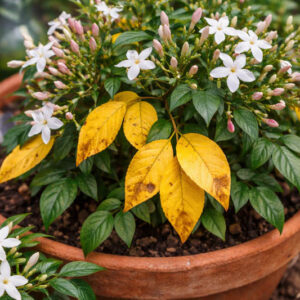
The foliage is what makes this cultivar instantly recognizable. Unlike plain green Common Jasmine, ‘Aureovariegatum’ carries leaves irregularly splashed, blotched, or marbled with bright yellow. In brighter positions, the contrast is stronger. In too much shade, the plant often looks greener and less distinctive. Because the stems twine and extend quickly, this is a climber with genuine architectural value, not just a novelty leaf plant.
This is a substantial plant, not a miniature vine. The RHS describes the variegated form as reaching about 6-10 m, while Missouri Botanical Garden lists the species at roughly 20-30 ft. in cultivation. In practical garden terms, that means ‘Aureovariegatum’ can cover a trellis, wall, pergola post, or large arch with surprising speed once established.
Jasminum officinale is generally grown in USDA Zones 7-10, and this cultivar follows the same broad pattern. In colder parts of its range, a warm wall, shelter from wind, and a winter mulch around the base improve performance. In colder gardens still, large-container culture makes protection much easier.
The perfume is one of the plant’s defining strengths. Common Jasmine is famous for a sweet floral scent strong enough to perfume a room or garden, and the variegated form preserves that essential jasmine character. This is a plant to place where people pause, not where it disappears into the back of a border.
Because this is a selection of Common Jasmine, gardeners sometimes treat the flowers in the same general way as other jasmine blooms used to scent tea, sugar, or syrups. That said, the safest wording is cautious wording: only flowers from clean, unsprayed plants grown specifically for edible use should ever be considered, and ornamental nursery plants should not be assumed food-ready.
Takeaway: Variegated Common Jasmine is primarily an ornamental climber. Treat any culinary use as cautious and secondary, and only use flowers from unsprayed plants grown expressly for that purpose.
The flowers attract pollinators, including bees and other beneficial insects, while the stems add vertical structure and shelter within mixed planting. It is not a replacement for a native hedgerow shrub, but it does contribute nectar and habitat layering in ornamental gardens.
Variegated Common Jasmine is generally considered deer-resistant, though no deer-resistant plant is completely deer-proof under heavy browsing pressure.
Local deer behavior, hunger levels, and tender new growth can all affect results.
Once established, Common Jasmine copes with short dry spells better than many lush-looking climbers, but it does not look its best when kept too dry. Prolonged drought typically means fewer flowers, weaker variegation, and more leaf drop – especially in containers or against hot, rain-shadow walls.
Variegated Common Jasmine can handle brief dry periods once established, but consistent moisture produces better color, better growth, and better bloom.
Jasminum species are listed by ASPCA as non-toxic to dogs, cats, and horses. Even so, any plant material can cause mild stomach upset if chewed in quantity, so non-toxic does not mean ideal as a snack.
Variegated Common Jasmine is vigorous but is not generally considered invasive in ordinary garden use. What it does need is management. Left untied and unpruned, it can become loose, tangled, and over-extended. Trained and thinned, it stays elegant.
‘Aureovariegatum’ is best described as vigorous rather than invasive. Regular tying-in and timely pruning keep it attractive and controlled.
Feed in spring with compost or a balanced slow-release fertilizer. Avoid overdoing nitrogen. Excess feeding often gives you exactly the wrong result: more soft green growth, less flowering definition, and a looser, less disciplined plant.
Apply a 2-3 in. layer of mulch around the root zone to conserve moisture, moderate soil temperature, and reduce weed competition. Keep the mulch clear of the crown to prevent damp buildup.
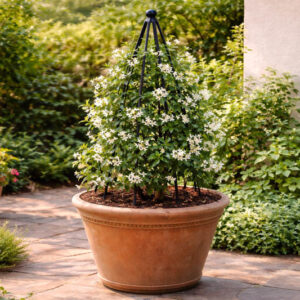
Container tip: Grow ‘Aureovariegatum’ in a large pot with excellent drainage, a fertile free-draining mix, and sturdy support. Pot-grown plants need more regular watering, steadier feeding, and more winter protection than plants in the ground.
Train stems early while they are still flexible. Fan them outward rather than letting them coil into a dense knot. This matters because the variegated foliage deserves to be displayed, not buried in a tangle. A well-trained plant flowers more evenly and looks brighter from a distance.
Prune after the main flowering period to remove weak, tangled, damaged, or overcrowded stems. Early spring is the time for harder renewal pruning if the plant has become woody or oversized. Also remove any all-green reverted shoots promptly, because they are usually more vigorous than the variegated growth and can gradually take over if ignored.
Pruning tip: Thin after flowering for control, use early spring for stronger renewal, and cut out any reverted all-green shoots as soon as they appear.
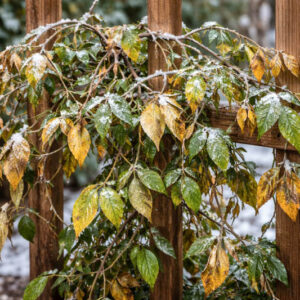
In mild areas, the plant may hold some foliage. In colder gardens, it is more fully deciduous. Young plants benefit from a winter mulch and shelter from icy wind, while container plants may need to be moved to a protected position before severe frost.
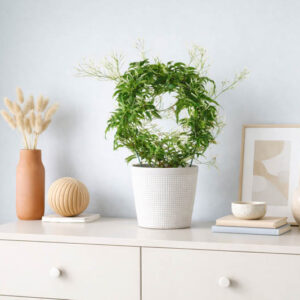
Yes, Variegated Common Jasmine can be grown very successfully in containers, provided the pot is generous and the support is strong. Use a large container with excellent drainage, a fertile but free-draining mix, and a trellis, obelisk, or frame installed at planting time. Place it in full sun to part shade, water thoroughly when the top layer begins to dry, feed during the growing season, and retrain regularly so it does not become top-heavy. In cooler climates, container growing is often the smartest way to enjoy this cultivar while protecting it in winter.
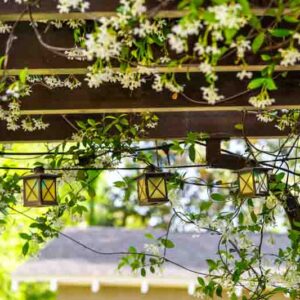
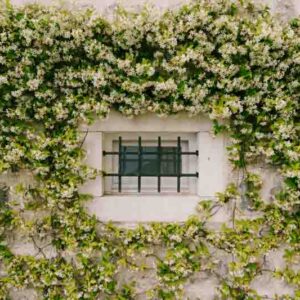
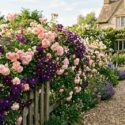
This cultivar is especially effective on trellises and pergolas because it delivers both pattern and perfume. Plant it slightly away from dry wall bases, choose a few strong framework stems first, fan them outward for even coverage, and tie them loosely. Used this way, it becomes more than a climber – it becomes a luminous structural plant that still smells wonderful at close range.
| Task | Best Time |
|---|---|
| Planting | Plant in spring or fall when conditions are moderate. |
| Feeding | Feed in spring, repeating lightly in summer for containers if needed. |
| Pruning | Prune after flowering for shape, or in early spring for renewal. |
| Propagation | Use layering or semi-hardwood cuttings in the warm growing season. |
| Mulching | Refresh mulch in spring. |
| Winter protection | Protect young and container-grown plants in late fall and winter. |
The most practical methods are layering and semi-hardwood cuttings. Layering is dependable because the stem remains attached to the parent while roots form. Semi-hardwood cuttings taken from partly mature stems also work well and preserve the variegated character of the cultivar, which seed propagation would not reliably do.
Pin a flexible stem to the soil, lightly cover one section, and keep it evenly moist until roots form. Once rooted, it can be cut free and planted separately.
Take cuttings from healthy non-flowering or lightly matured shoots, place them in a sharply draining propagation mix, and keep them bright but not scorched. Consistent moisture matters more than heavy feeding at this stage.
Fast diagnostic: Weak flowering usually points to shade, overfeeding, or pruning at the wrong time. Weak variegation usually points to low light or reversion. Leaf yellowing and drop usually point to watering or drainage problems first.
Variegated Common Jasmine is often relatively trouble-free when grown well, but stressed plants are more vulnerable. Tender shoots may attract aphids. Hot, dry conditions can encourage spider mites. Crowded or weakened growth may host scale insects. Poor drainage is the usual trigger for root rot. In other words, most serious problems begin with stress, not bad luck.
Jasminum officinale ‘Aureovariegatum’ offers the same true-jasmine perfume as standard Common Jasmine, but with a much stronger foliage effect. Compared with Star Jasmine, it is deciduous rather than evergreen and has a looser twining habit. Compared with Pink Jasmine, it is generally a sturdier garden subject in cooler outdoor conditions. Compared with plain green Common Jasmine, it earns its keep even when not flowering.
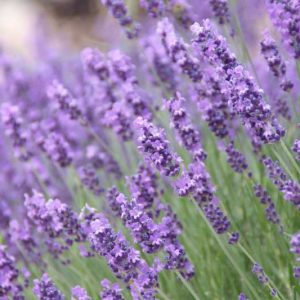
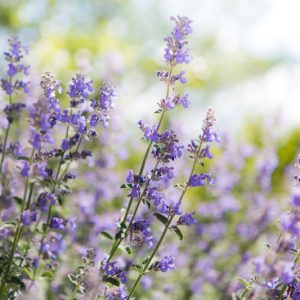
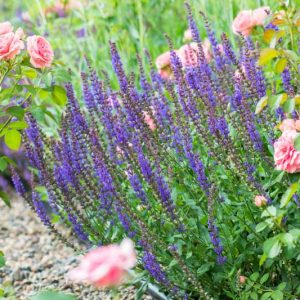
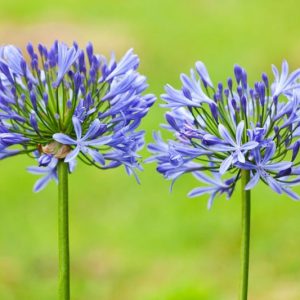
Choose companions that enjoy similar drainage and sun levels and that either deepen contrast or reinforce the fragrance-led mood. Dark green, silver, blue, and burgundy foliage companions are especially effective. Lavender, rosemary, salvia, nepeta, teucrium, santolina, agapanthus, gaura, penstemon, dark-leaved heuchera, purple-leaved hebe, boxwood, white roses, and clumping ornamental grasses all pair well with it visually and horticulturally.
Jasminum officinale ‘Aureovariegatum’ is a variegated form of Common Jasmine grown for fragrant white flowers and bright yellow-blotched foliage.
Yes. It belongs to the genus Jasminum, so it is a true jasmine.
It flowers through summer and often into early autumn.
With support, it can reach about 20 to 30 feet tall, with substantial lateral spread depending on pruning and training.
Yes. It has the sweet, classic fragrance associated with Common Jasmine.
It is usually deciduous, though it may hold some foliage in mild climates.
Plant it in full sun to part shade, in fertile well-drained soil, with shelter and strong support.
It performs best in full sun to part shade. More light usually improves flowering and variegation.
It tolerates short dry spells once established, but looks better and flowers better with consistent moisture.
Yes. It grows well in a large pot with excellent drainage and sturdy support.
They are sometimes treated similarly to Common Jasmine flowers, but only blooms from clean, unsprayed plants grown specifically for edible use should be considered.
Prune after flowering to shape and thin growth, or in early spring for stronger renewal pruning. Remove any reverted all-green shoots promptly.
The most common causes are shade, excess nitrogen, poor pruning timing, or general plant stress.
Too much shade is the most common cause. Overfeeding and green reversion can also weaken the variegated effect.
It is not usually classed as invasive, but it is vigorous and benefits from regular training and pruning.
Updated: March 2026 • Reviewed by Gardenia Editors
| Hardiness |
7 - 10 |
|---|---|
| Heat Zones |
8 - 12 |
| Climate Zones | 5, 6, 7, 8, 9, 12, 13, 14, 15, 16, 17, 18, 19, 20, 21, 22, 23, 24 |
| Plant Type | Climbers |
| Plant Family | Oleaceae |
| Genus | Jasminum |
| Common names | Common Jasmine, Jasmine |
| Exposure | Full Sun, Partial Sun |
| Season of Interest | Summer (Early, Mid, Late), Fall |
| Height | 20' - 30' (6.1m - 9.1m) |
| Spread | 6' - 15' (180cm - 4.6m) |
| Spacing | 180" (4.6m) |
| Maintenance | Low |
| Water Needs | Average |
| Soil Type | Chalk, Loam, Sand |
| Soil pH | Acid, Alkaline, Neutral |
| Soil Drainage | Well-Drained |
| Characteristics | Fragrant, Showy, Semi-Evergreen |
| Tolerances | Deer, Drought, Heat |
| Attracts | Bees, Butterflies, Hummingbirds |
| Garden Uses | Arbors, Pergolas, Trellises, Hedges And Screens, Patio And Containers, Wall-Side Borders, Walls And Fences |
| Garden Styles | Butterfly Garden, City and Courtyard, Coastal Garden, Informal and Cottage, Pollinator Garden |
| Toxic to Humans | No known toxicity |
| Toxic to Cats | Not toxic |
| Toxic to Dogs | Not toxic |
| Toxic to Horses | Not toxic |


| Hardiness |
7 - 10 |
|---|---|
| Heat Zones |
8 - 12 |
| Climate Zones | 5, 6, 7, 8, 9, 12, 13, 14, 15, 16, 17, 18, 19, 20, 21, 22, 23, 24 |
| Plant Type | Climbers |
| Plant Family | Oleaceae |
| Genus | Jasminum |
| Common names | Common Jasmine, Jasmine |
| Exposure | Full Sun, Partial Sun |
| Season of Interest | Summer (Early, Mid, Late), Fall |
| Height | 20' - 30' (6.1m - 9.1m) |
| Spread | 6' - 15' (180cm - 4.6m) |
| Spacing | 180" (4.6m) |
| Maintenance | Low |
| Water Needs | Average |
| Soil Type | Chalk, Loam, Sand |
| Soil pH | Acid, Alkaline, Neutral |
| Soil Drainage | Well-Drained |
| Characteristics | Fragrant, Showy, Semi-Evergreen |
| Tolerances | Deer, Drought, Heat |
| Attracts | Bees, Butterflies, Hummingbirds |
| Garden Uses | Arbors, Pergolas, Trellises, Hedges And Screens, Patio And Containers, Wall-Side Borders, Walls And Fences |
| Garden Styles | Butterfly Garden, City and Courtyard, Coastal Garden, Informal and Cottage, Pollinator Garden |
| Toxic to Humans | No known toxicity |
| Toxic to Cats | Not toxic |
| Toxic to Dogs | Not toxic |
| Toxic to Horses | Not toxic |
How many Jasminum officinale ‘Aureovariegatum’ (Variegated Jasmine) do I need for my garden?
| Plant | Quantity | |
|---|---|---|
| Jasminum officinale ‘Aureovariegatum’ (Variegated Jasmine) | N/A | Buy Plants |
Create a membership account to save your garden designs and to view them on any device.
Becoming a contributing member of Gardenia is easy and can be done in just a few minutes. If you provide us with your name, email address and the payment of a modest $25 annual membership fee, you will become a full member, enabling you to design and save up to 25 of your garden design ideas.
Join now and start creating your dream garden!
Create a membership account to save your garden designs and to view them on any device.
Becoming a contributing member of Gardenia is easy and can be done in just a few minutes. If you provide us with your name, email address and the payment of a modest $25 annual membership fee, you will become a full member, enabling you to design and save up to 25 of your garden design ideas.
Join now and start creating your dream garden!