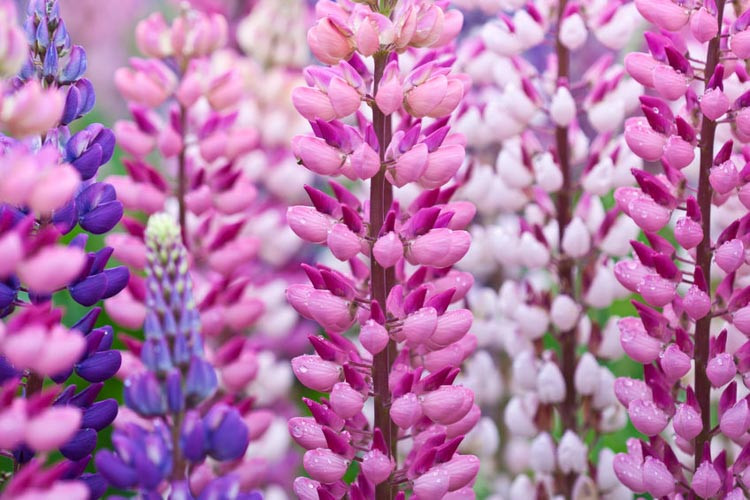
Lupinus (Lupine)
Characteristics
Lupinus, commonly called lupine, is a striking spring to early summer perennial loved for tall flower spikes, palmate leaves, cottage-garden charm, and pollinator appeal. Blooming in blue, purple, pink, red, yellow, white, and bicolor shades, lupines add height, rhythm, and bold color to borders, wildflower gardens, meadow plantings, and cutting gardens. For a broad overview, explore the Lupinus lupine genus guide.
Why Grow Lupines?
Lupines are ideal when you want dramatic vertical flowers that feel natural, colorful, and wildlife-friendly. Their pea-like blooms attract bees, butterflies, and hummingbirds, making them useful alongside the best flowers to attract hummingbirds. Many lupines are also nitrogen-fixing plants, helping enrich soil through their relationship with beneficial root bacteria.
Growing Tips
Plant lupines in full sun to light shade and moist, well-drained, slightly acidic to neutral soil. The best advice is simple: keep roots cool, avoid soggy soil, and protect tall flower spikes from strong wind. Water during dry spells, deadhead spent spikes for a tidier look and possible rebloom, and allow some seedheads to mature if you want natural self-sowing. Lupines shine among best perennial flowers and plants.
Popular Varieties
For rich rosy-red color, try Lupinus ‘My Castle’. For blue and white spires, choose Lupinus ‘The Governor’. For elegant creamy white flowers, plant Lupinus ‘Noble Maiden’. For compact containers and front borders, use Lupinus ‘Gallery White’. For a native-style blue display, consider Lupinus polyphyllus.
Garden Uses
Use lupines in groups for the strongest effect. They look beautiful in spring wildflower gardens, summer wildflower plantings, and blue-themed designs inspired by blue wildflowers. Pair them with foxgloves, irises, peonies, catmint, salvia, and ornamental grasses for a lush, layered border.
Colorful, architectural, and pollinator-friendly, Lupinus is a standout perennial for gardeners who want bold flower spikes, natural charm, soil-enriching benefits, and memorable spring-to-summer garden color.