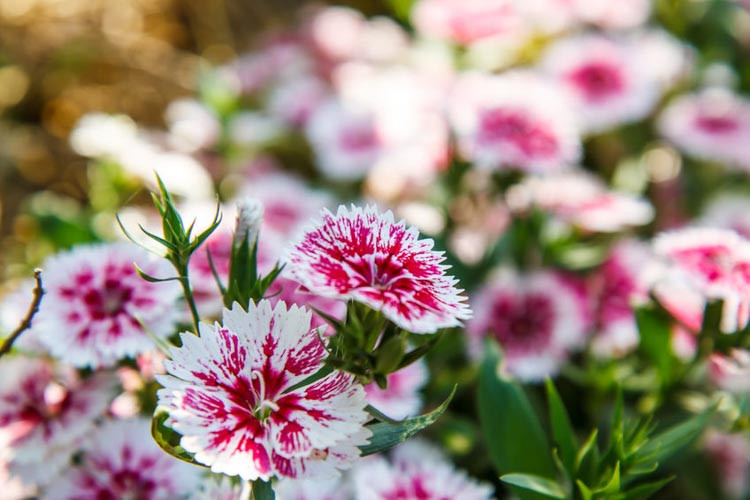
Dianthus (Pink, Carnation)
Characteristics
Dianthus, often called pinks, carnations, or Sweet William, is a fragrant, sun-loving flower known for frilled petals, spicy clove scent, blue-green foliage, and long-lasting color. Blooming in pink, red, white, rose, lavender, burgundy, and bicolor shades, dianthus is perfect for borders, rock gardens, edging, containers, cottage gardens, and cutting gardens.
Why Grow Dianthus?
Dianthus is a great choice when you want flowers that are beautiful, fragrant, compact, and easy to place. Many varieties bloom from late spring into summer, making them excellent companions for summer flowers. Their neat mounds also work beautifully in gravelly sites and sunny edges, especially when choosing perennial dianthus for rock gardens. For especially scented selections, explore the best fragrant dianthus and garden pinks to grow.
Growing Tips
Plant dianthus in full sun and sharply drained, neutral to alkaline soil. The key advice is simple: give it sunshine, airflow, and drainage. Avoid soggy winter soil, which can cause crown rot. Water new plants regularly, then water established plants more sparingly. Deadhead faded blooms to encourage more flowers, and shear lightly after flowering to keep plants tidy and compact. For container care, see this guide on how to grow pinks in pots without killing them. If plants fail to flower well, check these common reasons for pinks and dianthus not blooming.
Popular Varieties
For classic cottage charm, grow Dianthus barbatus, better known as Sweet William. For white, highly scented blooms, try Dianthus ‘Memories’. For bold color in a compact plant, choose Dianthus ‘Fire and Ice’. For a low-growing groundcover, use Dianthus deltoides ‘Arctic Fire’. For dramatic dark blooms, plant Dianthus caryophyllus ‘King of the Blacks’. To better understand common names and plant types, see pinks, carnations, and Sweet William: what’s the difference?.
Edible and Seasonal Uses
Dianthus petals can be used decoratively when grown without pesticides and prepared properly, making them useful among edible flowers for your garden and edible flowers for cakes. Carnations are also linked with the January birth flower, adding symbolic value to bouquets and gifts.
Fragrant, colorful, and wonderfully versatile, Dianthus is a standout flower for gardeners who want sunny border color, rock garden charm, edible-petal beauty, and classic cottage-garden appeal.