Common Jasmine, Poet's Jasmine, Common White Jasmine, Jessamine, Poet's Jessamine, Summer Jasmine, True Jasmine
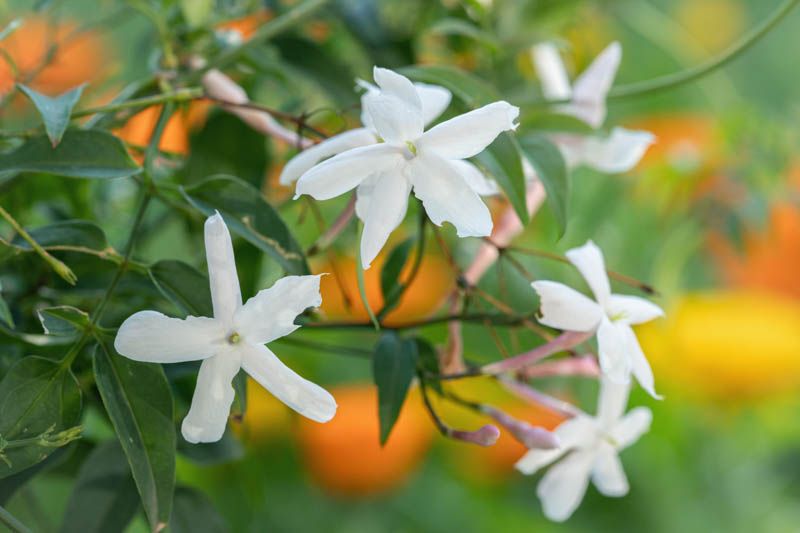
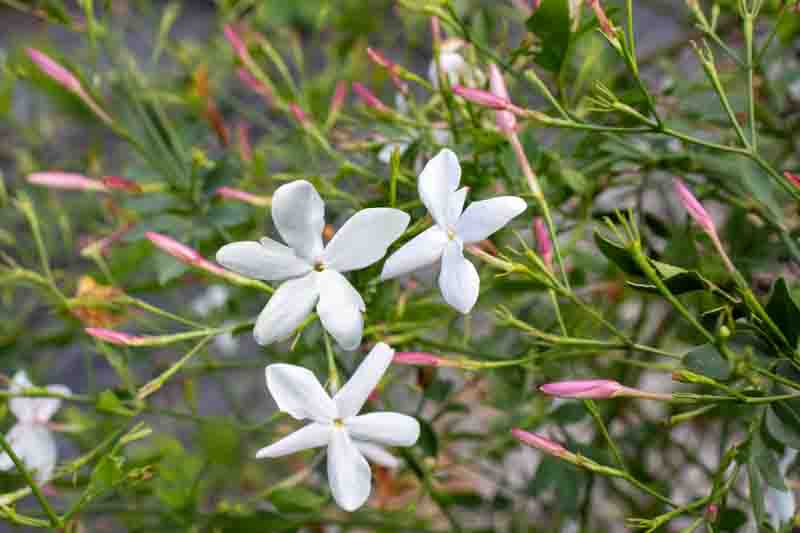


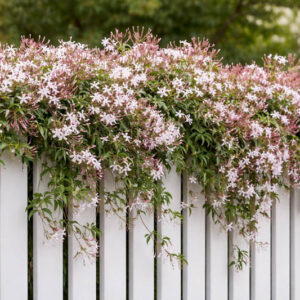
Jasminum officinale, commonly called Common Jasmine, Poet’s Jasmine, or True Jasmine, is a vigorous twining vine grown for its intensely fragrant white flowers, elegant growth, and long flowering season. This classic jasmine is prized for covering fences, pergolas, arches, and trellises with airy green foliage and clusters of sweetly perfumed blooms from late spring or early summer into fall.
Jasminum officinale is a fast-growing semi-evergreen to deciduous climbing vine grown for highly fragrant white flowers from late spring or early summer through summer and often into fall. Plant it in full sun to part shade in fertile, well-drained soil, provide sturdy support, water regularly while establishing, then deeply as needed. Prune after flowering or in early spring to control size and stimulate strong new flowering growth.
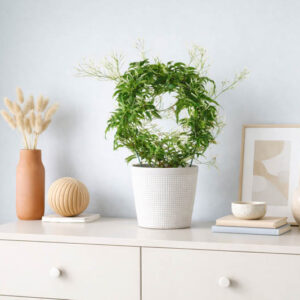
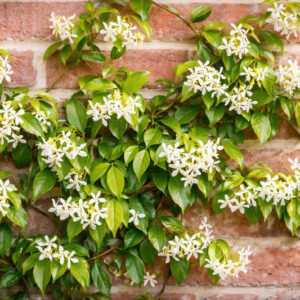
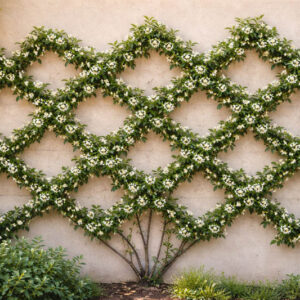
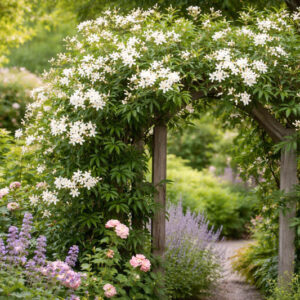
Use: Excellent for trellises, pergolas, arches, fences, walls, pillars, and large containers.
Highlight: Clusters of sweetly fragrant white edible flowers from late spring or early summer until frost in favorable conditions.
Design note: Grow it where fragrance matters – near patios, doors, seating areas, and garden paths.
| Botanical Name | Jasminum officinale |
|---|---|
| Family | Olive family (Oleaceae) |
| Common Names | Common Jasmine, Poet’s Jasmine, True Jasmine, Summer Jasmine |
| Native Range | Turkey through Iran and northern India to central China |
| Plant Type | Semi-evergreen to deciduous woody vine or climbing shrub |
| Hardiness (approx. USDA) | Best in USDA Zones 7-10 |
| Height | 15-30 ft. (4.5-9 m) |
| Spread | 6-15 ft. (1.8-4.5 m) |
| Sun Exposure | Full sun to part shade |
| Soil | Moderately fertile, medium moisture, well-drained soil |
| Bloom Time | Late spring or early summer through summer and often into fall |
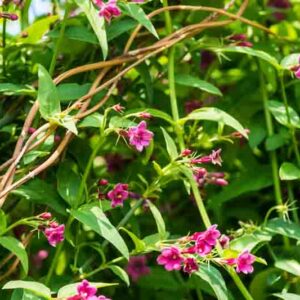
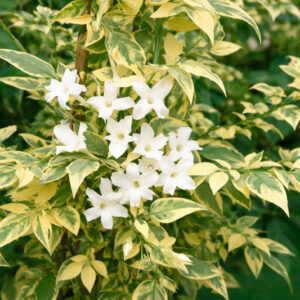
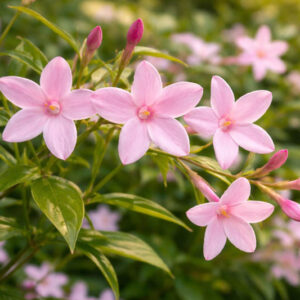
| Flower Color | White, often lightly flushed pink in bud |
| Foliage | Mid- to rich green compound leaves with 7-9 leaflets |
| Deer Resistant | Yes, generally deer resistant |
| Attracts | Pollinators, especially bees and other beneficial insects |
| Edible Flowers | Yes – flowers are commonly used to scent teas, syrups, desserts, and floral preparations |
Common Jasmine is one of the most beloved fragrant vines in the world for a reason. It combines vigorous climbing growth, elegant pinnate foliage, and a long succession of richly scented white flowers. Unlike many ornamental vines that deliver a brief seasonal show, Jasminum officinale offers real performance – fast coverage, repeat bloom, and a fragrance that carries through warm evening air.
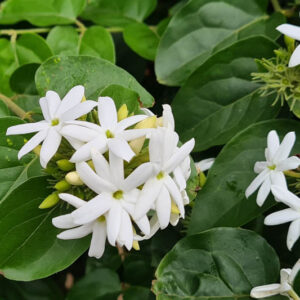
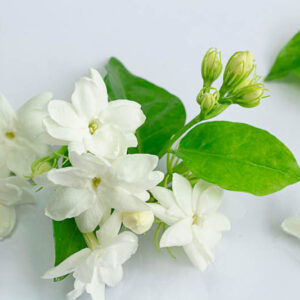
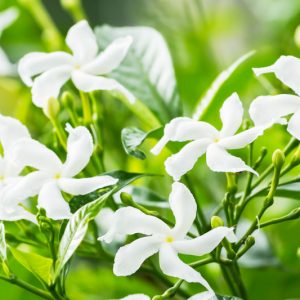
Common Jasmine is a large, twining climber with long, flexible stems that quickly wrap through supports. The leaves are compound, typically with 7-9 leaflets, and give the plant a lighter, more refined look than heavier evergreen climbers. Flowers are borne in loose clusters, usually 3-5 per cluster, and each bloom is about 1 inch across (2 cm). The scent is sweet, classic, and unmistakably jasmine.
Native to Asia Minor, the Himalayas, and China, Common Jasmine is widely cultivated in warm temperate and Mediterranean-style gardens. It thrives where summers are warm, roots can reach evenly moist but well-drained soil, and the top growth has room to climb and spread.
One of the strongest selling points of Jasminum officinale is its long bloom season. In many gardens, flowering begins in late spring or early summer and continues through summer, often extending into fall until frost. Flowering is heaviest when the plant gets enough light, regular moisture during active growth, and sensible pruning.
This is usually a semi-evergreen to deciduous vine, depending on climate. In milder regions it may hold much of its foliage, while in colder zones it drops leaves in winter. The overall effect is graceful rather than bulky – ideal when you want coverage that feels romantic, airy, and refined instead of dense and heavy.
Common Jasmine is a fast-growing vine that can reach 15-30 ft. (4.5-9 m) with support. In rich soil and warm conditions, it can cover a pergola, fence, or trellis surprisingly quickly. Width depends on training and pruning, but mature plants commonly spread 6-15 ft. (1.8-4.5 m).
Jasminum officinale is generally best in USDA Zones 7-10. In colder parts of Zone 7, it benefits from a sheltered wall, a warm microclimate, and winter protection during severe cold. In colder regions, it is often grown in a large container and overwintered in a protected space.
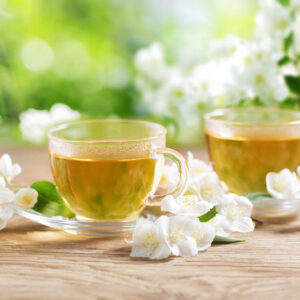
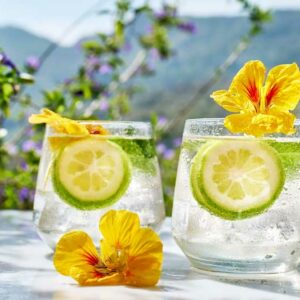
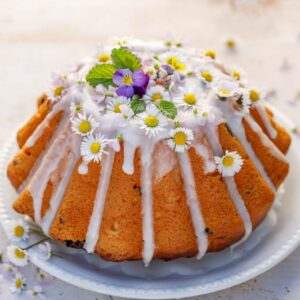
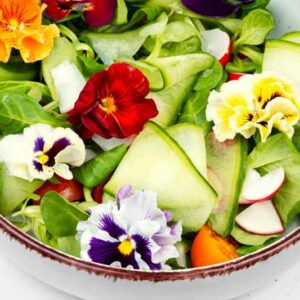
Common Jasmine is especially appealing because its flowers are widely associated with edible blooms and floral uses. The blossoms are prized for scenting teas, infusing syrups, flavoring jellies, perfuming desserts, and adding a delicate floral note to baked goods and cocktails. If flowers are intended for culinary use, grow the plant without synthetic pesticide sprays and harvest only freshly opened, clean blossoms.
Takeaway:
Common Jasmine is not just a fragrant ornamental vine – it is also one of the best-known jasmine species for edible flowers used to perfume teas, syrups, desserts, and floral garnishes.
Common Jasmine contributes fragrance, structure, and pollinator value. Its flowers attract bees, butterflies, hummingbirds, and other beneficial insects, and the vine can provide light cover in layered garden designs. For gardeners building scent-rich, pollinator-friendly spaces, it pairs beautifully with other nectar-rich plants and with top tropical flowers in warm-climate designs.
According to the Royal Horticultural Society, Common Jasmine (Jasminum officinale) scored as having a 20% or less chance of being damaged by deer, making it one of the stronger deer-resistant climbers for ornamental gardens.
As with any deer-resistant plant, local browsing pressure and seasonal food scarcity can still affect results.
Once established, Jasminum officinale is considered moderately drought-tolerant, but it performs best with regular moisture during active growth. It can handle short dry spells better than many lush flowering vines, yet prolonged drought often reduces flowering, slows growth, and can cause yellowing or leaf drop, especially in sandy soil or containers. In hot summer climates, deep watering is far better than frequent shallow watering, and a layer of mulch helps keep the root zone cooler and more evenly moist.
Common Jasmine is moderately drought-tolerant once established, but it flowers and grows far better when the soil does not stay dry for long periods. Drought stress usually reduces bloom quality before it seriously affects survival.
Jasminum officinale is not generally regarded as a toxic ornamental plant. ASPCA listings for Jasminum species indicate jasmine is non-toxic to dogs, cats, and horses, although ingestion of any plant material may still cause mild stomach upset in some pets.
Common Jasmine is not generally considered invasive, but it is undeniably vigorous in favorable conditions. In warm climates with fertile soil and support, it can grow quickly, extend beyond its allotted space, and overwhelm nearby shrubs or structures if left unpruned. In most gardens, this is a question of maintenance rather than invasiveness. Regular tying-in, thinning, and post-bloom pruning keep the plant controlled, floriferous, and easy to manage.
Common Jasmine is not usually classified as invasive, but it is a fast-growing climber that can spread well beyond its support if not pruned and trained regularly.
Feed in spring with compost or a balanced, slow-release fertilizer. Avoid excessive nitrogen, which can push leafy growth at the expense of flowers. For Common Jasmine, overfeeding is one of the fastest ways to get a big green vine with disappointing bloom.
Apply a 2-3 in. layer of mulch around the root zone to conserve moisture, suppress weeds, and moderate soil temperature. Keep mulch away from direct contact with the crown.
Container tip:
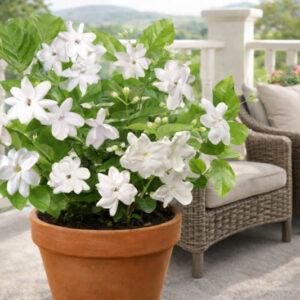
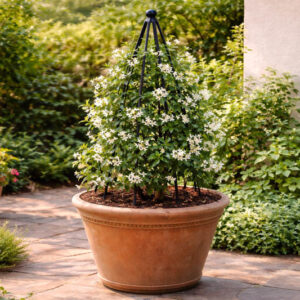
Grow Common Jasmine in a large pot with excellent drainage, fertile free-draining mix, and a strong support. Container plants need more frequent watering, more regular feeding, and closer winter protection than plants in the ground.
Train stems early while they are long and flexible. Tie young shoots loosely to their support and spread them to create even coverage. Common Jasmine can become a tangle if left to fend for itself, so early guidance pays off. The goal is not rigid control but a strong framework that lets flowering shoots fill in attractively.
Pruning is where many jasmine articles stay vague, but this plant deserves more precision. Common Jasmine flowers generously and tolerates pruning well, but the timing and intent matter.
Pruning tip:
Common Jasmine responds remarkably well to pruning. Remove weak, old, and overcrowded shoots after flowering, and do not be afraid of harder spring pruning when the vine has outgrown its space – it rebounds fast and can flower again within weeks in warm conditions.
In mild climates, Common Jasmine may stay partly evergreen. In colder gardens, it loses leaves and goes dormant. Young plants benefit from mulch over the root zone and shelter from severe wind. Container plants are more vulnerable and should be protected before hard freezes arrive.
Yes, Common Jasmine can be grown successfully in containers, but it should be treated like a serious vine, not a small decorative annual replacement.
In cool climates, container culture is often the easiest way to enjoy this classic jasmine while protecting it in winter.
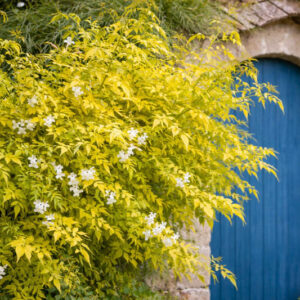
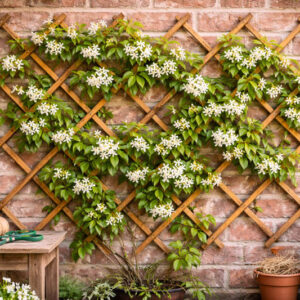
Common Jasmine is at its best when it has space to climb and air to move around the foliage. On a trellis or pergola, it quickly creates a soft, fragrant canopy.
Used this way, Common Jasmine becomes more than a flowering vine – it becomes an architectural scent plant.
Common Jasmine is easy to manage once established, but performance improves significantly when tasks are timed well.
| Task | Best Time |
|---|---|
| Planting | Plant in spring or fall when temperatures are moderate and root establishment is easier. |
| Feeding | Feed in spring as active growth begins. In containers, repeat lightly in summer if needed. |
| Pruning | Prune after flowering for shape, or in early spring for harder renewal pruning. |
| Propagation | Use layering, hardwood cuttings, or semi-hardwood cuttings during the appropriate season. |
| Mulching | Apply or refresh mulch in spring before summer heat intensifies. |
| Winter protection | Protect young and container-grown plants in late fall to winter in colder gardens. |
The best ways to propagate Common Jasmine are layering, hardwood cuttings, and semi-hardwood cuttings.
Layering is especially reliable because the stem remains attached to the parent while rooting. Bend a flexible stem to the soil, lightly wound or pin a section, cover it, and keep it slightly moist until roots form.
Hardwood cuttings are useful during dormancy, while semi-hardwood cuttings are taken from partially mature stems during active growth. In both cases, use a free-draining propagation mix, maintain even moisture, and provide bright indirect light until roots develop.
When Common Jasmine underperforms, the cause is usually cultural rather than mysterious. A diagnostic approach works better than generic advice.
Leggy Common Jasmine almost always points to insufficient light, weak training, or overdue pruning. More sun and better framework management usually correct the problem faster than fertilizer does.
That pattern strongly suggests overfeeding with nitrogen. For jasmine, steady moderate nutrition beats aggressive feeding every time.
Common Jasmine is often considered relatively pest and disease free, especially when grown in the right conditions. Still, stressed plants may develop issues.
Jasminum officinale is the benchmark for the phrase true jasmine. Compared with Star Jasmine, Common Jasmine has a lighter, more twining habit, compound leaves rather than leathery evergreen leaves, and a more classic true-jasmine flower form. Compared with Pink Jasmine, it is generally hardier and more garden-oriented. Compared with Arabian Jasmine, it is less tropical in feel and more useful as a large outdoor climber in temperate climates.
Common Jasmine belongs wherever fragrance is part of the garden plan, not an afterthought.
Choose companions that appreciate similar light, drainage, and warmth but will not overwhelm the root zone or visually compete with the perfume-led role of jasmine.
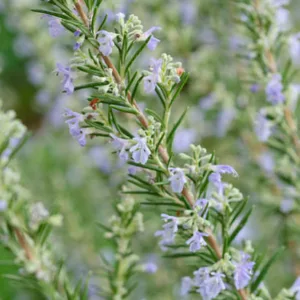
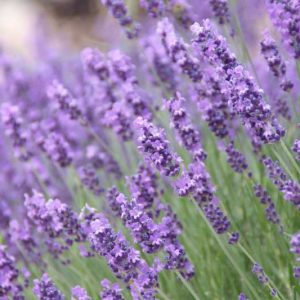
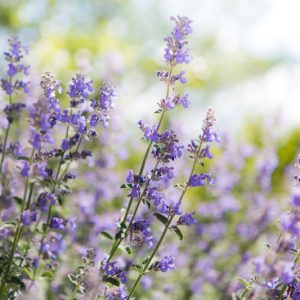
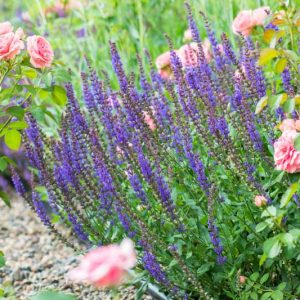
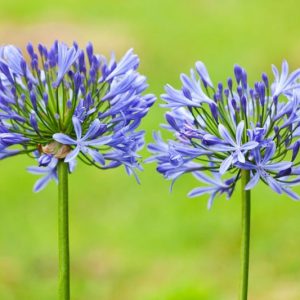
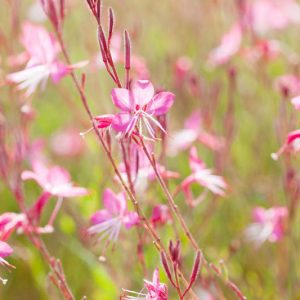
Excellent companions include: lavender, rosemary, salvia, nepeta, agapanthus, gaura, penstemon, catmint, boxwood, teucrium, santolina, dianthus, roses, and clumping ornamental grasses. These combinations support a long-season, scent-rich planting scheme while allowing Common Jasmine to remain the star climber.
Jasminum officinale, commonly called Common Jasmine or Poet’s Jasmine, is a fast-growing twining vine grown for its intensely fragrant white flowers, elegant climbing habit, and long bloom season.
Yes. Jasminum officinale is a true jasmine because it belongs to the genus Jasminum, unlike Star Jasmine, which belongs to Trachelospermum.
Common Jasmine typically blooms from late spring or early summer through summer and often into fall, especially in warm climates and with good growing conditions.
Jasminum officinale is a vigorous climber that typically reaches 15 to 30 feet tall with support and can spread 6 to 15 feet wide, depending on pruning and growing conditions.
Yes. Common Jasmine is prized for its rich, sweet fragrance and is considered one of the most fragrant climbing vines for gardens, pergolas, and patios.
Common Jasmine is usually semi-evergreen to deciduous. In mild climates it may keep much of its foliage, while in colder regions it often loses leaves in winter.
The best place to plant Common Jasmine is in full sun to part shade, in fertile well-drained soil, with a warm sheltered position and sturdy support such as a trellis, pergola, or fence.
Common Jasmine grows best in full sun to part shade. More sun usually means heavier flowering, while too much shade often leads to fewer blooms and leggier growth.
Common Jasmine is moderately drought tolerant once established, but it flowers and grows better with regular moisture. Extended drought usually reduces bloom and may cause leaf yellowing or drop.
Yes. Common Jasmine grows well in a large pot with excellent drainage, fertile potting mix, and a strong support. Container plants need more regular watering and feeding than plants in the ground.
Yes. The flowers of Jasminum officinale are widely used to scent teas, syrups, desserts, and floral infusions, provided they come from unsprayed plants grown specifically for edible use.
Common Jasmine is a fast-growing vine. In warm conditions with good soil, support, and regular care, it can cover a trellis or pergola quickly.
Prune Common Jasmine after flowering to control size, thin old or weak stems, and maintain shape. Harder spring pruning can also be used to renew overgrown plants because it rebounds quickly.
The most common reasons are too much shade, too much nitrogen fertilizer, improper pruning, or stress from poor drainage or drought.
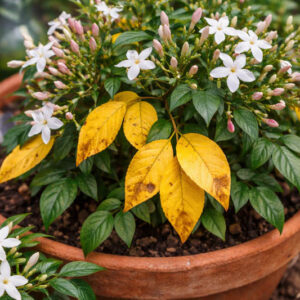
Yellow leaves on Common Jasmine usually indicate watering stress, poor drainage, root disturbance, or nutrient depletion in containers.
Common Jasmine is not generally considered invasive, but it is vigorous and can outgrow its space if not pruned and trained regularly.
Common Jasmine is used as a fragrant climbing vine for trellises, pergolas, arches, fences, walls, and containers. Its flowers are also valued for tea, syrups, desserts, and perfume-like garden fragrance.
Updated: March 2026 – Reviewed by Gardenia Editors
| Hardiness |
7 - 10 |
|---|---|
| Heat Zones |
8 - 12 |
| Climate Zones | 5, 6, 7, 8, 9, 12, 13, 14, 15, 16, 17, 18, 19, 20, 21, 22, 23, 24 |
| Plant Type | Climbers, Shrubs |
| Plant Family | Oleaceae |
| Genus | Jasminum |
| Common names | Common Jasmine, Jasmine, Jessamine |
| Exposure | Full Sun, Partial Sun |
| Season of Interest | Spring (Late), Summer (Early, Mid, Late), Fall |
| Height | 15' - 30' (4.6m - 9.1m) |
| Spread | 6' - 15' (180cm - 4.6m) |
| Spacing | 180" (4.6m) |
| Maintenance | Low |
| Water Needs | Average |
| Soil Type | Chalk, Clay, Loam, Sand |
| Soil pH | Acid, Alkaline, Neutral |
| Soil Drainage | Moist but Well-Drained, Well-Drained |
| Characteristics | Fragrant, Showy, Semi-Evergreen |
| Tolerance | Deer, Clay Soil, Drought |
| Attracts | Bees, Butterflies, Hummingbirds |
| Garden Uses | Arbors, Pergolas, Trellises, Ground Covers, Wall-Side Borders, Walls And Fences |
| Garden Styles | Coastal Garden |


| Hardiness |
7 - 10 |
|---|---|
| Heat Zones |
8 - 12 |
| Climate Zones | 5, 6, 7, 8, 9, 12, 13, 14, 15, 16, 17, 18, 19, 20, 21, 22, 23, 24 |
| Plant Type | Climbers, Shrubs |
| Plant Family | Oleaceae |
| Genus | Jasminum |
| Common names | Common Jasmine, Jasmine, Jessamine |
| Exposure | Full Sun, Partial Sun |
| Season of Interest | Spring (Late), Summer (Early, Mid, Late), Fall |
| Height | 15' - 30' (4.6m - 9.1m) |
| Spread | 6' - 15' (180cm - 4.6m) |
| Spacing | 180" (4.6m) |
| Maintenance | Low |
| Water Needs | Average |
| Soil Type | Chalk, Clay, Loam, Sand |
| Soil pH | Acid, Alkaline, Neutral |
| Soil Drainage | Moist but Well-Drained, Well-Drained |
| Characteristics | Fragrant, Showy, Semi-Evergreen |
| Tolerance | Deer, Clay Soil, Drought |
| Attracts | Bees, Butterflies, Hummingbirds |
| Garden Uses | Arbors, Pergolas, Trellises, Ground Covers, Wall-Side Borders, Walls And Fences |
| Garden Styles | Coastal Garden |
How many Jasminum officinale (Common Jasmine) do I need for my garden?
| Plant | Quantity | |
|---|---|---|
| Jasminum officinale (Common Jasmine) | N/A | Buy Plants |
Create a membership account to save your garden designs and to view them on any device.
Becoming a contributing member of Gardenia is easy and can be done in just a few minutes. If you provide us with your name, email address and the payment of a modest $25 annual membership fee, you will become a full member, enabling you to design and save up to 25 of your garden design ideas.
Join now and start creating your dream garden!
Create a membership account to save your garden designs and to view them on any device.
Becoming a contributing member of Gardenia is easy and can be done in just a few minutes. If you provide us with your name, email address and the payment of a modest $25 annual membership fee, you will become a full member, enabling you to design and save up to 25 of your garden design ideas.
Join now and start creating your dream garden!