Pink Jasmine, Many-Flowered Jasmine, Jasminum blinii

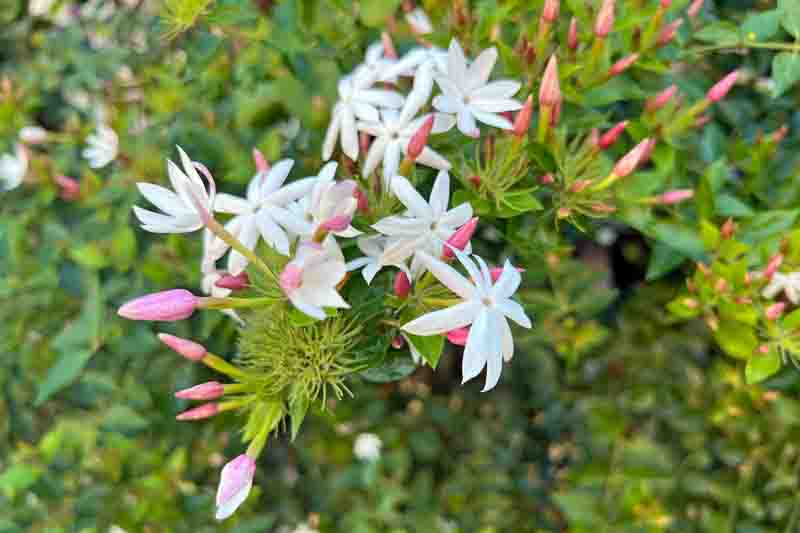
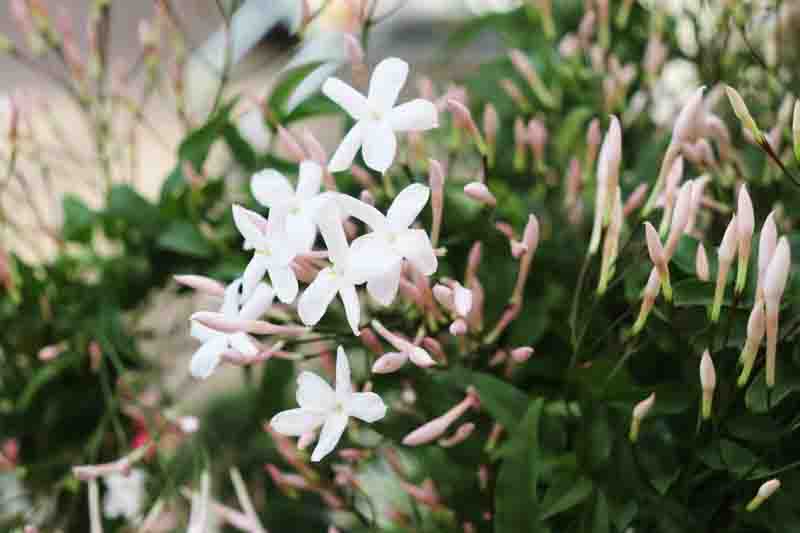
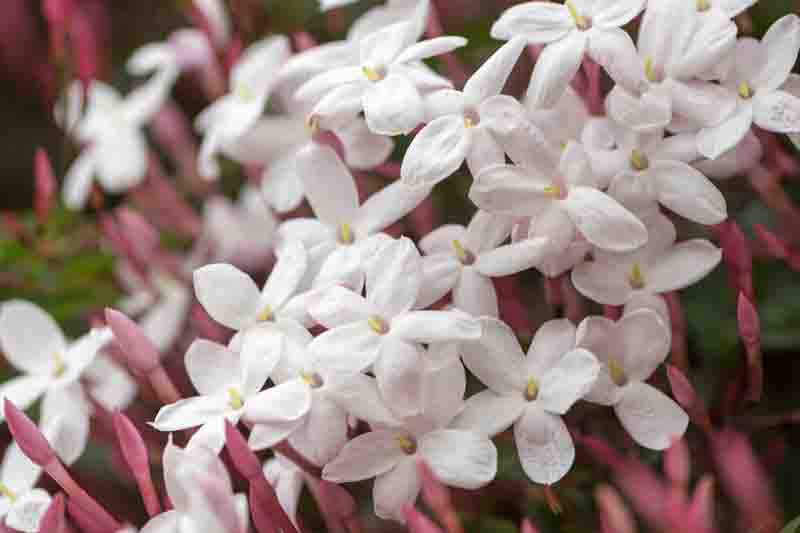


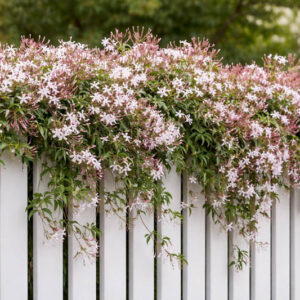
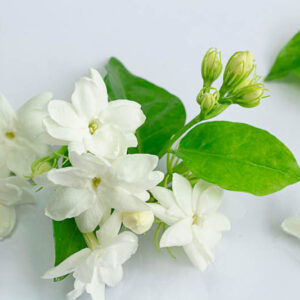
Jasminum polyanthum, commonly called Pink Jasmine or Many-Flowered Jasmine, is one of the most treasured flowering vines for fragrance, speed, and sheer floral drama. When in bloom, it covers itself in large clusters of deep pink buds that open into starry white flowers, filling the air with a rich, sweet perfume. If you want a jasmine that looks romantic, smells unforgettable, and grows fast enough to transform a trellis, arbor, fence, or bright indoor space, Pink Jasmine is one of the best choices you can make.
Jasminum polyanthum is a fast-growing evergreen jasmine vine grown for intensely fragrant white flowers that open from pink buds in late winter and spring. Plant it in full sun to part shade in fertile, well-drained soil, water regularly while establishing, and prune after flowering to control growth and encourage a dense, flower-filled framework.
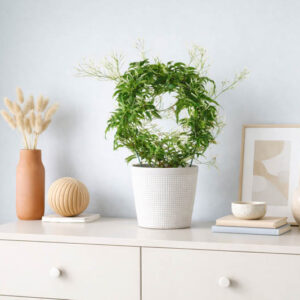
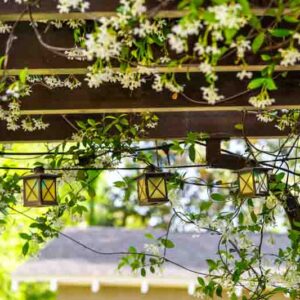
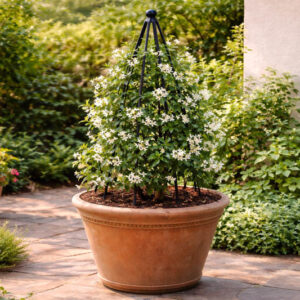
Use: Superb for trellises, arbors, fences, pergolas, wall-side borders, containers, conservatories, and fragrant patio displays.
Highlight: Masses of pink buds opening to intensely fragrant white flowers in late winter and spring.
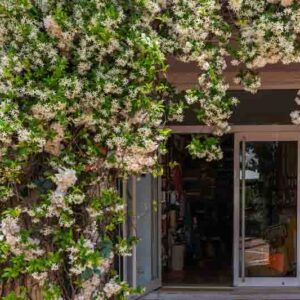
Design note: Plant it where the fragrance can be appreciated up close – near doorways, seating areas, patios, or sunny indoor rooms.
| Botanical Name | Jasminum polyanthum |
|---|---|
| Family | Olive family (Oleaceae) |
| Common Names | Pink Jasmine, Many-Flowered Jasmine |
| Native Range | South-central China to Myanmar |
| Plant Type | Evergreen climber, twining vine, conservatory plant, fragrant container vine |
| Hardiness (approx. USDA) | Best in USDA Zones 8-10, with winter protection in cooler areas |
| Height | 15-20 ft. (4.5-6 m) |
| Spread | 6-10 ft. (1.8-3 m), depending on training and pruning |
| Sun Exposure | Full sun to part shade, with bright light for best bloom |
| Soil | Fertile, humus-rich, well-drained soil |
| Bloom Time | Late winter to spring |
| Flower Color | Pink buds opening to white flowers |
| Fragrance | Yes – intensely sweet and highly fragrant |
| Foliage | Bright to dark green pinnate leaves with 5-7 leaflets |
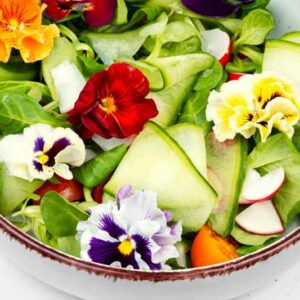
| Edible Flowers | No – this jasmine is grown as an ornamental fragrant vine rather than a culinary jasmine |
Pink Jasmine is one of the showiest and most fragrant true jasmines in cultivation. It belongs to the genus Jasminum and is especially prized for its ability to produce a spectacular flush of bloom when many gardens still feel quiet. Unlike vines grown mainly for foliage or coverage, Jasminum polyanthum delivers both decoration and perfume. That combination is exactly why gardeners, designers, and plant lovers keep returning to it.
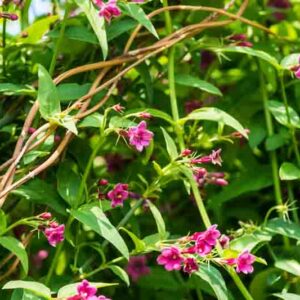
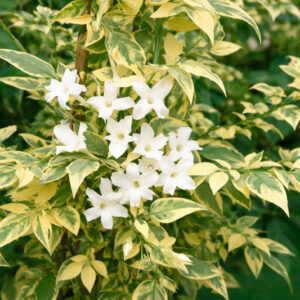
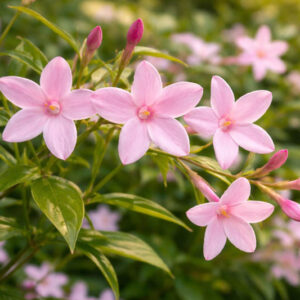
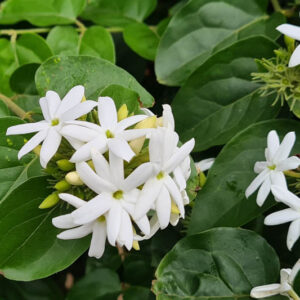
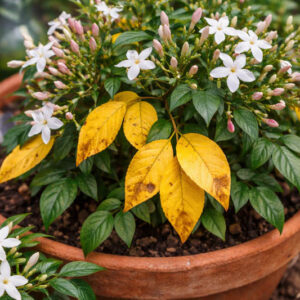
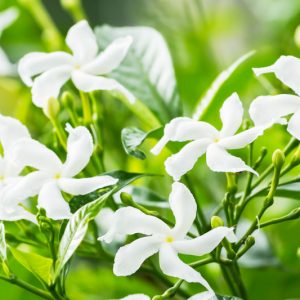
Pink Jasmine is a vigorous evergreen vine with long, slender, twining stems that quickly cover supports. Its leaves are made up of 5-7 leaflets and range from bright green to deeper green, often with a slightly paler underside. The plant’s real magic arrives in bloom season, when dense clusters of rosy buds open into narrow-tubed white flowers about 1 inch across (2 cm). The effect is lush, romantic, and unmistakably jasmine.
Native to south-central China to Myanmar, Pink Jasmine has become a global favorite in mild climates and as a container-grown conservatory or houseplant. It performs beautifully outdoors where winters are gentle, but it is equally valued in colder regions as a plant that can summer outside and winter indoors in bright light.
Pink Jasmine usually flowers from late winter to spring in containers, conservatories, and many mild climates, though it may bloom later outdoors in some frost-free landscapes. That timing is a major part of its appeal. It arrives when gardeners are especially hungry for scent and freshness, and it often blooms before many summer-flowering vines have even started active growth. In ideal conditions, mature plants can produce an astonishingly heavy floral display.
This is a twining climber, not a self-clinging wall vine. It needs support and benefits from early training, but it grows fast and responds well. Left unchecked, it can become a loose, generous tangle. Trained properly, it becomes an elegant fragrant screen, flowering trellis specimen, or patio centerpiece in a container.
In favorable conditions, Pink Jasmine can reach about 15 to 20 feet tall (4.5-6 m), with a spread of 6 to 10 feet (1.8-3 m) depending on support and pruning. In containers, it stays more manageable but still grows energetically. Indoors, it is often kept trimmed to a practical size without losing its flowering potential.
Jasminum polyanthum is best suited to USDA Zones 8-10. In frost-free or lightly frosty areas, it can be grown outdoors year-round. In colder regions, it is best treated as a conservatory plant, greenhouse jasmine, or container vine that is moved indoors before hard frost.
Jasminum polyanthum has received the Royal Horticultural Society’s Award of Garden Merit, reflecting its ornamental value, reliability, and broad appeal in cultivation.
Takeaway:
Pink Jasmine is one of the finest fragrant flowering vines for late winter and spring, combining fast growth, pink buds, white flowers, and a perfume that easily becomes the star of the garden.
Pink Jasmine is primarily grown for ornamental and sensory value, but its flowers can also attract pollinators when in bloom. In mild-climate gardens, it contributes seasonal nectar and helps build a layered, flower-rich planting around walls, terraces, and outdoor living spaces. It also combines beautifully with Top 30 Winter Flowers to Bring Color to Your Garden and Home and with other plants chosen for fragrance and seasonal succession.
Pink Jasmine is not usually listed among the most deer-preferred vines, but deer resistance is variable and depends heavily on local browsing pressure.
In high-pressure areas, young growth and flower buds may still be sampled, especially when other food is scarce.
Once established, Pink Jasmine can handle brief dry periods, but it is not at its best in chronically dry soil. This is a vine that flowers more freely and looks healthier when moisture is reasonably consistent. In containers, warm walls, and windy patios, watering must be watched more carefully.
Pink Jasmine tolerates light drought once established, but regular moisture and good drainage produce the strongest growth, healthiest foliage, and best flowering.
Pink Jasmine has no reported toxic effects. It should not be confused with the culinary jasmine species used for tea or fragrance products. ASPCA listings for Jasminum species indicate jasmine is non-toxic to dogs, cats, and horses, although ingestion of any plant material may still cause mild stomach upset in some pets.
Pink Jasmine is a vigorous vine that is usually manageable in cultivation, but it is invasive in some warm regions outside its native range. Its speed is one of its strengths, but that vigor means it needs pruning and guidance. In warm climates, neglected plants can become dense and sprawling, especially if allowed to scramble through neighboring shrubs or natural areas.
Pink Jasmine is usually manageable in cultivation, but invasive in some warm regions; check local guidance before planting.
Feed Pink Jasmine in spring as new growth starts, then lightly again after flowering if needed. A balanced fertilizer or compost-based feeding program works well. Avoid pushing too much nitrogen, which can produce long leafy shoots with fewer flowers.
Apply a 2-3 in. mulch layer around the root zone to conserve moisture and moderate soil temperature. Keep mulch away from the crown and stems.
Design tip:
Pink Jasmine is at its most memorable when planted where people pass close by. This is a fragrance-first vine – do not hide it where no one can enjoy the scent.
Because Pink Jasmine is a twining vine, it needs something to climb around. Tie young shoots loosely and guide them early. Fan them across wires or a trellis to create a broad flowering framework rather than a congested mass at the top.
Prune after flowering. That is the key timing. Like many jasmines, Pink Jasmine blooms on growth that developed earlier, so random late-season pruning can remove future flower buds.
Pruning tip:
The best time to prune Pink Jasmine is right after flowering. That keeps this vigorous jasmine vine in bounds without sacrificing next season’s buds.
In mild climates, outdoor plants usually need little winter protection beyond a sheltered planting site. In colder regions, Pink Jasmine should be grown in a pot and moved indoors before frost. Indoors, place it in the brightest possible position and avoid hot, dry air if you want the plant to remain healthy and flower well.
Pink Jasmine is one of the best jasmines for container culture. This is especially valuable in cold-winter regions where the plant cannot stay outdoors year-round.
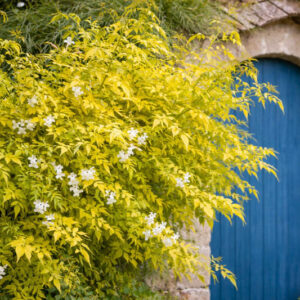
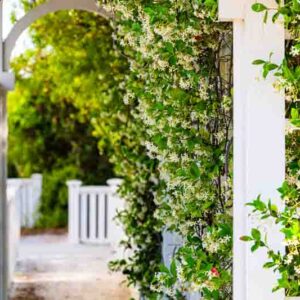
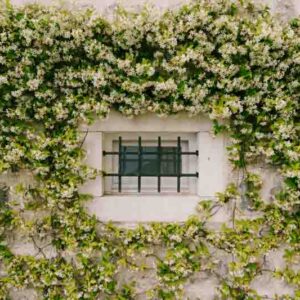
Pink Jasmine is exceptional on a trellis, pergola, or sunny wall. Its twining stems soften hard surfaces, and the flowers stand out beautifully against masonry, timber, or dark-painted fencing.
Pink Jasmine is easy to grow when its seasonal rhythm is respected.
| Task | Best Time |
|---|---|
| Planting | Plant in spring or early fall in mild climates. |
| Feeding | Feed in spring as growth begins, and lightly after flowering if needed. |
| Pruning | Prune immediately after flowering. |
| Propagation | Take semi-hardwood cuttings or layer stems from summer into autumn. |
| Mulching | Refresh mulch in spring. |
| Main display | Enjoy flowers from late winter into spring. |
Pink Jasmine is usually propagated by semi-hardwood cuttings or layering.
Take partially mature cuttings during the growing season, remove lower leaves, and place them in a free-draining propagation mix. Keep them evenly moist in bright indirect light until rooted.
Long flexible stems can be bent and pegged into soil while still attached to the parent plant. Once roots form, the new plant can be cut free and transplanted.
Pink Jasmine is generally rewarding, but when it underperforms, the reason is usually cultural rather than mysterious.
Legginess usually points to insufficient light, lack of training, or delayed pruning. Pink Jasmine is naturally vigorous, but it looks best when guided and edited rather than abandoned.
Pink Jasmine is often fairly easy to manage, but like many tender vines and houseplant jasmines, it can attract sap-feeding pests when stressed.
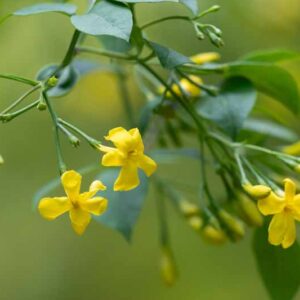
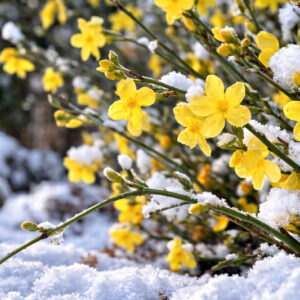
Jasminum polyanthum stands out because it combines ornamental pink buds, white fragrant flowers, and late winter to spring bloom in one vigorous package. Compared with Common Jasmine, it flowers earlier and is often grown more for spring display. Compared with Star Jasmine, it is a true jasmine with a softer, twining habit and pink flower buds. Compared with Winter Jasmine, Pink Jasmine is far more fragrant and more tropical in character.
Pink Jasmine shines when used where its beauty and scent can work together.
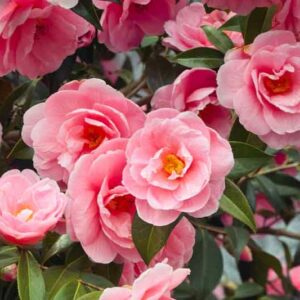
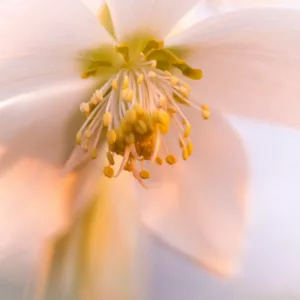
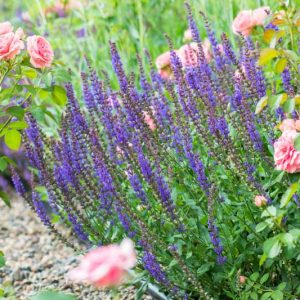
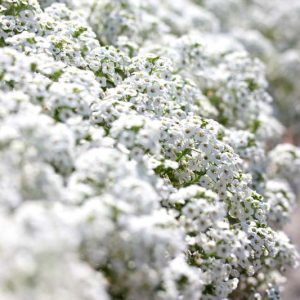
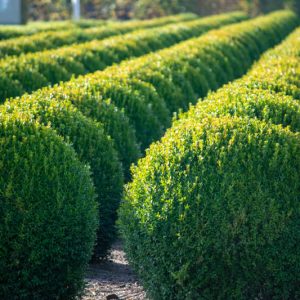
Choose companion plants that either extend the flowering season, contrast with the vine’s refined flowers, or support a warm, fragrant, romantic planting scheme. Good partners include camellias, hellebores, lavender, rosemary, climbing roses, clematis, sweet alyssum, salvia, dwarf citrus, pelargoniums, and evergreen structure plants such as boxwood or pittosporum. These combinations help Pink Jasmine feel like part of a complete design rather than a single seasonal burst.
Pink Jasmine, or Jasminum polyanthum, is a fast-growing evergreen twining vine grown for its intensely fragrant white flowers that open from pink buds in late winter and spring.
Yes. Pink Jasmine belongs to the genus Jasminum, so it is a true jasmine.
Yes. Pink Jasmine is highly fragrant and is one of the most strongly scented jasmine vines grown in gardens and containers.
Pink Jasmine usually blooms from late winter into spring, often producing a heavy flush of flowers when little else is in bloom.
Pink Jasmine can grow about 15 to 20 feet tall and 6 to 10 feet wide, depending on climate, support, and pruning.
Pink Jasmine is a twining climber or vine, not a shrub. It needs support such as a trellis, arbor, pergola, or wires.
Pink Jasmine grows best in full sun to part shade. Bright light promotes stronger growth, better flowering, and denser foliage.
It tolerates light shade, but too much shade reduces flowering and often makes the plant leggy.
The best place to plant Pink Jasmine is in a sheltered, bright location near a patio, doorway, path, or seating area where its fragrance can be enjoyed.
Yes. Pink Jasmine grows very well in a container with excellent drainage and a support, especially in regions where it must be moved indoors for winter.
Yes. Pink Jasmine is an evergreen vine in mild climates, keeping its foliage year-round unless stressed by cold.
Prune Pink Jasmine immediately after flowering by shortening long shoots, thinning crowded growth, and guiding stems over their support.
The most common causes are too little light, pruning at the wrong time, too much nitrogen fertilizer, or cold damage to developing buds.
Water Pink Jasmine regularly while it establishes, then deeply when the soil begins to dry. Container plants usually need more frequent watering than in-ground plants.
Yes. Pink Jasmine is one of the best fragrant vines for trellises, fences, pergolas, and arbors because it grows fast and flowers heavily.
Yes, as long as it receives very bright light, cool enough winter conditions, and good airflow. It is often grown indoors as a conservatory or sunroom plant.
Yes. Although it is best known as a climber, Pink Jasmine can also be allowed to sprawl as a fragrant ground cover in mild climates.
Updated: March 2026 – Reviewed by Gardenia Editors
| Hardiness |
8 - 10 |
|---|---|
| Heat Zones |
9 - 10 |
| Climate Zones | 5, 6, 7, 8, 9, 12, 13, 14, 15, 16, 17, 18, 19, 20, 21, 22, 23, 24, H1 |
| Plant Type | Climbers, Shrubs |
| Plant Family | Oleaceae |
| Genus | Jasminum |
| Common names | Jasmine, Pink Jasmine |
| Exposure | Full Sun, Partial Sun |
| Season of Interest | Spring (Early, Mid, Late), Winter |
| Height | 15' - 20' (4.6m - 6.1m) |
| Spread | 6' - 10' (180cm - 3m) |
| Spacing | 72" - 120" (180cm - 3m) |
| Maintenance | Low |
| Water Needs | Low, Average |
| Soil Type | Chalk, Loam, Sand |
| Soil pH | Acid, Alkaline, Neutral |
| Soil Drainage | Well-Drained |
| Characteristics | Fragrant, Plant of Merit, Showy, Evergreen |
| Garden Uses | Arbors, Pergolas, Trellises, Ground Covers, Patio And Containers, Wall-Side Borders, Walls And Fences |
| Garden Styles | City and Courtyard, Coastal Garden |


| Hardiness |
8 - 10 |
|---|---|
| Heat Zones |
9 - 10 |
| Climate Zones | 5, 6, 7, 8, 9, 12, 13, 14, 15, 16, 17, 18, 19, 20, 21, 22, 23, 24, H1 |
| Plant Type | Climbers, Shrubs |
| Plant Family | Oleaceae |
| Genus | Jasminum |
| Common names | Jasmine, Pink Jasmine |
| Exposure | Full Sun, Partial Sun |
| Season of Interest | Spring (Early, Mid, Late), Winter |
| Height | 15' - 20' (4.6m - 6.1m) |
| Spread | 6' - 10' (180cm - 3m) |
| Spacing | 72" - 120" (180cm - 3m) |
| Maintenance | Low |
| Water Needs | Low, Average |
| Soil Type | Chalk, Loam, Sand |
| Soil pH | Acid, Alkaline, Neutral |
| Soil Drainage | Well-Drained |
| Characteristics | Fragrant, Plant of Merit, Showy, Evergreen |
| Garden Uses | Arbors, Pergolas, Trellises, Ground Covers, Patio And Containers, Wall-Side Borders, Walls And Fences |
| Garden Styles | City and Courtyard, Coastal Garden |
How many Jasminum polyanthum (Pink Jasmine) do I need for my garden?
| Plant | Quantity | |
|---|---|---|
| Jasminum polyanthum (Pink Jasmine) | N/A | Buy Plants |
Create a membership account to save your garden designs and to view them on any device.
Becoming a contributing member of Gardenia is easy and can be done in just a few minutes. If you provide us with your name, email address and the payment of a modest $25 annual membership fee, you will become a full member, enabling you to design and save up to 25 of your garden design ideas.
Join now and start creating your dream garden!
Create a membership account to save your garden designs and to view them on any device.
Becoming a contributing member of Gardenia is easy and can be done in just a few minutes. If you provide us with your name, email address and the payment of a modest $25 annual membership fee, you will become a full member, enabling you to design and save up to 25 of your garden design ideas.
Join now and start creating your dream garden!