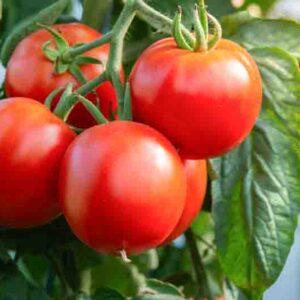
Tomato 'Beefsteak', Lycopersicon esculentum 'Beefsteak'
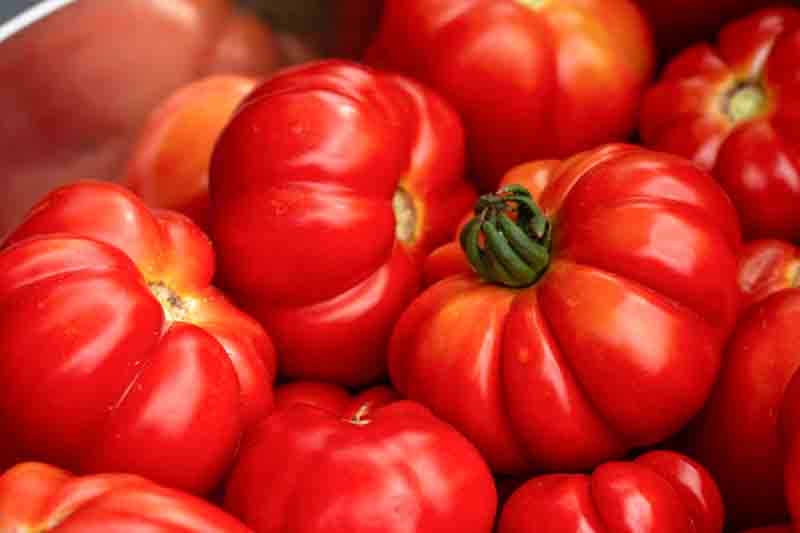
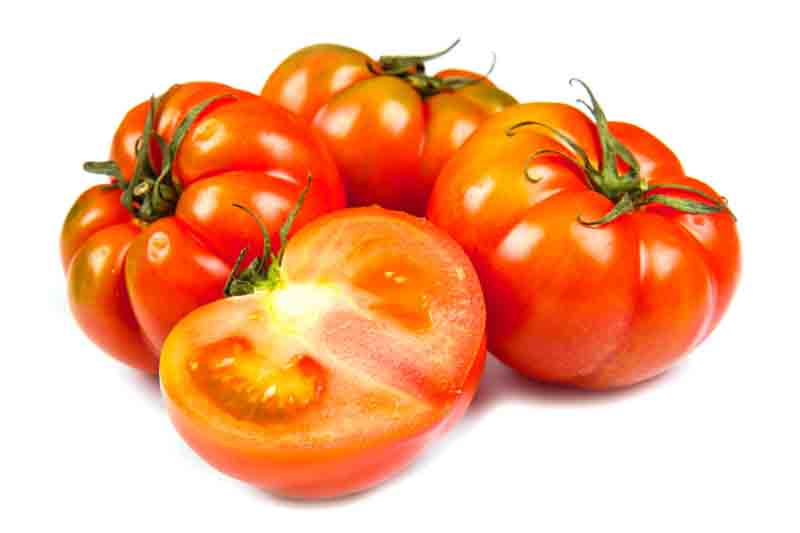
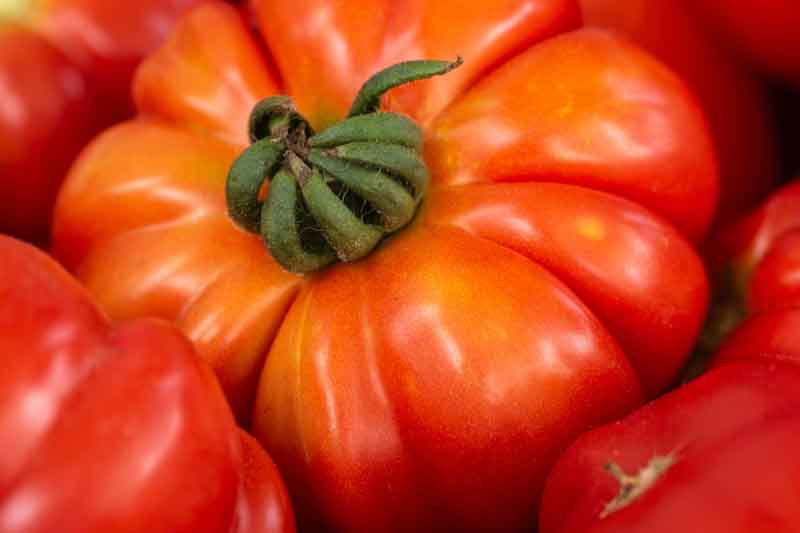


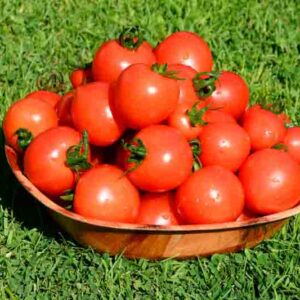
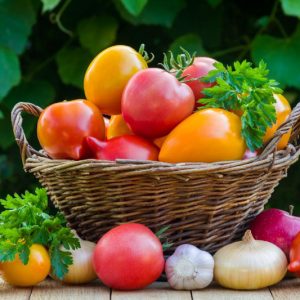
Solanum lycopersicum ‘Beefsteak’ is a classic open-pollinated tomato grown for exceptionally large, meaty red fruits with broad slices, abundant flesh, and rich fresh-tomato flavor. The vigorous indeterminate vines produce large, often ribbed fruits commonly weighing 1-2 lb. (450-900 g), making this an old-fashioned favorite for sandwiches, burgers, tomato plates, salads, and summer slicing.
There is an important naming complication. “Beefsteak tomato” is also a broad horticultural description for large, fleshy slicing tomatoes, so Brandywine, Mortgage Lifter, Cherokee Purple, and many modern hybrids may all be described as beefsteak tomatoes without being the cultivar ‘Beefsteak’. Gardenia treats this page as the named open-pollinated cultivar ‘Beefsteak’, not as a profile of every beefsteak-type tomato.
Gardenia cultivar insight: ‘Beefsteak’ and beefsteak-type tomato are not interchangeable terms. ‘Beefsteak’ can identify a specific open-pollinated cultivar, while “beefsteak” also describes a whole class of large slicing tomatoes. Always establish whether a source is describing the named cultivar or merely the fruit type before transferring size, maturity, resistance, or growth-habit data.
| Botanical Name | Solanum lycopersicum ‘Beefsteak’ |
|---|---|
| Family | Solanaceae |
| Common Name | Beefsteak tomato |
| Plant Type and Habit | Warm-season fruiting annual; vigorous, indeterminate vine requiring sturdy support |
| Seed Type | Open-pollinated; commonly sold as an heirloom or heritage cultivar |
| Size | Mature height varies among maintained Beefsteak seed lines. Burpee currently lists its ‘Beefsteak’ at about 42 in. (107 cm). Because the cultivar is indeterminate, plants may grow taller depending on the seed line, support, pruning, climate, fertility, and season length. |
| Growth Habit | Indeterminate; continues flowering and producing fruit through the growing season |
| Tomato Type | Main-season, large red beefsteak / slicing tomato |
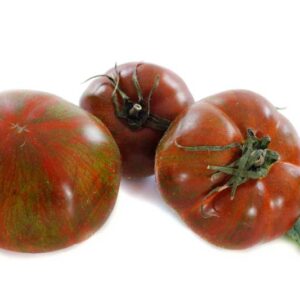
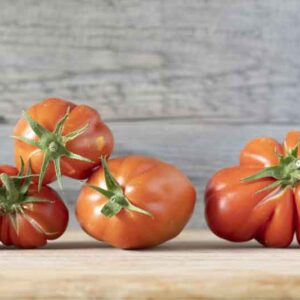
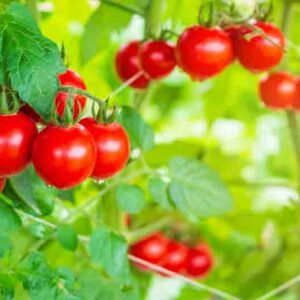
| Fruit | Large, red, often ribbed or irregularly flattened fruits commonly weighing 1-2 lb. (450-900 g) |
| Fruit Characteristics | Thick, meaty flesh, broad slices, abundant juice, and often pronounced ribbing or irregular shoulders |
| Flavor | Rich, juicy, classic tomato flavor, especially suited to fresh eating |
| Days to Maturity | Approximately 80-96 days from transplanting for the named cultivar; individual maintained seed lines may use narrower estimates |
| Sun and Exposure | Full sun; at least 6 hours of direct sunlight, preferably 8 or more |
| Soil | Fertile, organically rich, moist but well-drained clay, loam, or sandy soil; ideally around pH 6.0-6.8 |
| Spacing | 24-36 in. (60-90 cm); allow more room for large cages or multi-stem plants |
| Harvest | Main-season and extended; harvest when fruit develops full red color and begins to soften slightly |
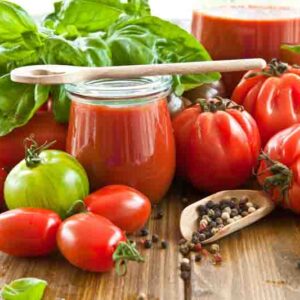
| Best Uses | Sandwiches, burgers, salads, tomato plates, fresh slicing, salsa, and fresh summer cooking |
| Disease Resistance | No universal resistance package should be assigned to all seed sold as ‘Beefsteak’; check the exact maintained seed line and supplier |
| Container Suitability | Possible in a very large container with very strong support, but vigorous vines and exceptionally heavy fruit make it better suited to beds or large growing spaces |
‘Beefsteak’ is grown for size and slicing quality. Cornell describes the named cultivar as an indeterminate main-season tomato producing ribbed fruits weighing approximately 1-2 lb. each.
Those large fruits contain broad sections of fleshy interior, producing the substantial slices that made beefsteak tomatoes synonymous with summer sandwiches, burgers, and tomato plates.
The fruits can be less uniform than modern commercial slicing hybrids. Ribbing, flattened shoulders, asymmetry, and very large irregular fruits may occur, especially when cool conditions interfere with flower development.
Best reason to grow ‘Beefsteak’: Choose it when your priority is a huge, juicy tomato for fresh slicing. One ripe fruit can provide broad, substantial slices for several sandwiches or burgers.
This distinction is essential when researching or buying Beefsteak tomatoes.
‘Beefsteak’ can identify a particular open-pollinated cultivar producing very large red, often ribbed fruit.
Beefsteak tomato, however, is also a descriptive category for large, fleshy slicing tomatoes. Many unrelated cultivars fall into that category, including red, pink, purple, yellow, orange, striped, open-pollinated, heirloom, and hybrid varieties.
A Brandywine can therefore be a beefsteak-type tomato without being the cultivar ‘Beefsteak’. The same is true of Mortgage Lifter, Cherokee Purple, Supersteak, and many other large-fruited tomatoes.
Gardenia identity rule: Before assigning any trait to ‘Beefsteak’, ask whether the source means the named cultivar or the beefsteak fruit category. A statement such as “beefsteak tomatoes can be determinate or indeterminate” can be true for the category while being misleading on a cultivar page for the indeterminate ‘Beefsteak’.
‘Beefsteak’ is widely sold as an old open-pollinated or heirloom tomato, but its historical identity is less straightforward than its familiar name suggests.
Some modern seed catalogs treat ‘Beefsteak’ as synonymous with names such as Red Ponderosa or Crimson Cushion. Other cultivar databases maintain those names as separate entries. The result is a genuine naming conflict rather than a simple list of universally accepted synonyms.
The term “beefsteak” also has a much broader history as a description for exceptionally large, fleshy tomatoes. Historical cultivars such as Ponderosa helped establish the large-fruited style, but that does not prove that every cultivar later sold as Beefsteak shares exactly the same pedigree.
Gardenia history rule: Do not assume that every historical mention of Beefsteak, Classic Beefsteak, Red Ponderosa, Ponderosa, or Crimson Cushion represents genetically identical seed. Where catalogs disagree, keep the names separate unless the seed source explicitly establishes synonymy.
For Gardenia, the safest identity for this page is therefore the modern documented cultivar profile: an open-pollinated, indeterminate, main-season tomato producing very large red ribbed fruits. Historical synonym claims should remain attached to the specific seed source making them.
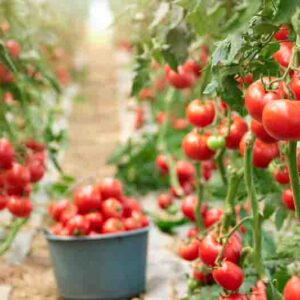
‘Beefsteak’ is an indeterminate tomato. Its stems continue growing, flowering, and producing fruit through the season rather than terminating after one concentrated crop.
Published mature-height information for seed sold specifically as ‘Beefsteak’ is limited and varies by source. Burpee currently lists its Beefsteak line at about 42 in. (107 cm), but an indeterminate tomato can extend farther depending on growing conditions, support, pruning, fertility, and season length.
Do not use height data from ‘Classic Beefsteak’, another beefsteak-type cultivar, or a generic beefsteak tomato to define the height of ‘Beefsteak’. Plan instead for an indeterminate vine and provide substantial support.
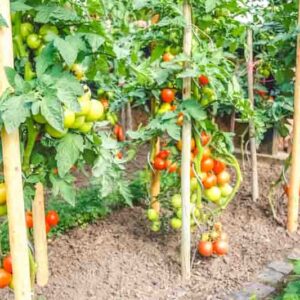
The vines also need support capable of carrying unusually heavy fruit. A structure adequate for a cherry tomato may bend or collapse beneath several 1-2 lb. Beefsteak tomatoes.
Support rule: With ‘Beefsteak’, support the fruit load, not merely the vine. Use a strong cage, securely anchored stake, trellis, or string system capable of carrying very large fruit without collapsing.
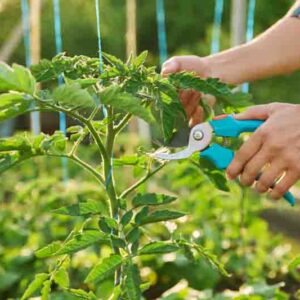
For more on tomato growth habit, see Gardenia’s Determinate vs. Indeterminate Tomatoes. For pruning guidance, see How and When to Prune Tomatoes.
Grow ‘Beefsteak’ in full sun, with at least 6 hours of direct sunlight and preferably 8 or more for strong growth, flowering, and fruit development.
Plant in fertile, organically rich, moist but well-drained soil. Clay, loam, or sandy soil can work when fertility and drainage are suitable. Aim for a slightly acidic to neutral soil pH around 6.0-6.8.
Allow about 24-36 inches (60-90 cm) between supported plants. Give multi-stem vines and large cages additional room where possible.
Maintain reasonably even root-zone moisture. Very large fruits require a substantial and consistent water supply, and abrupt changes between dry and saturated soil can encourage cracking.
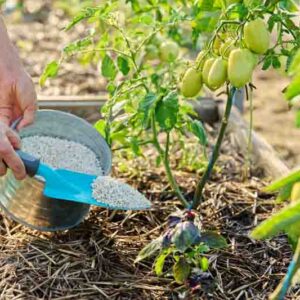
Use balanced fertility rather than pushing excessive leafy growth with high nitrogen. Large fruit requires healthy roots, foliage, and balanced nutrition, not simply more fertilizer.
For larger, better-quality fruit: Give ‘Beefsteak’ full sun, deep fertile soil, steady moisture, sturdy support, and enough healthy foliage to feed developing tomatoes. Severe pruning, drought stress, or excessive nitrogen can work against the crop you are trying to produce.
For complete tomato care, see Gardenia’s Tomato (Solanum lycopersicum) profile.
Large beefsteak tomatoes are more likely than small-fruited cultivars to show irregularities such as deep ribbing, cracking, or catfacing.
Catfacing produces puckered, scarred, or malformed tissue around the blossom end. Cool temperatures while flowers are developing are an important trigger, and large-fruited beefsteak-type tomatoes can be especially susceptible.
Cracking often develops when rapidly expanding fruit receives a sudden influx of water after a drier period. Maintaining more even soil moisture can reduce the risk, although outdoor weather cannot always be controlled.
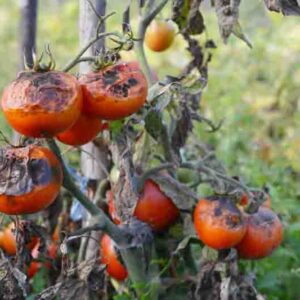
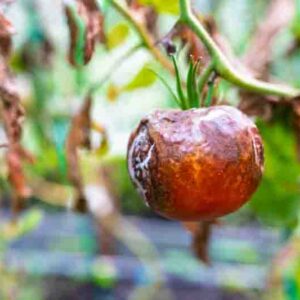
Appearance reality: An enormous homegrown Beefsteak tomato does not need supermarket symmetry to be excellent. Deep shoulders, ribbing, and occasional irregularity are common in very large-fruited tomatoes. Distinguish harmless shape variation from actual rot, severe cracking, or disease.
Do not assume a standardized modern disease-resistance package for every open-pollinated tomato sold as ‘Beefsteak’. Cornell’s cultivar record identifies the growth habit, fruit size, and maturity but does not assign a resistance package to the named cultivar.
Individual commercial seed lines may advertise particular resistance traits, but those claims should remain attached to that maintained seed source unless the underlying cultivar identity has been verified.
Gardenia resistance rule: Never transfer resistance codes from a hybrid described as a “beefsteak tomato” – or from one supplier’s maintained Beefsteak seed line – to every plant called ‘Beefsteak’. The fruit category and the named cultivar are not genetically interchangeable.
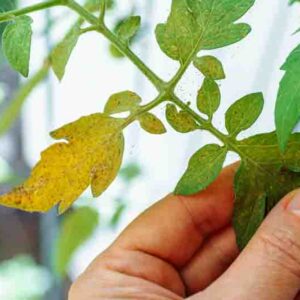
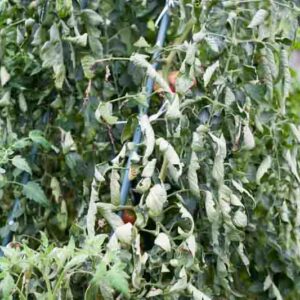
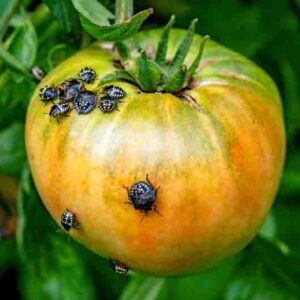
Plants may encounter early blight, late blight, Septoria leaf spot, blossom-end rot, cracking, and pests such as tomato hornworms.
If symptoms are unclear, use Gardenia’s Tomato Problems: What Is Wrong With My Plant?. For infectious diseases, see Tomato Diseases: Identification, Treatment & Prevention.
‘Beefsteak’ is a main-season tomato. Cornell lists the named cultivar at approximately 80-96 days from transplanting, although individual maintained seed lines may use narrower maturity estimates.
For peak fresh-eating quality, harvest when the fruit has developed its mature red color and has begun to soften slightly without becoming mushy.
Because a single tomato can weigh 1-2 lb., check large fruits frequently as they approach maturity. Heavy ripe fruit may crack, drop, or place considerable strain on stems and support structures.
Gardenia harvest cue: Size alone does not tell you that a Beefsteak tomato is ripe. A very large fruit can reach nearly full size while still green and need substantial additional time to develop mature color, texture, and flavor.
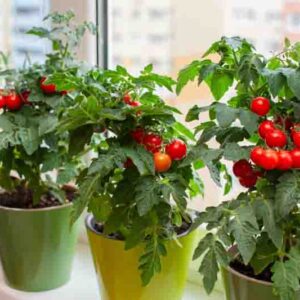
‘Beefsteak’ can be grown in a container, but it is not an ideal small-space tomato. The combination of an indeterminate vine, substantial root system, and exceptionally heavy fruit requires generous soil volume and strong support.
Use a container of at least about 10 gallons, with 15-20 gallons providing a more forgiving root zone for a vigorous plant. Install sturdy support at planting rather than trying to add it after large fruit begins developing.
Container plants require especially close attention to watering because limited soil volume can shift rapidly from moist to dry during summer heat.
Container reality: You can grow ‘Beefsteak’ in a pot, but “can” does not mean “compact.” If space is limited, a determinate or dwarf large-fruited tomato may provide easier management.
Choose companions that share full sun and compatible soil conditions without competing heavily with the large tomato canopy and root system.
Basil (Ocimum basilicum) shares similar sun and moisture requirements and fits naturally into an edible tomato bed.
French Marigold (Tagetes patula) thrives in full sun and can flower along the edge of the tomato bed.
Nasturtium (Tropaeolum majus) can trail around bed edges rather than competing for vertical canopy space.
Garlic (Allium sativum) can occupy garden space before the tomato reaches full summer size.
For more ideas based on compatible growing conditions and practical garden functions rather than folklore, see Gardenia’s Companion Plants for Tomatoes.
The named open-pollinated ‘Beefsteak’ cultivar is indeterminate. Beefsteak-type tomatoes as a broader category can be either determinate or indeterminate, so cultivar identity matters.
The named ‘Beefsteak’ cultivar commonly produces large, often ribbed tomatoes weighing about 1-2 pounds (450-900 g). Individual fruits and maintained seed lines can vary.
Mature height varies among maintained Beefsteak seed lines. Burpee currently lists its ‘Beefsteak’ at about 42 inches (107 cm). Because the cultivar is indeterminate, vines may grow taller depending on support, pruning, fertility, climate, and season length.
Cornell lists the named ‘Beefsteak’ cultivar at approximately 80-96 days from transplanting, making it a main-season rather than an early tomato.
Both uses occur. ‘Beefsteak’ can refer to a named open-pollinated cultivar, while “beefsteak tomato” is also a broad category describing large, meaty slicing tomatoes. The two meanings should not be confused.
Not necessarily. Some seed catalogs treat some of these names as synonymous or closely related, while other cultivar databases maintain them as separate entries. Gardenia keeps the names separate unless a specific seed source establishes the identity of its maintained line.
The open-pollinated cultivar sold as ‘Beefsteak’ is commonly classified as an heirloom or heritage tomato. That does not mean every beefsteak-type tomato is an heirloom, since many modern hybrids also belong to the beefsteak category.
Large beefsteak tomatoes commonly show ribbing and irregular shapes. Catfacing can also produce puckered or scarred blossom ends, particularly when cool conditions disrupt flower development.
Yes, but they need substantial root space and very strong support. Use at least about a 10-gallon container, with 15-20 gallons offering a more forgiving root zone for a vigorous indeterminate plant.
Yes, if you are growing an open-pollinated ‘Beefsteak’ strain. Tomatoes are largely self-pollinating, although occasional crossing can occur, so isolation improves the likelihood of maintaining the seed line true to type.
| Hardiness |
2 - 11 |
|---|---|
| Climate Zones | 1, 1A, 1B, 2, 2A, 2B, 3, 3A, 3B, 4, 5, 6, 7, 8, 9, 10, 11, 12, 13, 14, 15, 16, 17, 18, 19, 20, 21, 22, 23, 24, A1, A2, A3, H1, H2 |
| Plant Type | Annuals, Fruits, Perennials |
| Plant Family | Solanaceae |
| Genus | Solanum, Tomatoes |
| Common names | Tomato |
| Exposure | Full Sun |
| Season of Interest | Summer (Early, Mid, Late), Fall |
| Height | 3' - 4' (90cm - 120cm) |
| Spread | 2' - 3' (60cm - 90cm) |
| Spacing | 24" - 36" (60cm - 90cm) |
| Maintenance | High |
| Water Needs | Average |
| Soil Type | Clay, Loam, Sand |
| Soil pH | Acid, Neutral |
| Soil Drainage | Moist but Well-Drained |
| Tolerance | Rabbit, Clay Soil |
| Attracts | Bees |
| Garden Uses | Beds And Borders, Patio And Containers, Wall-Side Borders |
| Garden Styles | City and Courtyard, Informal and Cottage, Pollinator Garden |


| Hardiness |
2 - 11 |
|---|---|
| Climate Zones | 1, 1A, 1B, 2, 2A, 2B, 3, 3A, 3B, 4, 5, 6, 7, 8, 9, 10, 11, 12, 13, 14, 15, 16, 17, 18, 19, 20, 21, 22, 23, 24, A1, A2, A3, H1, H2 |
| Plant Type | Annuals, Fruits, Perennials |
| Plant Family | Solanaceae |
| Genus | Solanum, Tomatoes |
| Common names | Tomato |
| Exposure | Full Sun |
| Season of Interest | Summer (Early, Mid, Late), Fall |
| Height | 3' - 4' (90cm - 120cm) |
| Spread | 2' - 3' (60cm - 90cm) |
| Spacing | 24" - 36" (60cm - 90cm) |
| Maintenance | High |
| Water Needs | Average |
| Soil Type | Clay, Loam, Sand |
| Soil pH | Acid, Neutral |
| Soil Drainage | Moist but Well-Drained |
| Tolerance | Rabbit, Clay Soil |
| Attracts | Bees |
| Garden Uses | Beds And Borders, Patio And Containers, Wall-Side Borders |
| Garden Styles | City and Courtyard, Informal and Cottage, Pollinator Garden |
How many Solanum lycopersicum ‘Beefsteak’ (Tomato) do I need for my garden?
| Plant | Quantity | |
|---|---|---|
| Solanum lycopersicum ‘Beefsteak’ (Tomato) | N/A | Buy Plants |
Create a membership account to save your garden designs and to view them on any device.
Becoming a contributing member of Gardenia is easy and can be done in just a few minutes. If you provide us with your name, email address and the payment of a modest $25 annual membership fee, you will become a full member, enabling you to design and save up to 25 of your garden design ideas.
Join now and start creating your dream garden!
Create a membership account to save your garden designs and to view them on any device.
Becoming a contributing member of Gardenia is easy and can be done in just a few minutes. If you provide us with your name, email address and the payment of a modest $25 annual membership fee, you will become a full member, enabling you to design and save up to 25 of your garden design ideas.
Join now and start creating your dream garden!