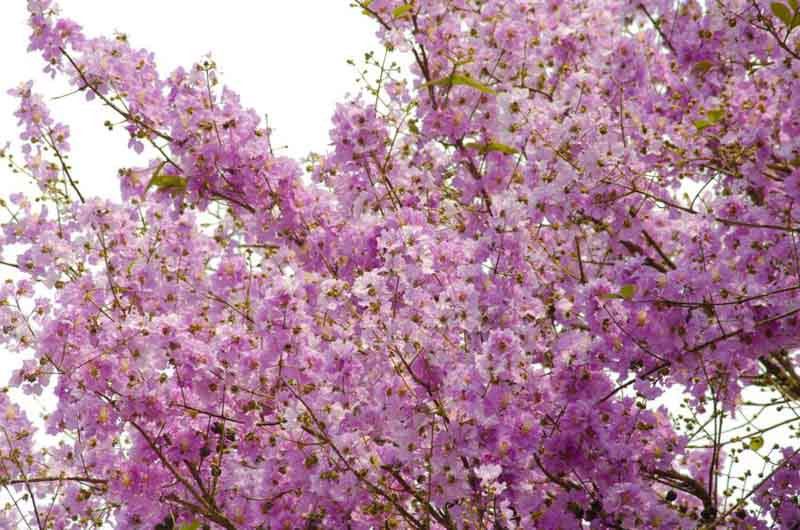
Lagerstroemia (Crape Myrtle)
Characteristics
Lagerstroemia, commonly known as crape myrtle, is one of the most spectacular flowering trees and shrubs for sunny gardens. Valued for its exceptionally long bloom season, colorful summer flowers, handsome bark, attractive fall foliage, and excellent heat and drought tolerance, crape myrtle delivers year-round interest with surprisingly little maintenance. Available in sizes ranging from compact patio shrubs to elegant shade trees, there is a cultivar for almost every landscape. Explore the best crape myrtles for every garden size, compare cultivars with the Crape Myrtle comparison tool, and discover the best flower colors.
Why Grow Lagerstroemia?
Crape myrtle combines spectacular flowering with outstanding landscape performance. It blooms for months, thrives in hot summers, tolerates drought once established, and attracts pollinators while generally resisting deer. Many cultivars also feature beautiful peeling bark and brilliant autumn foliage. It is an excellent choice for foundation plantings, specimen trees, streetscapes, mixed borders, and gardens featuring plants that bloom all summer. Learn more about drought-tolerant plants and deer-resistant plants.
Growing Tips and Care
Plant lagerstroemia in full sun and fertile, well-drained soil. Six or more hours of direct sunlight are essential for abundant flowering and healthy growth. Water regularly during the first growing season, then only during prolonged dry spells. Avoid excessive nitrogen fertilizer, which encourages leaves instead of flowers. If your plant fails to bloom, see why crape myrtles do not bloom. Proper pruning also makes a difference – follow this guide on when and how to prune a crape myrtle.
Common Problems
Modern cultivars are highly disease resistant, but powdery mildew may still appear during humid weather, while aphids, Japanese beetles, and crape myrtle bark scale occasionally affect plants. Good air circulation, proper watering, and selecting resistant cultivars greatly reduce problems. Learn how to treat powdery mildew, identify crape myrtle diseases and pests, and manage aphids or Japanese beetles.
Popular Varieties
Among the most widely grown cultivars are ‘Muskogee’ with lavender flowers, ‘Natchez’ with elegant white blooms and cinnamon bark, ‘Tuscarora’ with vibrant coral-pink flowers, ‘Dynamite’ with brilliant red flowers, and ‘Catawba’, a graceful semi-weeping selection perfect for smaller gardens.
Beautiful, easy to grow, remarkably long blooming, and adaptable to a wide range of landscapes, Lagerstroemia remains one of the finest flowering trees and shrubs for adding reliable summer color, attractive bark, and lasting beauty to gardens large and small.